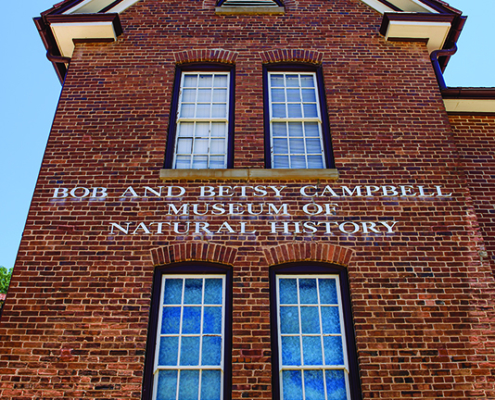
{"id":17832,"date":"2017-09-03T19:00:16","date_gmt":"2017-09-03T23:00:16","guid":{"rendered":"https:\/\/clemson.world\/?p=17832"},"modified":"2017-09-03T19:00:16","modified_gmt":"2017-09-03T23:00:16","slug":"campbell-museum-of-natural-history","status":"publish","type":"post","link":"https:\/\/clemson.world\/archive\/campbell-museum-of-natural-history\/","title":{"rendered":"The Bob and Betsy Campbell Museum of Natural History"},"content":{"rendered":"<p><div id='fullscreen_slider_1'  class='avia-fullscreen-slider main_color   avia-builder-el-0  el_before_av_textblock  avia-builder-el-first   container_wrap sidebar_right' style=' '  ><a href='#next-section' title='' class='scroll-down-link av-control-default' aria-hidden='true' data-av_icon='\ue877' data-av_iconfont='entypo-fontello'><\/a><div   data-size='no scaling'  data-lightbox_size='large'  data-animation='slide'  data-conditional_play=''  data-ids='17833'  data-video_counter='0'  data-autoplay='false'  data-bg_slider='true'  data-slide_height='100'  data-handle='av_fullscreen'  data-interval='5'  data-class=' '  data-el_id=''  data-css_id='fullscreen_slider_1'  data-scroll_down='aviaTBscroll_down'  data-control_layout='av-control-default'  data-custom_markup=''  data-perma_caption=''  data-autoplay_stopper=''  data-image_attachment='scroll'  data-min_height='0px'  data-stretch=''  class='avia-slideshow avia-slideshow-1 av-slider-scroll-down-active av-control-default av-default-height-applied avia-slideshow-no scaling av_fullscreen   avia-slide-slider '  itemprop=\"image\" itemscope=\"itemscope\" itemtype=\"https:\/\/schema.org\/ImageObject\" ><ul class='avia-slideshow-inner ' style='padding-bottom: 50.0222518914%;' ><li style='background-position:top left;' data-img-url='https:\/\/clemson.world\/archive\/wp-content\/uploads\/sites\/3\/2017\/08\/Natural-History-Museum_Lead.jpg' class=' av-single-slide slide-1 ' ><div data-rel='slideshow-1' class='avia-slide-wrap '   ><div class = \"caption_fullwidth av-slideshow-caption caption_center caption_center_framed caption_framed\"><div class = \"container caption_container\"><div class = \"slideshow_caption\"><div class = \"slideshow_inner_caption\"><div class = \"slideshow_align_caption\"><h2  class='avia-caption-title  '  itemprop=\"name\" >Landmarks &amp; Legends<\/h2><div class='avia-caption-content  av_inherit_color'  itemprop=\"description\"   style='font-size:18px; '><p>The Bob and Betsy Campbell Museum of Natural History<\/p>\n<\/div><\/div><\/div><\/div><\/div><\/div><\/div><\/li><\/ul><\/div><\/div><div id='after_full_slider_1'  class='main_color av_default_container_wrap container_wrap sidebar_right' style=' '  ><div class='container' ><div class='template-page content  av-content-small alpha units'><div class='post-entry post-entry-type-page post-entry-17832'><div class='entry-content-wrapper clearfix'><br \/>\n<section class=\"av_textblock_section \"  itemscope=\"itemscope\" itemtype=\"https:\/\/schema.org\/BlogPosting\" itemprop=\"blogPost\" ><div class='avia_textblock  '   itemprop=\"text\" ><h2 style=\"text-align: center\">Many people on campus aren&#8217;t aware\u00a0of<br \/>\nits existence,\u00a0and few have been inside.<\/h2>\n<\/div><\/section><br \/>\n<div   class='hr hr-default   avia-builder-el-2  el_after_av_textblock  el_before_av_one_fifth '><span class='hr-inner ' ><span class='hr-inner-style'><\/span><\/span><\/div><br \/>\n<div class=\"flex_column av_one_fifth  flex_column_div av-zero-column-padding first  avia-builder-el-3  el_after_av_hr  el_before_av_three_fifth  \" style='border-radius:0px; '><\/div><br \/>\n<div class=\"flex_column av_three_fifth  flex_column_div   avia-builder-el-4  el_after_av_one_fifth  el_before_av_one_fifth  \" style='padding:0px 0px 0px 0px ; border-radius:0px 0px 0px 0px ; '><section class=\"av_textblock_section \"  itemscope=\"itemscope\" itemtype=\"https:\/\/schema.org\/BlogPosting\" itemprop=\"blogPost\" ><div class='avia_textblock  '   itemprop=\"text\" ><p>It\u2019s a small unassuming building that looks like it belongs in an earlier time, tucked in behind Jordan and wedged up next to Kinard. Many people on campus aren\u2019t aware of its existence, and fewer have been inside. But if you meander up the steps and open its wide front door, you\u2019ll find yourself in a tiny but fascinating natural history museum that serves as a resource for both classroom and community.<br \/>\nOnly a very small percentage of the contents of this building is displayed in the public gallery on the first floor that features 32 whole taxidermy mounts, 76 head mounts and 26 skeletons, including deer, antelope, buffalo, big cats and birds. There\u2019s an enormous eland, the largest of antelopes. And there\u2019s the tiniest of antelopes, the dik-dik, which looks as if it ought to be featured in a fantasy movie about incredibly small woodland creatures. A small rhebok can be seen \u2014 spelled \u201creebok\u201d in Afrikaans, it\u2019s the inspiration for the Reebok athletic brand. The skeleton of a tiny hummingbird is posed next to one of an emu, a flightless running bird as tall as a person. Mounted iPads with touch screens allow visitors to explore information about the various animals.<br \/>\nJust past the gallery is a doorway to what biology professor Richard Blob calls the \u201cunseen heart of the museum,\u201d the research and teaching collection. The head of a sable antelope sits on a pedestal standing guard over the skin and skeletal collection, which includes skeletal displays of snakes and other critters beautifully preserved and arranged by museum curator Stanlee Miller. Beyond that are shelves of teaching specimens in alcohol-filled jars, and the archival collection whose primary focus is local specimens. Jars of all sizes contain fish from local rivers and lakes, samples that have been collected year after year so that they can be compared for changes in things like heavy metal concentrations. They\u2019re used by Clemson students and faculty, as well as by researchers all over the country.<br \/>\nThe museum is also home to the University\u2019s herbarium, tended to by Dixie Damrel and containing more than 100,000 specimens of plants. A lichens collection, a pine collection of Central America and a large fungal collection that has just been shipped back after being imaged, thanks to an NSF grant, are among the treasures here. Another room provides space to identify and prepare plant specimens for storage.<\/p>\n<\/div><\/section><\/div><br \/>\n<div class=\"flex_column av_one_fifth  flex_column_div av-zero-column-padding   avia-builder-el-6  el_after_av_three_fifth  el_before_av_fullscreen  avia-builder-el-last  \" style='border-radius:0px; '><\/div><br \/>\n<\/div><\/div><\/div><!-- close content main div --><\/div><\/div><div id='fullscreen_slider_2'  class='avia-fullscreen-slider main_color   avia-builder-el-7  el_after_av_one_fifth  el_before_av_one_fifth   slider-not-first container_wrap sidebar_right' style=' '  ><a href='#next-section' title='' class='scroll-down-link av-control-default' aria-hidden='true' data-av_icon='\ue877' data-av_iconfont='entypo-fontello'><\/a><div   data-size='extra_large'  data-lightbox_size='large'  data-animation='slide'  data-conditional_play=''  data-ids=''  data-video_counter='1'  data-autoplay='false'  data-bg_slider='true'  data-slide_height='100'  data-handle='av_fullscreen'  data-interval='5'  data-class=' '  data-el_id=''  data-css_id='fullscreen_slider_2'  data-scroll_down='aviaTBscroll_down'  data-control_layout='av-control-default'  data-custom_markup=''  data-perma_caption=''  data-autoplay_stopper=''  data-image_attachment=''  data-min_height='0px'  data-stretch=''  data-default-height='100'  class='avia-slideshow avia-slideshow-2 av-slider-scroll-down-active av-control-default av-default-height-applied avia-slideshow-extra_large av_fullscreen   avia-slide-slider '  itemprop=\"image\" itemscope=\"itemscope\" itemtype=\"https:\/\/schema.org\/ImageObject\" ><ul class='avia-slideshow-inner ' style='padding-bottom: 100%;' ><li  data-controls='' data-mute='' data-loop='' data-disable-autoplay='aviaTBaviaTBvideo_autoplay'  data-mobile-img='https:\/\/clemson.world\/archive\/wp-content\/uploads\/sites\/3\/2017\/08\/Natural-History-Museum_Blob.jpg' class=' av-video-slide  av-video-service-youtube  av-mobile-fallback-image av-single-slide slide-1 ' ><div data-rel='slideshow-2' class='avia-slide-wrap ' style='background-image:url(\"https:\/\/clemson.world\/archive\/wp-content\/uploads\/sites\/3\/2017\/08\/Natural-History-Museum_Blob.jpg\");'  ><div class='av-click-overlay'><\/div><div class='mejs-mediaelement'><div height='1600' width='900' class='av_youtube_frame' id='player_17832_1173011667_1175825467'  data-autoplay='0'  data-videoid='uKTQrUmJilQ'  data-hd='1'  data-rel='0'  data-wmode='opaque'  data-playlist='player_17832_1173011667_1175825467'  data-loop='0'  data-version='3'  data-autohide='1'  data-color='white'  data-controls='1'  data-showinfo='0'  data-iv_load_policy='3'  data-original_url='https:\/\/youtu.be\/uKTQrUmJilQ' ><\/div><\/div><div class='av-click-to-play-overlay'><div class=\"avia_playpause_icon\"><\/div><\/div><\/div><\/li><\/ul><\/div><\/div><div id='after_full_slider_2'  class='main_color av_default_container_wrap container_wrap sidebar_right' style=' '  ><div class='container' ><div class='template-page content  av-content-small alpha units'><div class='post-entry post-entry-type-page post-entry-17832'><div class='entry-content-wrapper clearfix'><br \/>\n<div class=\"flex_column av_one_fifth  flex_column_div av-zero-column-padding first  avia-builder-el-8  el_after_av_fullscreen  el_before_av_three_fifth  avia-builder-el-first  \" style='border-radius:0px; '><\/div><br \/>\n<div class=\"flex_column av_three_fifth  flex_column_div av-zero-column-padding   avia-builder-el-9  el_after_av_one_fifth  el_before_av_one_fifth  \" style='border-radius:0px; '><section class=\"av_textblock_section \"  itemscope=\"itemscope\" itemtype=\"https:\/\/schema.org\/BlogPosting\" itemprop=\"blogPost\" ><div class='avia_textblock  '   itemprop=\"text\" ><blockquote>\n<p>Above almost every door and tucked in every imaginable space is some specimen of animal life: a hippo with bared teeth glares from above a doorway, a monkey hangs from the ceiling of the skin and skeletal collection. A large antelope overlooks the staircase from the second floor.<\/p>\n<\/blockquote>\n<p>Built in the 1890s, the building was originally the home of J.S. Newman, who managed the Experiment Station, and later the home of Col. Mark Hardin, a chemistry professor who served as acting president of Clemson at the turn of the twentieth century and is the namesake of Hardin Hall. In the mid 1930s the building was moved to allow the construction of Long Hall.<br \/>\nIts history after that is unclear, although it was vacant at times and sometimes referred to as the \u201cKinard Annex.\u201d The herbarium and collections of animal specimens were moved from various locations on campus in 1995, when the building was renovated and renamed for Bob and Betsy Campbell, who donated the money for the renovation.<\/p>\n<\/div><\/section><\/div><br \/>\n<div class=\"flex_column av_one_fifth  flex_column_div av-zero-column-padding   avia-builder-el-11  el_after_av_three_fifth  el_before_av_hr  \" style='border-radius:0px; '><\/div><br \/>\n<div   class='hr hr-default   avia-builder-el-12  el_after_av_one_fifth  el_before_av_gallery '><span class='hr-inner ' ><span class='hr-inner-style'><\/span><\/span><\/div><br \/>\n<div  class='avia-gallery  avia-gallery-1 avia_lazyload avia-gallery-animate avia_animate_when_visible  avia-builder-el-13  el_after_av_hr  avia-builder-el-last '  itemprop=\"image\" itemscope=\"itemscope\" itemtype=\"https:\/\/schema.org\/ImageObject\" ><div class='avia-gallery-thumb'> <a href='https:\/\/clemson.world\/archive\/wp-content\/uploads\/sites\/3\/2017\/08\/Natural-History-Museum_Dikdik.jpg' data-rel='gallery-1' data-prev-img='https:\/\/clemson.world\/archive\/wp-content\/uploads\/sites\/3\/2017\/08\/Natural-History-Museum_Dikdik-495x400.jpg' class='first_thumb lightbox ' data-onclick='1' title=''  itemprop=\"thumbnailUrl\" ><img  src='https:\/\/clemson.world\/archive\/wp-content\/uploads\/sites\/3\/2017\/08\/Natural-History-Museum_Dikdik-495x400.jpg' width='495' height='400'  title='Dik-dik' alt='' \/><\/a> <a href='https:\/\/clemson.world\/archive\/wp-content\/uploads\/sites\/3\/2017\/08\/Natural-History-Museum_Building.jpg' data-rel='gallery-1' data-prev-img='https:\/\/clemson.world\/archive\/wp-content\/uploads\/sites\/3\/2017\/08\/Natural-History-Museum_Building-495x400.jpg' class='lightbox ' data-onclick='2' title=''  itemprop=\"thumbnailUrl\" ><img  src='https:\/\/clemson.world\/archive\/wp-content\/uploads\/sites\/3\/2017\/08\/Natural-History-Museum_Building-495x400.jpg' width='495' height='400'  title='Natural History Museum' alt='' \/><\/a> <a href='https:\/\/clemson.world\/archive\/wp-content\/uploads\/sites\/3\/2017\/08\/Natural-History-Museum_Bear.jpg' data-rel='gallery-1' data-prev-img='https:\/\/clemson.world\/archive\/wp-content\/uploads\/sites\/3\/2017\/08\/Natural-History-Museum_Bear-495x400.jpg' class='lightbox ' data-onclick='3' title=''  itemprop=\"thumbnailUrl\" ><img  src='https:\/\/clemson.world\/archive\/wp-content\/uploads\/sites\/3\/2017\/08\/Natural-History-Museum_Bear-495x400.jpg' width='495' height='400'  title='Grizzly Bear' alt='' \/><\/a> <a href='https:\/\/clemson.world\/archive\/wp-content\/uploads\/sites\/3\/2017\/08\/Natural-History-Museum_Blob.jpg' data-rel='gallery-1' data-prev-img='https:\/\/clemson.world\/archive\/wp-content\/uploads\/sites\/3\/2017\/08\/Natural-History-Museum_Blob-495x400.jpg' class='first_thumb lightbox ' data-onclick='4' title=''  itemprop=\"thumbnailUrl\" ><img  src='https:\/\/clemson.world\/archive\/wp-content\/uploads\/sites\/3\/2017\/08\/Natural-History-Museum_Blob-495x400.jpg' width='495' height='400'  title='Professor Richard Blob' alt='' \/><\/a> <a href='https:\/\/clemson.world\/archive\/wp-content\/uploads\/sites\/3\/2017\/08\/Natural-History-Museum_Cats.jpg' data-rel='gallery-1' data-prev-img='https:\/\/clemson.world\/archive\/wp-content\/uploads\/sites\/3\/2017\/08\/Natural-History-Museum_Cats-495x400.jpg' class='lightbox ' data-onclick='5' title=''  itemprop=\"thumbnailUrl\" ><img  src='https:\/\/clemson.world\/archive\/wp-content\/uploads\/sites\/3\/2017\/08\/Natural-History-Museum_Cats-495x400.jpg' width='495' height='400'  title='The Public Gallery' alt='' \/><\/a> <a href='https:\/\/clemson.world\/archive\/wp-content\/uploads\/sites\/3\/2017\/08\/Natural-History-Museum_Bird.jpg' data-rel='gallery-1' data-prev-img='https:\/\/clemson.world\/archive\/wp-content\/uploads\/sites\/3\/2017\/08\/Natural-History-Museum_Bird-495x400.jpg' class='lightbox ' data-onclick='6' title=''  itemprop=\"thumbnailUrl\" ><img  src='https:\/\/clemson.world\/archive\/wp-content\/uploads\/sites\/3\/2017\/08\/Natural-History-Museum_Bird-495x400.jpg' width='495' height='400'  title='Loon and Pied-billed Grebe Skeletons' alt='' \/><\/a> <a href='https:\/\/clemson.world\/archive\/wp-content\/uploads\/sites\/3\/2017\/08\/Natural-History-Museum_Herbarium-3.jpg' data-rel='gallery-1' data-prev-img='https:\/\/clemson.world\/archive\/wp-content\/uploads\/sites\/3\/2017\/08\/Natural-History-Museum_Herbarium-3-495x400.jpg' class='first_thumb lightbox ' data-onclick='7' title=''  itemprop=\"thumbnailUrl\" ><img  src='https:\/\/clemson.world\/archive\/wp-content\/uploads\/sites\/3\/2017\/08\/Natural-History-Museum_Herbarium-3-495x400.jpg' width='495' height='400'  title='' alt='' \/><\/a> <a href='https:\/\/clemson.world\/archive\/wp-content\/uploads\/sites\/3\/2017\/08\/Natural-History-Museum_Herbarium-2.jpg' data-rel='gallery-1' data-prev-img='https:\/\/clemson.world\/archive\/wp-content\/uploads\/sites\/3\/2017\/08\/Natural-History-Museum_Herbarium-2-495x400.jpg' class='lightbox ' data-onclick='8' title=''  itemprop=\"thumbnailUrl\" ><img  src='https:\/\/clemson.world\/archive\/wp-content\/uploads\/sites\/3\/2017\/08\/Natural-History-Museum_Herbarium-2-495x400.jpg' width='495' height='400'  title='' alt='' \/><\/a> <a href='https:\/\/clemson.world\/archive\/wp-content\/uploads\/sites\/3\/2017\/08\/Natural-History-Museum_Herbarium-1.jpg' data-rel='gallery-1' data-prev-img='https:\/\/clemson.world\/archive\/wp-content\/uploads\/sites\/3\/2017\/08\/Natural-History-Museum_Herbarium-1-495x400.jpg' class='lightbox ' data-onclick='9' title=''  itemprop=\"thumbnailUrl\" ><img  src='https:\/\/clemson.world\/archive\/wp-content\/uploads\/sites\/3\/2017\/08\/Natural-History-Museum_Herbarium-1-495x400.jpg' width='495' height='400'  title='' alt='' \/><\/a><\/div><\/div><\/p>\n","protected":false},"excerpt":{"rendered":"<p>It\u2019s a small unassuming building that looks like it belongs in an earlier time. Many people on campus aren\u2019t aware of its existence, and few have been inside. <\/p>\n","protected":false},"author":4,"featured_media":17839,"comment_status":"open","ping_status":"open","sticky":false,"template":"","format":"standard","meta":{"_jetpack_memberships_contains_paid_content":false,"footnotes":""},"categories":[7],"tags":[381,777,2047,2858,2864],"coauthors":[],"class_list":["post-17832","post","type-post","status-publish","format-standard","has-post-thumbnail","hentry","category-landmarks-legends","tag-biological-sciences","tag-college-of-science","tag-natural-history","tag-summer-fall-2017","tag-summer-fall-2017-landmarks-legends"],"jetpack_featured_media_url":"https:\/\/clemson.world\/archive\/wp-content\/uploads\/sites\/3\/2017\/08\/Natural-History-Museum_Blob.jpg","jetpack_sharing_enabled":true,"_links":{"self":[{"href":"https:\/\/clemson.world\/archive\/wp-json\/wp\/v2\/posts\/17832","targetHints":{"allow":["GET"]}}],"collection":[{"href":"https:\/\/clemson.world\/archive\/wp-json\/wp\/v2\/posts"}],"about":[{"href":"https:\/\/clemson.world\/archive\/wp-json\/wp\/v2\/types\/post"}],"author":[{"embeddable":true,"href":"https:\/\/clemson.world\/archive\/wp-json\/wp\/v2\/users\/4"}],"replies":[{"embeddable":true,"href":"https:\/\/clemson.world\/archive\/wp-json\/wp\/v2\/comments?post=17832"}],"version-history":[{"count":0,"href":"https:\/\/clemson.world\/archive\/wp-json\/wp\/v2\/posts\/17832\/revisions"}],"wp:featuredmedia":[{"embeddable":true,"href":"https:\/\/clemson.world\/archive\/wp-json\/wp\/v2\/media\/17839"}],"wp:attachment":[{"href":"https:\/\/clemson.world\/archive\/wp-json\/wp\/v2\/media?parent=17832"}],"wp:term":[{"taxonomy":"category","embeddable":true,"href":"https:\/\/clemson.world\/archive\/wp-json\/wp\/v2\/categories?post=17832"},{"taxonomy":"post_tag","embeddable":true,"href":"https:\/\/clemson.world\/archive\/wp-json\/wp\/v2\/tags?post=17832"},{"taxonomy":"author","embeddable":true,"href":"https:\/\/clemson.world\/archive\/wp-json\/wp\/v2\/coauthors?post=17832"}],"curies":[{"name":"wp","href":"https:\/\/api.w.org\/{rel}","templated":true}]}}