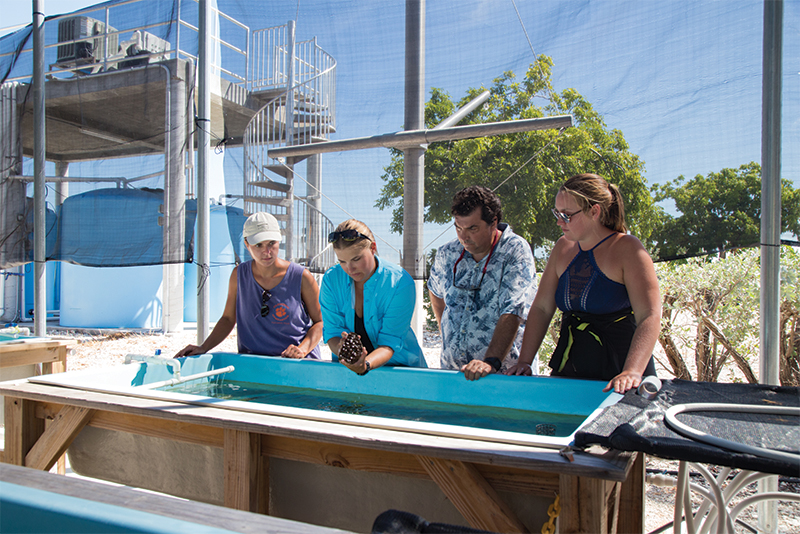
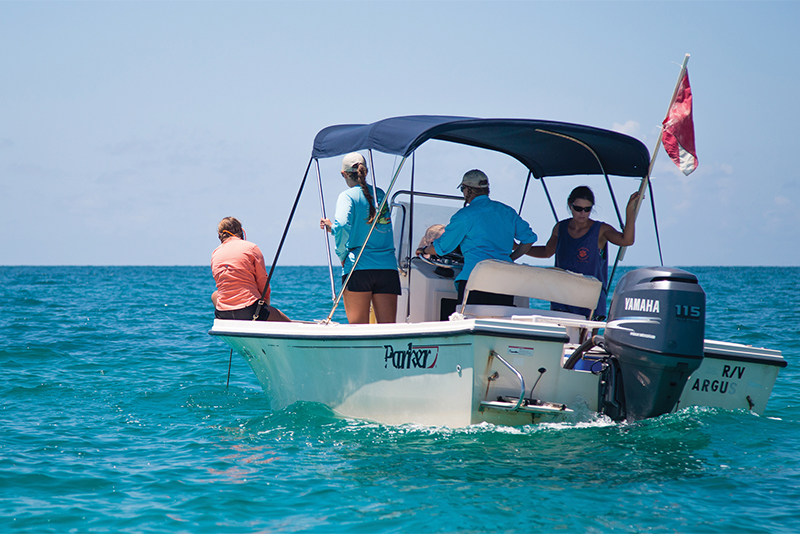
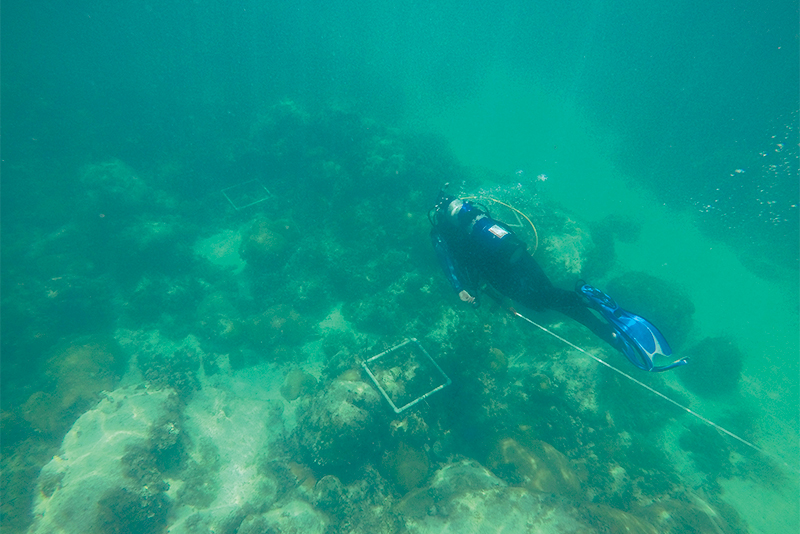
{"id":18485,"date":"2018-01-11T16:19:43","date_gmt":"2018-01-11T21:19:43","guid":{"rendered":"https:\/\/clemson.world\/?p=18485"},"modified":"2018-01-11T16:19:43","modified_gmt":"2018-01-11T21:19:43","slug":"coral-crusader","status":"publish","type":"post","link":"https:\/\/clemson.world\/archive\/coral-crusader\/","title":{"rendered":"Coral Crusader"},"content":{"rendered":"<p><div id='fullscreen_slider_1'  class='avia-fullscreen-slider main_color   avia-builder-el-0  el_before_av_one_full  avia-builder-el-first   container_wrap sidebar_right' style=' '  ><a href='#next-section' title='' class='scroll-down-link av-control-default' aria-hidden='true' data-av_icon='\ue877' data-av_iconfont='entypo-fontello'><\/a><div   data-size='no scaling'  data-lightbox_size='large'  data-animation='slide'  data-conditional_play=''  data-ids='18483,'  data-video_counter='1'  data-autoplay='true'  data-bg_slider='true'  data-slide_height='100'  data-handle='av_fullscreen'  data-interval='5'  data-class=' '  data-el_id=''  data-css_id='fullscreen_slider_1'  data-scroll_down='aviaTBscroll_down'  data-control_layout='av-control-default'  data-custom_markup=''  data-perma_caption=''  data-autoplay_stopper=''  data-image_attachment='scroll'  data-min_height='0px'  data-stretch=''  class='avia-slideshow avia-slideshow-1 av-slider-scroll-down-active av-control-default av-default-height-applied avia-slideshow-no scaling av_fullscreen   avia-slide-slider '  itemprop=\"image\" itemscope=\"itemscope\" itemtype=\"https:\/\/schema.org\/ImageObject\" ><ul class='avia-slideshow-inner ' style='padding-bottom: 66.6666666667%;' ><li style='background-position:center center;' data-img-url='https:\/\/clemson.world\/archive\/wp-content\/uploads\/sites\/3\/2018\/01\/Coral_Lead.jpg' class=' slide-1 ' ><div data-rel='slideshow-1' class='avia-slide-wrap '   ><div class = \"caption_fullwidth av-slideshow-caption caption_center\"><div class = \"container caption_container\"><div class = \"slideshow_caption\"><div class = \"slideshow_inner_caption\"><div class = \"slideshow_align_caption\"><h2  style='font-size:96px; color:#3a4958; ' class='avia-caption-title  '  itemprop=\"name\" >Coral Crusader<\/h2><div class='avia-caption-content  av_inherit_color'  itemprop=\"description\"   style='font-size:21px; color:#109dc0; '><p>Coral reefs in the Florida Keys, Caribbean and throughout the world are in dramatic decline. A graduate student from Clemson has made it her mission to help restore one of the ocean\u2019s most endangered species.<br \/>\nBy Jim Melvin<\/p>\n<\/div><\/div><\/div><\/div><\/div><\/div><div class='av-click-to-play-overlay'><div class=\"avia_playpause_icon\"><\/div><\/div><\/div><\/li><li  data-controls='' data-mute='' data-loop='' data-disable-autoplay='aviaTBaviaTBvideo_autoplay'  class=' av-video-slide  av-video-service-youtube  av-mobile-fallback-image slide-2 ' ><div data-rel='slideshow-1' class='avia-slide-wrap '   ><div class='av-click-overlay'><\/div><div class='mejs-mediaelement'><div height='1600' width='900' class='av_youtube_frame' id='player_18485_199081179_765516284'  data-autoplay='0'  data-videoid='BF-zpYK3eak'  data-hd='1'  data-rel='0'  data-wmode='opaque'  data-playlist='player_18485_199081179_765516284'  data-loop='0'  data-version='3'  data-autohide='1'  data-color='white'  data-controls='1'  data-showinfo='0'  data-iv_load_policy='3'  data-original_url='https:\/\/youtu.be\/BF-zpYK3eak' ><\/div><\/div><div class='av-click-to-play-overlay'><div class=\"avia_playpause_icon\"><\/div><\/div><\/div><\/li><\/ul><div class='avia-slideshow-arrows avia-slideshow-controls'><a href='#prev' class='prev-slide' aria-hidden='true' data-av_icon='\ue87c' data-av_iconfont='entypo-fontello'>Previous<\/a><a href='#next' class='next-slide' aria-hidden='true' data-av_icon='\ue87d' data-av_iconfont='entypo-fontello'>Next<\/a><\/div><div class='avia-slideshow-dots avia-slideshow-controls'><a href='#1' class='goto-slide active' >1<\/a><a href='#2' class='goto-slide ' >2<\/a><\/div><\/div><\/div><div id='after_full_slider_1'  class='main_color av_default_container_wrap container_wrap sidebar_right' style=' '  ><div class='container' ><div class='template-page content  av-content-small alpha units'><div class='post-entry post-entry-type-page post-entry-18485'><div class='entry-content-wrapper clearfix'><br \/>\n<div class=\"flex_column av_one_full  flex_column_div av-zero-column-padding first  avia-builder-el-1  el_after_av_fullscreen  el_before_av_one_fifth  avia-builder-el-first  \" style='border-radius:0px; '><section class=\"av_textblock_section \"  itemscope=\"itemscope\" itemtype=\"https:\/\/schema.org\/BlogPosting\" itemprop=\"blogPost\" ><div class='avia_textblock  av_inherit_color '  style='font-size:21px; color:#000000; '  itemprop=\"text\" ><p><strong>In the waters of the Florida Keys, just above the ocean floor, a young woman raises a hammer and strikes the head of a steel bar. The force of the blow drives her backward. She struggles to regain her position and strikes again. And again. Finally, she\u2019s satisfied that it\u2019s securely in place, holding down a PVC frame on the ocean floor. However, there are at least 40 more steel bars to slam home before she and her team can call it a day.<\/strong><\/p>\n<\/div><\/section><\/div><br \/>\n<div class=\"flex_column av_one_fifth  flex_column_div av-zero-column-padding first  avia-builder-el-3  el_after_av_one_full  el_before_av_three_fifth  column-top-margin\" style='border-radius:0px; '><\/div><br \/>\n<div class=\"flex_column av_three_fifth  flex_column_div av-zero-column-padding   avia-builder-el-4  el_after_av_one_fifth  el_before_av_one_fifth  column-top-margin\" style='border-radius:0px; '><div   class='hr hr-default   avia-builder-el-5  avia-builder-el-no-sibling '><span class='hr-inner ' ><span class='hr-inner-style'><\/span><\/span><\/div><\/div><br \/>\n<div class=\"flex_column av_one_fifth  flex_column_div av-zero-column-padding   avia-builder-el-6  el_after_av_three_fifth  el_before_av_one_fifth  column-top-margin\" style='border-radius:0px; '><\/div><br \/>\n<div class=\"flex_column av_one_fifth  flex_column_div av-zero-column-padding first  avia-builder-el-7  el_after_av_one_fifth  el_before_av_three_fifth  column-top-margin\" style='border-radius:0px; '><\/div><br \/>\n<div class=\"flex_column av_three_fifth  flex_column_div av-zero-column-padding   avia-builder-el-8  el_after_av_one_fifth  el_before_av_one_fifth  column-top-margin\" style='border-radius:0px; '><section class=\"av_textblock_section \"  itemscope=\"itemscope\" itemtype=\"https:\/\/schema.org\/BlogPosting\" itemprop=\"blogPost\" ><div class='avia_textblock  av_inherit_color '  style='font-size:17px; color:#000000; '  itemprop=\"text\" ><p style=\"text-align: center;color: #109dc0;letter-spacing: 3px;margin: 0px 0px 25px 0px\"><b>VOYAGE TO THE BOTTOM OF THE SEA<\/b><\/p>\n<p>In so many ways, it\u2019s a long journey from the foothills of the Appalachians to the seas of southern Florida.<br \/>\nKylie Smith has made the trek many times and knows the way all too well. She has been donning scuba equipment and plunging into the salt water of the Florida Keys for the past six years as she completed her master\u2019s degree and is now finishing the research for her Ph.D. She has spent hundreds of hours studying the exotic creatures that inhabit coral reefs, measuring fish abundance, testing water quality and acidification levels, and also transplanting fragments of coral and recording their rates of survival and growth. Her experiences have changed her \u2014 as a scientist and as a person.<br \/>\nCoral reefs represent some of our oldest and most diverse ecosystems. They cleanse the oceans and provide habitat and food to more than one million species. They even help protect shorelines from erosion by lessening wave height and force. But this invaluable natural resource has been in precipitous decline for the past 30 years. Marine biologists consider these reefs to be the most critically imperiled ecosystem on the planet. There are a variety of reasons, but the chief culprit is believed to be multiple stresses associated with climate change. Corals thrive in a narrow temperature range, about 75-86 degrees Fahrenheit. When water temperatures rise above 86 degrees for extended periods, corals become more susceptible to disease, competition, predation and mortality.<br \/>\nThis decline has not gone unnoticed. In the Florida Keys and elsewhere, several organizations are transplanting coral fragments by the tens of thousands in hopes of restoring existing reefs and creating new ones. But most of the transplants fare poorly, simply because what is causing them to deteriorate remains insidiously in place.<br \/>\nDuring her time underwater, Smith has grown to love the corals. But after watching them suffer, she is more determined than ever to find ways to turn the tide. Her research has become not just a career goal, but a life\u2019s calling.<br \/>\n\u201cYour blood, sweat and tears go into these projects. It becomes a personal thing, because you\u2019re spending all your time returning to the same sites and watching something that you love wither and die,\u201d she says. \u201cBut sometimes you find something unexpected that gives you hope, and it restores your motivation.\u201d<\/p>\n<\/div><\/section><\/div><br \/>\n<div class=\"flex_column av_one_fifth  flex_column_div av-zero-column-padding   avia-builder-el-10  el_after_av_three_fifth  el_before_av_hr  column-top-margin\" style='border-radius:0px; '><\/div><br \/>\n<div  style='height:50px' class='hr hr-invisible   avia-builder-el-11  el_after_av_one_fifth  el_before_av_image '><span class='hr-inner ' ><span class='hr-inner-style'><\/span><\/span><\/div><br \/>\n<div  class='avia-image-container  av-styling-  noHover  av-overlay-on-hover   avia-builder-el-12  el_after_av_hr  el_before_av_one_fifth  avia-align-center '  itemprop=\"image\" itemscope=\"itemscope\" itemtype=\"https:\/\/schema.org\/ImageObject\"  ><div class='avia-image-container-inner'><div class='avia-image-overlay-wrap'><div class='av-image-caption-overlay'><div class='av-caption-image-overlay-bg' style='opacity:0.7; background-color:#000000; '><\/div><div class='av-image-caption-overlay-position'><div class='av-image-caption-overlay-center' style='color:#ffffff; font-size:16px; '><p>L-R: Sara Rolfe, Kylie Smith, Michael Childress<br \/>\nand Sydney Whitaker discuss coral samples.<\/p>\n<\/div><\/div><\/div><img class='avia_image' src='https:\/\/clemson.world\/archive\/wp-content\/uploads\/sites\/3\/2018\/01\/Coral_Onshore-Study.jpg' alt='' title='Coral_Onshore-Study' height=\"534\" width=\"800\"  itemprop=\"thumbnailUrl\"  \/><\/div><\/div><\/div><br \/>\n<div class=\"flex_column av_one_fifth  flex_column_div av-zero-column-padding first  avia-builder-el-13  el_after_av_image  el_before_av_three_fifth  \" style='border-radius:0px; '><\/div><br \/>\n<div class=\"flex_column av_three_fifth  flex_column_div av-zero-column-padding   avia-builder-el-14  el_after_av_one_fifth  el_before_av_one_fifth  \" style='border-radius:0px; '><section class=\"av_textblock_section \"  itemscope=\"itemscope\" itemtype=\"https:\/\/schema.org\/BlogPosting\" itemprop=\"blogPost\" ><div class='avia_textblock  av_inherit_color '  style='font-size:17px; color:#000000; '  itemprop=\"text\" ><p style=\"text-align: center;color: #109dc0;letter-spacing: 3px;margin: 25px 0px 25px 0px\"><b>FROM HERE TO THERE AND BACK AGAIN<\/b><\/p>\n<p>Marine biologists don\u2019t always end up living near the ocean. Michael Childress spent part of his career at Idaho State University, about a four-day drive from the Florida Keys.<br \/>\nBut before his stint at Idaho State, Childress began doing underwater research in the Keys in 1991 when he was a graduate student at Florida State University. That\u2019s when his passion for this wondrous string of tropical islands first consumed him. Childress knew that he didn\u2019t want to stay in Idaho forever, so when a faculty position became available at Clemson, he was quick to take it. Tigertown isn\u2019t exactly a stone\u2019s throw from the Conch Republic, but it\u2019s a whole lot closer than a state famous for its potatoes.<br \/>\nAn evolutionary behavioral ecologist whose research focuses on understanding how marine animals respond to habitat loss, Childress joined Clemson in 2001 and is now an asscoiate professor in biological sciences. Two of his main courses \u2014 Marine Ecology and Behavioral Ecology \u2014 are thriving despite the University\u2019s relative lack of resources dedicated to marine science. In addition, he teaches a Creative Inquiry undergraduate research course on the Conservation of Marine Resources.<\/p>\n<blockquote>\n<p style=\"text-align: center\"><b>&#8220;This invaluable natural resource has been in precipitous decline for the past 30 years. Marine biologists consider these reefs to be the most critically imperiled ecosystem on the planet.&#8221;<\/b><\/p>\n<\/blockquote>\n<p>Over the past 15-plus years, Childress and his students have managed to make dozens of trips to the Keys to study spiny lobsters, blue crabs and anemone shrimp. They\u2019ve helped finance these trips by doing everything from using National Oceanic and Atmospheric Administration Sea Grant awards to holding bake sales.<br \/>\nSmith began working with Childress in 2010. After earning her bachelor\u2019s in ecology and evolutionary biology at the University of Colorado Boulder, she came to Clemson first as a research assistant and then as a master\u2019s student. When Childress and Smith began to discuss her research options, Smith mentioned that she was interested in studying corals.<br \/>\n\u201cI didn\u2019t work on corals,\u201d Childress recalls. \u201cSo, when Kylie said that she wanted to do a project about corals, I told her that, at least at first, it would have to be related to some aspect of animal behavior. Because that\u2019s what my lab at Clemson does. Eventually, we decided that Kylie would begin by studying the effects of parrotfish populations on the health of coral reefs.\u201d<br \/>\nParrotfish are herbivores, and one of their favorite foods is macroalgae that compete with coral for nutrients and space. Smith\u2019s initial research tested the hypothesis that coral decline was due to harmful macroalgae growing out of control due to a loss of reef herbivores. But she found no strong evidence that coral was being inhibited by macroalgae overgrowth or being rescued by parrotfish eating it. This became the subject of her master\u2019s thesis, which she defended in 2015.<\/p>\n<\/div><\/section><\/div><br \/>\n<div class=\"flex_column av_one_fifth  flex_column_div av-zero-column-padding   avia-builder-el-16  el_after_av_three_fifth  el_before_av_hr  \" style='border-radius:0px; '><\/div><br \/>\n<div  style='height:50px' class='hr hr-invisible   avia-builder-el-17  el_after_av_one_fifth  el_before_av_image '><span class='hr-inner ' ><span class='hr-inner-style'><\/span><\/span><\/div><br \/>\n<div  class='avia-image-container  av-styling-  noHover  av-overlay-on-hover   avia-builder-el-18  el_after_av_hr  el_before_av_one_fifth  avia-align-center '  itemprop=\"image\" itemscope=\"itemscope\" itemtype=\"https:\/\/schema.org\/ImageObject\"  ><div class='avia-image-container-inner'><div class='avia-image-overlay-wrap'><a href='https:\/\/youtu.be\/s2_EhYv_yz8' class='avia_image'  ><div class='av-image-caption-overlay'><div class='av-caption-image-overlay-bg' style='opacity:0.7; background-color:#000000; '><\/div><div class='av-image-caption-overlay-position'><div class='av-image-caption-overlay-center' style='color:#ffffff; font-size:16px; '><p>Kylie Smith and her team prepare to dive at a site in the Florida Keys.<\/p>\n<\/div><\/div><\/div><img class='avia_image ' src='https:\/\/clemson.world\/archive\/wp-content\/uploads\/sites\/3\/2018\/01\/Coral_In-Boat_800x534.jpg' alt='' title='Coral_In-Boat_800x534'  itemprop=\"thumbnailUrl\"  \/><\/a><\/div><\/div><\/div><br \/>\n<div class=\"flex_column av_one_fifth  flex_column_div av-zero-column-padding first  avia-builder-el-19  el_after_av_image  el_before_av_three_fifth  \" style='border-radius:0px; '><\/div><br \/>\n<div class=\"flex_column av_three_fifth  flex_column_div av-zero-column-padding   avia-builder-el-20  el_after_av_one_fifth  el_before_av_one_fifth  \" style='border-radius:0px; '><section class=\"av_textblock_section \"  itemscope=\"itemscope\" itemtype=\"https:\/\/schema.org\/BlogPosting\" itemprop=\"blogPost\" ><div class='avia_textblock  av_inherit_color '  style='font-size:17px; color:#000000; '  itemprop=\"text\" ><p>Childress\u2019s Creative Inquiry class has functioned as a research team for Smith in her master\u2019s and doctoral work. The composition of the class changes a bit from semester to semester, but these students have traveled back and forth to the Keys, become dive-certified and participated in almost every facet of Smith\u2019s research. Childress has mentored Smith, and Smith in turn has mentored these undergraduate students who have caught her passion for the world underwater.<br \/>\nSmith\u2019s early research taught her many things about coral reefs. For instance, different species of corals seemed to have different sensitivities to warm-water conditions, which can cause coral to turn completely white. This is called coral bleaching, which results when corals expel algae that reside in their tissues. Corals can survive bleaching events, but the accompanying stress often results in widespread damage.<br \/>\n\u201cLooking at the interactions that have been taking place between these organisms had been the foundation of my research,\u201d Smith says. \u201cBut we\u2019ve had other offshoots. We\u2019ve looked at the effects of overharvesting of fish. We\u2019ve looked at how differing water quality can influence some of these relationships. And we\u2019ve monitored how changes in temperature can influence coral growth.\u201d<br \/>\nIn 2013, Smith conducted her first coral restoration study. She and her team transplanted 84 coral fragments on seven reefs throughout the Middle Keys. What happened next proved to be a hard lesson in coral sensitivity. She witnessed firsthand that prolonged periods of higher-than-normal water temperature can cause coral bleaching and mortality in both transplanted and native corals.<\/p>\n<blockquote>\n<p style=\"text-align: center\"><strong>&#8220;Childress has mentored Smith, and Smith in turn has mentored these undergraduate students who have caught her passion for the world underwater.&#8221;<\/strong><\/p>\n<\/blockquote>\n<p>\u201cIn 2014 and 2015, we had intense warming during the fall months, and that triggered major bleaching events across the Caribbean, including here in the Keys,\u201d Smith says. \u201cSome of the corals we had transplanted showed signs of bleaching, while others didn\u2019t. But by following our corals, we saw that they seemed to recover more quickly and be more resilient in 2015 than they had been in 2014. And so, we think that there might be some local acclimatization going on. This could mean that corals that have previously experienced high temperatures are better able to resist bleaching the next time they occur.\u201d<br \/>\nWhat Smith learned between 2013 and 2015 prompted her to broaden her focus to include a wider range of interactions in the coral reef community. In 2016, she began to devise a structured-equation model that could be used to predict the best conditions for coral transplant success. Her hope was that environmentalists who might eventually follow this model would be able to increase survival rates. To test her model, Smith picked out eight near-shore and offshore reefs in the Middle Keys that differed in structure and composition.<br \/>\nIn early 2017, the final phase of her doctoral research began.<\/p>\n<\/div><\/section><\/div><br \/>\n<div class=\"flex_column av_one_fifth  flex_column_div av-zero-column-padding   avia-builder-el-22  el_after_av_three_fifth  el_before_av_fullscreen  avia-builder-el-last  \" style='border-radius:0px; '><\/div><br \/>\n<\/div><\/div><\/div><!-- close content main div --><\/div><\/div><div id='fullscreen_slider_2'  class='avia-fullscreen-slider main_color   avia-builder-el-23  el_after_av_one_fifth  el_before_av_one_fifth   slider-not-first container_wrap sidebar_right' style=' '  ><div   data-size='no scaling'  data-lightbox_size='large'  data-animation='slide'  data-conditional_play=''  data-ids=',18561'  data-video_counter='1'  data-autoplay='false'  data-bg_slider='true'  data-slide_height='100'  data-handle='av_fullscreen'  data-interval='5'  data-class=' '  data-el_id=''  data-css_id='fullscreen_slider_2'  data-scroll_down=''  data-control_layout='av-control-default'  data-custom_markup=''  data-perma_caption=''  data-autoplay_stopper=''  data-image_attachment='scroll'  data-min_height='0px'  data-stretch=''  class='avia-slideshow avia-slideshow-2  av-control-default avia-slideshow-no scaling av_fullscreen   avia-slide-slider '  itemprop=\"image\" itemscope=\"itemscope\" itemtype=\"https:\/\/schema.org\/ImageObject\" ><ul class='avia-slideshow-inner '  ><li  data-controls='aviaTBaviaTBvideo_controls' data-mute='' data-loop='' data-disable-autoplay='aviaTBaviaTBvideo_autoplay'  class=' av-video-slide  av-video-service-youtube  av-hide-video-controls av-mobile-fallback-image slide-1 ' ><div data-rel='slideshow-2' class='avia-slide-wrap '   ><div class='av-click-overlay'><\/div><div class='mejs-mediaelement'><div height='1600' width='900' class='av_youtube_frame' id='player_18485_629060533_1637978078'  data-autoplay='0'  data-videoid='s2_EhYv_yz8'  data-hd='1'  data-rel='0'  data-wmode='opaque'  data-playlist='player_18485_629060533_1637978078'  data-loop='0'  data-version='3'  data-autohide='1'  data-color='white'  data-controls='0'  data-showinfo='0'  data-iv_load_policy='3'  data-original_url='https:\/\/youtu.be\/s2_EhYv_yz8' ><\/div><\/div><div class='av-click-to-play-overlay'><div class=\"avia_playpause_icon\"><\/div><\/div><\/div><\/li><li style='background-position:top center;' data-img-url='https:\/\/clemson.world\/archive\/wp-content\/uploads\/sites\/3\/2018\/01\/Coral_Underwater.jpg' class=' slide-2 ' ><div data-rel='slideshow-2' class='avia-slide-wrap '   ><div class='av-click-to-play-overlay'><div class=\"avia_playpause_icon\"><\/div><\/div><\/div><\/li><\/ul><div class='avia-slideshow-arrows avia-slideshow-controls'><a href='#prev' class='prev-slide' aria-hidden='true' data-av_icon='\ue87c' data-av_iconfont='entypo-fontello'>Previous<\/a><a href='#next' class='next-slide' aria-hidden='true' data-av_icon='\ue87d' data-av_iconfont='entypo-fontello'>Next<\/a><\/div><div class='avia-slideshow-dots avia-slideshow-controls'><a href='#1' class='goto-slide active' >1<\/a><a href='#2' class='goto-slide ' >2<\/a><\/div><\/div><\/div><div id='after_full_slider_2'  class='main_color av_default_container_wrap container_wrap sidebar_right' style=' '  ><div class='container' ><div class='template-page content  av-content-small alpha units'><div class='post-entry post-entry-type-page post-entry-18485'><div class='entry-content-wrapper clearfix'><br \/>\n<div class=\"flex_column av_one_fifth  flex_column_div av-zero-column-padding first  avia-builder-el-24  el_after_av_fullscreen  el_before_av_three_fifth  avia-builder-el-first  \" style='border-radius:0px; '><\/div><br \/>\n<div class=\"flex_column av_three_fifth  flex_column_div av-zero-column-padding   avia-builder-el-25  el_after_av_one_fifth  el_before_av_one_fifth  \" style='border-radius:0px; '><section class=\"av_textblock_section \"  itemscope=\"itemscope\" itemtype=\"https:\/\/schema.org\/BlogPosting\" itemprop=\"blogPost\" ><div class='avia_textblock  av_inherit_color '  style='font-size:17px; color:#000000; '  itemprop=\"text\" ><p style=\"text-align: center;color: #109dc0;letter-spacing: 3px;margin: 0px 0px 25px 0px\"><b>CREATING A MODEL FOR SUCCESS<\/b><\/p>\n<p>Smith chose to transplant 192 fragments of four different varieties of corals at the eight reefs. Each variety would have 48 fragments. The corals varied in vulnerability. <i>Acropora cervicornis<\/i> (Acer), a branching coral also called staghorn, was the most vulnerable and is an endangered species. <i>Siderastrea radians<\/i> (Srad), a stony coral known as starlet, was the hardiest. <i>Orbicella favolata<\/i> (Ofav), a stony coral called mountainous star, and <i>Porites astreoides<\/i> (Past), a stony coral known as mustard hill, fit somewhere in between.<br \/>\nStep one was to secure the coral fragments and transfer them to holding tanks. Step two was to transplant the fragments. Step three was to document the growth and survival rates every several months from October 2017 through June 2019. Step four was to compare reef and transplant data with her predictive model to see if it worked.<br \/>\nIn March 2017, Smith, Childress and four other members of the Creative Inquiry team \u2014 Kara Noonan, a new graduate student; Randi Sims, a recent Clemson graduate with her bachelor\u2019s in conservation biology; and undergraduates Sydney Whitaker and Sara Rolfe \u2014 traveled to the Florida Keys National Marine Sanctuary coral nursery in Key West to harvest fragments of Srad, Ofav and Past.<br \/>\n\u201cWhen we got into the water, the visibility was barely the length of our arms,\u201d Childress says. \u201cThe crates were suspended beneath docks in the marina, and we had to pick out the correct fragments in near darkness. This turned out to be one of the most challenging dives of the entire project. But in the end, we were able to get at least 48 fragments of each of the three species. We later obtained our staghorn fragments from an offshore nursery.\u201d<\/p>\n<\/div><\/section><\/div><br \/>\n<div class=\"flex_column av_one_fifth  flex_column_div av-zero-column-padding   avia-builder-el-27  el_after_av_three_fifth  el_before_av_hr  \" style='border-radius:0px; '><\/div><br \/>\n<div  style='height:50px' class='hr hr-invisible   avia-builder-el-28  el_after_av_one_fifth  el_before_av_image '><span class='hr-inner ' ><span class='hr-inner-style'><\/span><\/span><\/div><br \/>\n<div  class='avia-image-container  av-styling-  noHover  av-overlay-on-hover   avia-builder-el-29  el_after_av_hr  el_before_av_one_fifth  avia-align-center '  itemprop=\"image\" itemscope=\"itemscope\" itemtype=\"https:\/\/schema.org\/ImageObject\"  ><div class='avia-image-container-inner'><div class='avia-image-overlay-wrap'><div class='av-image-caption-overlay'><div class='av-caption-image-overlay-bg' style='opacity:0.7; background-color:#000000; '><\/div><div class='av-image-caption-overlay-position'><div class='av-image-caption-overlay-center' style='color:#ffffff; font-size:16px; '><p>Clemson researcher inspecting a coral site.<\/p>\n<\/div><\/div><\/div><img class='avia_image' src='https:\/\/clemson.world\/archive\/wp-content\/uploads\/sites\/3\/2018\/01\/Coral_Underwater-Small.jpg' alt='Clemson researcher inspecting a coral site' title='Clemson Researcher Diving' height=\"534\" width=\"800\"  itemprop=\"thumbnailUrl\"  \/><\/div><\/div><\/div><br \/>\n<div class=\"flex_column av_one_fifth  flex_column_div av-zero-column-padding first  avia-builder-el-30  el_after_av_image  el_before_av_three_fifth  \" style='border-radius:0px; '><\/div><br \/>\n<div class=\"flex_column av_three_fifth  flex_column_div av-zero-column-padding   avia-builder-el-31  el_after_av_one_fifth  el_before_av_one_fifth  \" style='border-radius:0px; '><section class=\"av_textblock_section \"  itemscope=\"itemscope\" itemtype=\"https:\/\/schema.org\/BlogPosting\" itemprop=\"blogPost\" ><div class='avia_textblock  av_inherit_color '  style='font-size:17px; color:#000000; '  itemprop=\"text\" ><p>Some of the fragments were too large and had to be cut to the appropriate size (approximating a silver dollar) using a table saw. Corals are extremely sensitive to changes in water temperature, but are quite hardy when it comes to being cut to pieces. The fragments were transferred from Key West to holding tanks at the Keys Marine Laboratory in Long Key.<br \/>\nSmith and her team then constructed a couple of hundred PVC frames that would be used to mark the locations of each transplant. For identification purposes, each coral would also have an individually numbered tag. Fifty-meter-long transect tapes would serve as orientation on the reefs.<br \/>\n\u201cJust building the PVC frames was a major effort,\u201d says Smith, a certified dive instructor who has trained most of the students who dive with her. \u201cWe had to secure them on the reefs with rebar. We have a lot of footage of us hammering rebar underwater, which is not the easiest thing, because you\u2019re constantly fighting going up and going down. But making the frames in advance really paid off. It would have been maddening to have had to build them at the same time we were transplanting the corals.\u201d<\/p>\n<\/div><\/section><\/div><br \/>\n<div class=\"flex_column av_one_fifth  flex_column_div av-zero-column-padding   avia-builder-el-33  el_after_av_three_fifth  el_before_av_fullscreen  avia-builder-el-last  \" style='border-radius:0px; '><\/div><br \/>\n<\/div><\/div><\/div><!-- close content main div --><\/div><\/div><div id='fullscreen_slider_3'  class='avia-fullscreen-slider main_color   avia-builder-el-34  el_after_av_one_fifth  el_before_av_one_fifth   slider-not-first container_wrap sidebar_right' style=' '  ><div   data-size='no scaling'  data-lightbox_size='large'  data-animation='slide'  data-conditional_play=''  data-ids='18578'  data-video_counter='0'  data-autoplay='false'  data-bg_slider='true'  data-slide_height='100'  data-handle='av_fullscreen'  data-interval='5'  data-class=' '  data-el_id=''  data-css_id='fullscreen_slider_3'  data-scroll_down=''  data-control_layout='av-control-default'  data-custom_markup=''  data-perma_caption=''  data-autoplay_stopper=''  data-image_attachment='scroll'  data-min_height='0px'  data-stretch=''  class='avia-slideshow avia-slideshow-3  av-control-default av-default-height-applied avia-slideshow-no scaling av_fullscreen   avia-slide-slider '  itemprop=\"image\" itemscope=\"itemscope\" itemtype=\"https:\/\/schema.org\/ImageObject\" ><ul class='avia-slideshow-inner ' style='padding-bottom: 50%;' ><li style='background-position:top center;' data-img-url='https:\/\/clemson.world\/archive\/wp-content\/uploads\/sites\/3\/2018\/01\/Coral_Underwater_Reef.jpg' class=' av-single-slide slide-1 ' ><div data-rel='slideshow-3' class='avia-slide-wrap '   ><\/div><\/li><\/ul><\/div><\/div><div id='after_full_slider_3'  class='main_color av_default_container_wrap container_wrap sidebar_right' style=' '  ><div class='container' ><div class='template-page content  av-content-small alpha units'><div class='post-entry post-entry-type-page post-entry-18485'><div class='entry-content-wrapper clearfix'><br \/>\n<div class=\"flex_column av_one_fifth  flex_column_div av-zero-column-padding first  avia-builder-el-35  el_after_av_fullscreen  el_before_av_three_fifth  avia-builder-el-first  \" style='border-radius:0px; '><\/div><br \/>\n<div class=\"flex_column av_three_fifth  flex_column_div av-zero-column-padding   avia-builder-el-36  el_after_av_one_fifth  el_before_av_one_fifth  \" style='border-radius:0px; '><section class=\"av_textblock_section \"  itemscope=\"itemscope\" itemtype=\"https:\/\/schema.org\/BlogPosting\" itemprop=\"blogPost\" ><div class='avia_textblock  av_inherit_color '  style='font-size:17px; color:#000000; '  itemprop=\"text\" ><p style=\"text-align: center;color: #109dc0;letter-spacing: 3px;margin: 0px 0px 25px 0px\"><b>A RAUCOUS RIDE TO A PEACEFUL PLACE<\/b><\/p>\n<p>Cruising wide-open in an 18-foot skiff on the ruffled waters of the Florida Keys is not for the faint of heart. Leaps and bounds bruise your senses \u2014 and also your knees and lower back.<br \/>\nBut once you arrive and drop anchor over a coral reef in the Florida Keys, you realize it\u2019s most definitely worth it. The bluebird sky and the surface of the sea are both magically beautiful, but what lies 15 feet or so beneath the surface dwarfs all else. This is why Smith does what she does.<br \/>\nIt is now June 2017. Smith and her team, already adorned in wetsuits, don scuba gear and prepare to plunge into the warm water. Their assignment today is to transplant coral. Three of the varieties will be put in place using a cement mixture. The fourth \u2014 the fragile staghorn \u2014 will be attached using concrete nails and tie-wraps.<br \/>\nNoonan has been assigned the unenviable task of mixing cement with silica powder in plastic bowls and then placing fist-sized globs of it into plastic ziplock bags. By the end of the day, she is so covered with powder, she looks more like a Greek statue than a scuba diver.<br \/>\n\u201cThere\u2019s a reason they use trucks to make cement,\u201d she says sardonically.<br \/>\nWith Noonan remaining onboard, the other four members of the team go about the arduous process of transplanting dozens of fragments of coral. Whitaker and Rolfe take turns bringing the cement and coral fragments down to the first PVC marker. Smith then smooshes the cement onto the relatively flat surface of dead coral skeleton and presses the living coral fragment into the cement. Amazingly, the cement starts to harden even though it is underwater,\u00a0 and the fragment holds. One down, 191 to go.<br \/>\n\u201cThere\u2019s nothing like being underwater,\u201d Whitaker says. \u201cYou think it\u2019s silent at first, but once you get used to it, you can hear all the snapping and all the crunching of the different fish. It\u2019s just amazing to be able to see everything moving around you and how much life there is in the ocean.\u201d<br \/>\n\u201cI didn\u2019t expect the work to be as exhausting as it is,\u201d Rolfe adds. \u201cBut it\u2019s wonderful work, and the things we see on a daily basis continue to amaze me.\u201d<br \/>\nMeanwhile, Sims records what species of coral is transplanted where, making sure that everything is well-organized and properly documented. \u201cI\u2019ve done a lot of data collection and analysis with this project, both in the field and in the lab at Clemson,\u201d Sims says. \u201cAnd it\u2019s been really cool to see the way the project has grown.\u201d<br \/>\nAt the end of the day, the team is exhausted. And this is just one day out of many before all the fragments are in place. But they wouldn\u2019t have it any other way.<br \/>\n\u201cI\u2019ve grown a lot through the process and have even become a mentor,\u201d Smith says. \u201cI didn\u2019t expect to love my \u2018kids\u2019 as much as I do. Each student has taught me a lesson and left me with a wonderful memory. It\u2019s emotionally taxing to go out and see a new disease has popped up or one of the corals you transplanted just a week ago has already been taken out by something. But it\u2019s worth it to know that I\u2019ve had so many wonderful undergraduates who have been inspired by this work and now want to go out and help change the world.\u201d<br \/>\nOne day, Childress takes the team out to a reef that none of them have seen before \u2014 not for research but just for recreation. Unlike so many other coral reefs in the Florida Keys, this one is in pristine condition, and the water enveloping it is as clear as air. A forest of purple, yellow and teal sea plumes sways gently in the current. Magnificent boulders of star coral sprout from the sandy bottom. Parrotfish, damselfish and angelfish dart this way and that, though a few nestle motionless in the dense cover, as if asleep. What at first appears to be a long stick buried in the sand turns out to be the tail of a stingray, the rest of its body hidden from view. If you look closely enough, however, you can make out a pair of watchful eyes.<br \/>\n\u201cWe occasionally explore new locations to identify future reefs for coral restoration or other experiments,\u201d Childress says. \u201cThis reef had one of the highest density of corals of any reef in the middle Florida Keys. It was exciting for me to see this reef but even more exciting to watch my students\u2019 reactions. It was as if we had gone back in time, and they were seeing a reef the way they used to be.\u201d<\/p>\n<p style=\"text-align: center;color: #109dc0;letter-spacing: 3px;margin: 25px 0px 25px 0px\"><b>WEATHERING THE STORM<\/b><\/p>\n<p>Even the most precise and best-laid plans can be derailed by unexpected circumstances. When Hurricane Irma slammed southern Florida on September 10, 2017, the monstrous storm devastated large swaths of the Florida Keys.<br \/>\nThe Keys Marine Laboratory, a state-owned marine field station where Smith and her team are permitted to base much of their operations, experienced severe flooding. But at least the team\u2019s boat, the R\/V Argus, survived the storm intact.<br \/>\nIn October 2017, the team visited six of its research reefs, and Smith discovered that more than 50 percent of her transplanted corals had been either killed, crushed, dislodged or buried in sand by the storm. As feared, the fragile staghorn corals had suffered the most damage \u2014 almost 80 percent lost \u2014 yet more than 50 percent of the hardier stony corals had survived.<br \/>\nSmith\u2019s original experiment was to see if she could predict the coral fragments\u2019 long-term resilience to climate change, but now her study will include how quickly and in what ways the reefs can rebound from hurricane disturbance. She will examine how this sudden change in community structure influences the settlement and growth of new corals, including her surviving transplants. To this point, her team\u2019s overall conclusion is that despite the severe effects of thermal bleaching and hurricane disturbance, the reef communities of the Florida Keys are hanging in there by the tenacity of a few species of corals that show high resilience. However, continued monitoring of changes in reef community structure will be needed to understand the long-term resilience of the Florida Reef Track.<br \/>\nThe good news is that reefs are well-adapted to recover from natural disasters. The bad news is that climate change doesn\u2019t come and go as fast as a hurricane.<br \/>\nThe starkness of this reality has caused some researchers to give up. But not Smith. When the silt from Hurricane Irma finally settles, she\u2019ll be back at work, displaying the kind of resilience she hopes to find in her coral transplants.<\/p>\n<\/div><\/section><\/div><br \/>\n<div class=\"flex_column av_one_fifth  flex_column_div av-zero-column-padding   avia-builder-el-38  el_after_av_three_fifth  el_before_av_one_fifth  \" style='border-radius:0px; '><section class=\"av_textblock_section \"  itemscope=\"itemscope\" itemtype=\"https:\/\/schema.org\/BlogPosting\" itemprop=\"blogPost\" ><div class='avia_textblock  av_inherit_color '  style='font-size:13px; color:#000000; '  itemprop=\"text\" ><h3 style=\"color: #109dc0;margin: 0px 0px 20px 0px;font-size: 17px\">Funding\u00a0Student\u00a0Research<\/h3>\n<h6 style=\"margin: 10px 0px 10px 0px;font-size: 14px;font-weight: bold;line-height: 20px\">Creative Inquiry is Clemson\u2019s \u201cimaginative combination of engaged learning, cross-disciplinary interactions and undergraduate research.\u201d The Creative Inquiry program makes the high-caliber research being conducted by Kylie Smith possible.<\/h6>\n<h6 style=\"margin: 10px 0px 10px 0px;font-size: 14px;font-weight: bold;line-height: 20px\">Creative Inquiry provides a limited amount of funding to faculty members to support a variety of activities involved in undergraduate research. The Conservation of Marine Resources course that Childress and Smith lead has served as the research team for Smith, while also providing students a robust experience in field research.<\/h6>\n<h6 style=\"margin: 10px 0px 10px 0px;font-size: 14px;font-weight: bold;line-height: 20px\">\u201cThe Creative Inquiry program has been the biggest single factor in our success,\u201d Smith says. \u201cIt gives us the majority of our funding and also supplies us with a slew of talented student scientists.\u201d<\/h6>\n<h6 style=\"margin: 10px 0px 10px 0px;font-size: 14px;font-weight: bold;line-height: 20px\">But operating a boat, buying or renting scuba equipment, and housing and feeding a team of scientists in the Florida Keys several times a year is not cheap. Despite Creative Inquiry\u2019s generous support, Smith has been forced to cobble together funding through a variety of sources.<\/h6>\n<h6 style=\"margin: 10px 0px 25px 0px;font-size: 14px;font-weight: bold;line-height: 20px\">\u201cI apply for about 25 grants each year. Most of the grants I\u2019m able to get are small, like $400 here, $750 there,\u201d Smith says. \u201cSo, I\u2019m really having to operate on a very tight budget. Don\u2019t get me wrong, I\u2019m not complaining. What we\u2019ve been able to do with the resources we have has been nothing short of amazing. But if we had more financial support, we could increase the size of our team and accomplish so much more. This would be great not just for the survival of coral, but also for the development of our own students here at Clemson.\u201d<\/h6>\n<hr \/>\n<h6 style=\"color: #109dc0;margin: 10px 0px 10px 0px;font-size: 14px;font-weight: bold;line-height: 15px\">If you would like to learn more about how you can invest in research like this in the College of Science, please contact Julie Tovey at <a href=\"mailto:jtovey@clemson.edu\">jtovey@clemson.edu<\/a>.<\/h6>\n<h6 style=\"color: #109dc0;margin: 10px 0px 10px 0px;font-size: 14px;font-weight: bold;line-height: 15px\">If you would like to\u00a0 support the Creative Inquiry program to provide these types of opportunities for students, you can <a href=\"https:\/\/cualumni.clemson.edu\/give\/creativeinquiry\">give online.<\/a><\/h6>\n<\/div><\/section><\/div><br \/>\n<div class=\"flex_column av_one_fifth  flex_column_div av-zero-column-padding first  avia-builder-el-40  el_after_av_one_fifth  el_before_av_three_fifth  column-top-margin\" style='border-radius:0px; '><\/div><br \/>\n<div class=\"flex_column av_three_fifth  flex_column_div av-zero-column-padding   avia-builder-el-41  el_after_av_one_fifth  el_before_av_one_fifth  column-top-margin\" style='border-radius:0px; '><div   class='hr hr-default   avia-builder-el-42  avia-builder-el-no-sibling '><span class='hr-inner ' ><span class='hr-inner-style'><\/span><\/span><\/div><\/div><br \/>\n<div class=\"flex_column av_one_fifth  flex_column_div av-zero-column-padding   avia-builder-el-43  el_after_av_three_fifth  el_before_av_one_fifth  column-top-margin\" style='border-radius:0px; '><\/div><br \/>\n<div class=\"flex_column av_one_fifth  flex_column_div av-zero-column-padding first  avia-builder-el-44  el_after_av_one_fifth  el_before_av_three_fifth  column-top-margin\" style='border-radius:0px; '><\/div><br \/>\n<div class=\"flex_column av_three_fifth  flex_column_div av-zero-column-padding   avia-builder-el-45  el_after_av_one_fifth  el_before_av_hr  column-top-margin\" style='border-radius:0px; '><section class=\"av_textblock_section \"  itemscope=\"itemscope\" itemtype=\"https:\/\/schema.org\/BlogPosting\" itemprop=\"blogPost\" ><div class='avia_textblock  av_inherit_color '  style='font-size:14px; color:#000000; '  itemprop=\"text\" ><p><b>Jim Melvin<\/b> is director of public information and marketing\u00a0for the College of Science.<\/p>\n<\/div><\/section><\/div><br \/>\n<div  style='height:50px' class='hr hr-invisible   avia-builder-el-47  el_after_av_three_fifth  el_before_av_video '><span class='hr-inner ' ><span class='hr-inner-style'><\/span><\/span><\/div><br \/>\n<div  class='avia-video avia-video-16-9   av-lazyload-immediate  av-lazyload-video-embed  '   itemprop=\"video\" itemtype=\"https:\/\/schema.org\/VideoObject\"  data-original_url='https:\/\/youtu.be\/BF-zpYK3eak' ><script type='text\/html' class='av-video-tmpl'><a href=\"https:\/\/youtu.be\/BF-zpYK3eak\">https:\/\/youtu.be\/BF-zpYK3eak<\/a><\/script><div class='av-click-to-play-overlay'><div class=\"avia_playpause_icon\"><\/div><\/div><\/div><br \/>\n<div  class='avia-video avia-video-16-9   av-lazyload-immediate  av-lazyload-video-embed  '   itemprop=\"video\" itemtype=\"https:\/\/schema.org\/VideoObject\"  data-original_url='https:\/\/youtu.be\/s2_EhYv_yz8' ><script type='text\/html' class='av-video-tmpl'><a href=\"https:\/\/youtu.be\/s2_EhYv_yz8\">https:\/\/youtu.be\/s2_EhYv_yz8<\/a><\/script><div class='av-click-to-play-overlay'><div class=\"avia_playpause_icon\"><\/div><\/div><\/div><br \/>\n<div  class='av-buildercomment   '><\/div><\/p>\n","protected":false},"excerpt":{"rendered":"<p>Coral reefs in the Florida Keys, Caribbean and throughout the world are in dramatic decline. Kylie Smith, a graduate student from Clemson, has made it her mission to help restore one of the ocean\u2019s most endangered species.<\/p>\n","protected":false},"author":12,"featured_media":18479,"comment_status":"open","ping_status":"open","sticky":false,"template":"","format":"standard","meta":{"_jetpack_memberships_contains_paid_content":false,"footnotes":""},"categories":[4],"tags":[382,824,846,1269,3317,3322],"coauthors":[],"class_list":["post-18485","post","type-post","status-publish","format-standard","has-post-thumbnail","hentry","category-features","tag-biology","tag-coral","tag-creative-inquiry","tag-florida-keys","tag-winter-2018","tag-winter-2018-features"],"jetpack_featured_media_url":"https:\/\/clemson.world\/archive\/wp-content\/uploads\/sites\/3\/2018\/01\/Coral_Coral-Inhand.jpg","jetpack_sharing_enabled":true,"_links":{"self":[{"href":"https:\/\/clemson.world\/archive\/wp-json\/wp\/v2\/posts\/18485","targetHints":{"allow":["GET"]}}],"collection":[{"href":"https:\/\/clemson.world\/archive\/wp-json\/wp\/v2\/posts"}],"about":[{"href":"https:\/\/clemson.world\/archive\/wp-json\/wp\/v2\/types\/post"}],"author":[{"embeddable":true,"href":"https:\/\/clemson.world\/archive\/wp-json\/wp\/v2\/users\/12"}],"replies":[{"embeddable":true,"href":"https:\/\/clemson.world\/archive\/wp-json\/wp\/v2\/comments?post=18485"}],"version-history":[{"count":0,"href":"https:\/\/clemson.world\/archive\/wp-json\/wp\/v2\/posts\/18485\/revisions"}],"wp:featuredmedia":[{"embeddable":true,"href":"https:\/\/clemson.world\/archive\/wp-json\/wp\/v2\/media\/18479"}],"wp:attachment":[{"href":"https:\/\/clemson.world\/archive\/wp-json\/wp\/v2\/media?parent=18485"}],"wp:term":[{"taxonomy":"category","embeddable":true,"href":"https:\/\/clemson.world\/archive\/wp-json\/wp\/v2\/categories?post=18485"},{"taxonomy":"post_tag","embeddable":true,"href":"https:\/\/clemson.world\/archive\/wp-json\/wp\/v2\/tags?post=18485"},{"taxonomy":"author","embeddable":true,"href":"https:\/\/clemson.world\/archive\/wp-json\/wp\/v2\/coauthors?post=18485"}],"curies":[{"name":"wp","href":"https:\/\/api.w.org\/{rel}","templated":true}]}}