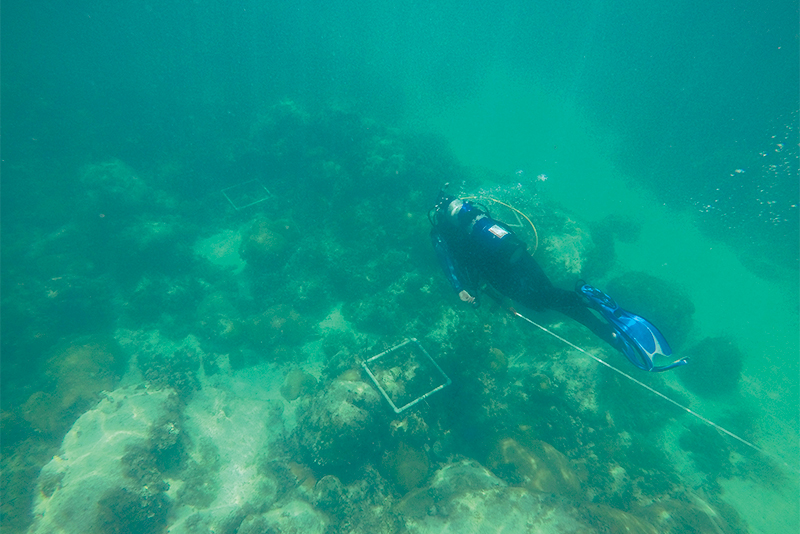
{"id":20632,"date":"2019-05-16T15:58:02","date_gmt":"2019-05-16T19:58:02","guid":{"rendered":"https:\/\/clemson.world\/?p=20632"},"modified":"2019-05-16T15:58:02","modified_gmt":"2019-05-16T19:58:02","slug":"something-fishy","status":"publish","type":"post","link":"https:\/\/clemson.world\/archive\/something-fishy\/","title":{"rendered":"Something Very Fishy"},"content":{"rendered":"<p><div id='fullscreen_slider_1'  class='avia-fullscreen-slider main_color   avia-builder-el-0  el_before_av_one_full  avia-builder-el-first   container_wrap sidebar_right' style=' '  ><a href='#next-section' title='' class='scroll-down-link av-control-default' aria-hidden='true' data-av_icon='\ue877' data-av_iconfont='entypo-fontello'><\/a><div   data-size='extra_large'  data-lightbox_size='large'  data-animation='slide'  data-conditional_play=''  data-ids='20636'  data-video_counter='0'  data-autoplay='true'  data-bg_slider='true'  data-slide_height='100'  data-handle='av_fullscreen'  data-interval='3'  data-class=' '  data-el_id=''  data-css_id='fullscreen_slider_1'  data-scroll_down='aviaTBscroll_down'  data-control_layout='av-control-default'  data-custom_markup=''  data-perma_caption=''  data-autoplay_stopper=''  data-image_attachment='scroll'  data-min_height='0px'  data-stretch=''  data-default-height='100'  class='avia-slideshow avia-slideshow-1 av-slider-scroll-down-active av-control-default av-default-height-applied avia-slideshow-extra_large av_fullscreen   avia-slide-slider '  itemprop=\"image\" itemscope=\"itemscope\" itemtype=\"https:\/\/schema.org\/ImageObject\" ><ul class='avia-slideshow-inner ' style='padding-bottom: 66.6666666667%;' ><li style='background-position:center center;' data-img-url='https:\/\/clemson.world\/archive\/wp-content\/uploads\/sites\/3\/2019\/04\/Something-Very-Fishy_156-1500x1000.jpg' class=' av-single-slide slide-1 ' ><div data-rel='slideshow-1' class='avia-slide-wrap '   ><div class = \"caption_fullwidth av-slideshow-caption caption_bottom\"><div class = \"container caption_container\"><div class = \"slideshow_caption\"><div class = \"slideshow_inner_caption\"><div class = \"slideshow_align_caption\"><h2  style='font-size:78px; color:#ffffff; ' class='avia-caption-title  '  itemprop=\"name\" >Something Very Fishy<\/h2><div class='avia-caption-content  av_inherit_color'  itemprop=\"description\"   style='font-size:22px; '><p>Science and art outreach production ignites awareness of marine conservation<\/p>\n<\/div><\/div><\/div><\/div><\/div><\/div><div class='av-section-color-overlay' style='opacity: 0.2; background-color: #000000; '><\/div><\/div><\/li><\/ul><\/div><\/div><div id='after_full_slider_1'  class='main_color av_default_container_wrap container_wrap sidebar_right' style=' '  ><div class='container' ><div class='template-page content  av-content-small alpha units'><div class='post-entry post-entry-type-page post-entry-20632'><div class='entry-content-wrapper clearfix'><br \/>\n<div class=\"flex_column av_one_full  flex_column_div av-zero-column-padding first  avia-builder-el-1  el_after_av_fullscreen  el_before_av_one_fifth  avia-builder-el-first  \" style='border-radius:0px; '><section class=\"av_textblock_section \"  itemscope=\"itemscope\" itemtype=\"https:\/\/schema.org\/BlogPosting\" itemprop=\"blogPost\" ><div class='avia_textblock  av_inherit_color '  style='font-size:13px; color:#000000; '  itemprop=\"text\" ><p style=\"text-align: center\">By <strong>Hannah Halusker<\/strong><\/p>\n<\/div><\/section><\/div><br \/>\n<div class=\"flex_column av_one_fifth  flex_column_div av-zero-column-padding first  avia-builder-el-3  el_after_av_one_full  el_before_av_three_fifth  column-top-margin\" style='border-radius:0px; '><\/div><br \/>\n<div class=\"flex_column av_three_fifth  flex_column_div av-zero-column-padding   avia-builder-el-4  el_after_av_one_fifth  el_before_av_one_fifth  column-top-margin\" style='border-radius:0px; '><div   class='hr hr-default   avia-builder-el-5  avia-builder-el-no-sibling '><span class='hr-inner ' ><span class='hr-inner-style'><\/span><\/span><\/div><\/div><br \/>\n<div class=\"flex_column av_one_fifth  flex_column_div av-zero-column-padding   avia-builder-el-6  el_after_av_three_fifth  el_before_av_one_full  column-top-margin\" style='border-radius:0px; '><\/div><br \/>\n<div class=\"flex_column av_one_full  flex_column_div av-zero-column-padding first  avia-builder-el-7  el_after_av_one_fifth  el_before_av_fullscreen  avia-builder-el-last  column-top-margin\" style='border-radius:0px; '><section class=\"av_textblock_section \"  itemscope=\"itemscope\" itemtype=\"https:\/\/schema.org\/BlogPosting\" itemprop=\"blogPost\" ><div class='avia_textblock  av_inherit_color '  style='font-size:19px; color:#000000; '  itemprop=\"text\" ><p>ON WEEKDAY MORNINGS IN FEBRUARY 2019,\u00a0\u00a0<span style=\"font-style: normal !msorm\"><em>Something Very Fishy<\/em><\/span> occurred at the Pickens Performing Arts Center.<br \/>\nThe stage featured an underwater scene of the ocean floor, complete with a colorful display of corals and deep-sea rocks, where two puppets \u2014 Octavia the Octopus and Boss the Great White Shark \u2014 were being operated by human actors. A blue glow emanated into the audience, highlighting an auditorium full of awestruck elementary schoolers and the teachers and chaperones who brought them.<br \/>\nThen the lighting transitioned. The underwater scene turned yellow, and Octavia and Boss began to despair. A reckless fisherman had left barrels of oil and gas near his boat, and an overnight storm had knocked them into the ocean. Earlier, the same fisherman forgot to clean up his supplies, and a young seal in the reef, Sunny, had mistaken a fishing hook for a treat and was rushed to a local marine hospital. A heat wave engulfed Boss and Octavia, and they began to scramble, searching for colder, more comfortable water amid their destructed habitat that was now littered with trash.<br \/>\n\u201cPeople are the ones who got us into this mess in the first place. How will they ever know that we need help to get out of it?\u201d Octavia cried.<br \/>\nA few scenes later, Sandy, a marine biologist, entered center stage. She sat down with the fisherman, and after a bit of scolding, she broke into song to educate him on the small changes he could make to be more protective of the environment.<br \/>\n\u201cReduce is the first step \u2014 remember to use less. Say no to plastic bags when you\u2019re in the store. Instead, use fabric ones; they fit so much more!\u201d Sandy sings. \u201cReuse is the second step \u2014 use the same thing again. Separate your trash, recycle it \u2014 turn it into something new.\u201d<br \/>\nCreated by a team of scientists, artists, and students from Educational Entertainment LLC and Clemson University, the show was part of an innovative outreach program that exemplifies the best of what can happen when science and art collide.<\/p>\n<\/div><\/section><\/div><br \/>\n<\/div><\/div><\/div><!-- close content main div --><\/div><\/div><div id='fullscreen_slider_2'  class='avia-fullscreen-slider main_color   avia-builder-el-9  el_after_av_one_full  el_before_av_one_full   slider-not-first container_wrap sidebar_right' style=' '  ><a href='#next-section' title='' class='scroll-down-link av-control-default' aria-hidden='true' data-av_icon='\ue877' data-av_iconfont='entypo-fontello'><\/a><div   data-size='extra_large'  data-lightbox_size='large'  data-animation='slide'  data-conditional_play=''  data-ids='20638'  data-video_counter='0'  data-autoplay='false'  data-bg_slider='true'  data-slide_height='100'  data-handle='av_fullscreen'  data-interval='5'  data-class=' '  data-el_id=''  data-css_id='fullscreen_slider_2'  data-scroll_down='aviaTBscroll_down'  data-control_layout='av-control-default'  data-custom_markup=''  data-perma_caption=''  data-autoplay_stopper=''  data-image_attachment='scroll'  data-min_height='0px'  data-stretch=''  data-default-height='100'  class='avia-slideshow avia-slideshow-2 av-slider-scroll-down-active av-control-default av-default-height-applied avia-slideshow-extra_large av_fullscreen   avia-slide-slider '  itemprop=\"image\" itemscope=\"itemscope\" itemtype=\"https:\/\/schema.org\/ImageObject\" ><ul class='avia-slideshow-inner ' style='padding-bottom: 66.6666666667%;' ><li style='background-position:center center;' data-img-url='https:\/\/clemson.world\/archive\/wp-content\/uploads\/sites\/3\/2019\/04\/Something-Very-Fishy_168-1500x1000.jpg' class=' av-single-slide slide-1 ' ><div data-rel='slideshow-2' class='avia-slide-wrap '   ><\/div><\/li><\/ul><\/div><\/div><div id='after_full_slider_2'  class='main_color av_default_container_wrap container_wrap sidebar_right' style=' '  ><div class='container' ><div class='template-page content  av-content-small alpha units'><div class='post-entry post-entry-type-page post-entry-20632'><div class='entry-content-wrapper clearfix'><br \/>\n<div class=\"flex_column av_one_full  flex_column_div av-zero-column-padding first  avia-builder-el-10  el_after_av_fullscreen  el_before_av_hr  avia-builder-el-first  \" style='border-radius:0px; '><section class=\"av_textblock_section \"  itemscope=\"itemscope\" itemtype=\"https:\/\/schema.org\/BlogPosting\" itemprop=\"blogPost\" ><div class='avia_textblock  av_inherit_color '  style='font-size:19px; color:#000000; '  itemprop=\"text\" ><p><strong>THE RAINFORESTS OF THE OCEAN<\/strong><br \/>\nIF THE EARTH WERE A BODY SYSTEM, the ocean would be our most vital organ. The deep, salty sea occupies 70 percent of the planet\u2019s surface and is the leading regulator of our climate, weather patterns, and the oxygen that we breathe. Daily temperatures and wind speeds are the result of constantly rotating ocean currents, and rainfall is the result of the ocean in evaporation.<br \/>\nBeneath the surface, the ocean is home to hundreds of thousands of living species \u2014 and potentially millions more that haven\u2019t been discovered yet, given that only 5 percent of the ocean has been explored.<br \/>\nIn their assortment of stunning colors and shapes, corals are one of the most biologically important species residing in the ocean, their reefs serving as the primary habitat for nearly a quarter of marine life. With an economic impact\u00a0estimated at $30 billion annually, corals are also important to humans across the globe who turn to reefs for food, fisheries and tourism.<br \/>\nBut humans are also impacting coral reefs in devastating ways. Fishing practices, such as overfishing, are causing irreparable damage to these marine invertebrates. Industrial activities \u2014 from the burning of coal and oil, to the clearing of land for new developments, and the discarding of toxic waste into waterways \u2014 are contributing to Earth\u2019s changing climate, which is directly acidifying the ocean environment.<br \/>\nAs temperatures rise, corals eject their zooxanthellae, the algae they rely on for nutrients. Without zooxanthellae, corals lose their vibrant colors and eventually die off in a process known as coral bleaching. In 2016 \u2014 one year alone \u2014 an unprecedented bleaching event killed half of the coral belonging to the famous Great Barrier Reef of Australia. The event was part of a broader decline in reef populations that has been occurring over the past three decades.<br \/>\nAt a climactic point in the future of Earth\u2019s well-being, it will take more than a coalition of concerned scientists to curb the effects of our warming planet. But that coalition is best equipped to share precisely why humans should care, and need to care, about where Earth is headed.<\/p>\n<\/div><\/section><\/div><br \/>\n<div  style='height:50px' class='hr hr-invisible   avia-builder-el-12  el_after_av_one_full  el_before_av_image '><span class='hr-inner ' ><span class='hr-inner-style'><\/span><\/span><\/div><br \/>\n<div  class='avia-image-container  av-styling-    avia-builder-el-13  el_after_av_hr  el_before_av_hr  avia-align-center '  itemprop=\"image\" itemscope=\"itemscope\" itemtype=\"https:\/\/schema.org\/ImageObject\"  ><div class='avia-image-container-inner'><div class='avia-image-overlay-wrap'><img class='avia_image' src='https:\/\/clemson.world\/archive\/wp-content\/uploads\/sites\/3\/2018\/01\/Coral_Underwater-Small.jpg' alt='Clemson researcher inspecting a coral site' title='Clemson Researcher Diving' height=\"534\" width=\"800\"  itemprop=\"thumbnailUrl\"  \/><\/div><\/div><\/div><br \/>\n<div  style='height:50px' class='hr hr-invisible   avia-builder-el-14  el_after_av_image  el_before_av_one_full '><span class='hr-inner ' ><span class='hr-inner-style'><\/span><\/span><\/div><br \/>\n<div class=\"flex_column av_one_full  flex_column_div av-zero-column-padding first  avia-builder-el-15  el_after_av_hr  el_before_av_fullscreen  avia-builder-el-last  \" style='border-radius:0px; '><section class=\"av_textblock_section \"  itemscope=\"itemscope\" itemtype=\"https:\/\/schema.org\/BlogPosting\" itemprop=\"blogPost\" ><div class='avia_textblock  av_inherit_color '  style='font-size:19px; color:#000000; '  itemprop=\"text\" ><p><strong>CHASING CORAL<\/strong><br \/>\nMichael Childress, an associate professor of biological sciences at Clemson University, is more than familiar with the corals and marine life that reside undersea in the Florida Keys.<br \/>\nFor the past eight years, Childress and graduate students Kylie Smith and Kara Noonan have been studying how the changing ocean environments \u2014 including warming temperatures, hurricane disturbance, and emergent diseases \u2014 impact coral health and reef fish behaviors. Each summer, they set out to sea in the waters of the Florida Keys, diving deep below the surface to transplant corals, test water quality and study how habitat loss is otherwise affecting reef animal behaviors.<br \/>\nFor members of the Childress Lab, their work is in part driven by a desire to share the importance of marine ecosystems with the next generation of \u201cstewards of the earth.\u201d Childress has 25 years of experience in mentoring undergraduate and graduate students in the methods of experimental field ecology, and Smith and Noonan have taken the baton, directing a team of undergraduate students in the Keys in studies that support their graduate research.<br \/>\nTheir engagement stretches from the Atlantic coast back to Clemson, where they actively work to get the local community invested in matters affecting the ocean. When Hurricane Irma decimated homes and businesses along the Florida coast in August 2017, the Childress Lab gathered donations of basic necessities and delivered them to those Floridians in need. The following spring, the team hosted multiple public showings of the Netflix documentary <span style=\"font-style: normal !msorm\"><em>Chasing Coral<\/em><\/span>, which illustrates the plight of coral decline across the world. Yet, taking their message to an audience of children was met with looming questions of \u201cHow?\u201d and \u201cIn what way?\u201d<br \/>\n\u201cWorking with schools is something we\u2019ve always wanted to do, but we\u2019ve never had the right resources to do it,\u201d Smith said. \u201cIf you get to kids early enough, you can educate them about how important these habitats are and help them understand that they can make a difference no matter how far they are from the ocean.\u201d<br \/>\nIt was at a <span style=\"font-style: normal !msorm\"><em>Chasing Coral<\/em><\/span> showing, held at the Clemson University Osher Lifelong Learning Institute in Spring 2018, where Smith met a creative artist from the \u201cland down under,\u201d who had the know-how to take the team\u2019s outreach to the next level.<\/p>\n<\/div><\/section><\/div><br \/>\n<\/div><\/div><\/div><!-- close content main div --><\/div><\/div><div id='fullscreen_slider_3'  class='avia-fullscreen-slider main_color   avia-builder-el-17  el_after_av_one_full  el_before_av_one_full   slider-not-first container_wrap sidebar_right' style=' '  ><a href='#next-section' title='' class='scroll-down-link av-control-default' aria-hidden='true' data-av_icon='\ue877' data-av_iconfont='entypo-fontello'><\/a><div   data-size='large'  data-lightbox_size='large'  data-animation='slide'  data-conditional_play=''  data-ids='20640'  data-video_counter='0'  data-autoplay='false'  data-bg_slider='true'  data-slide_height='100'  data-handle='av_fullscreen'  data-interval='5'  data-class=' '  data-el_id=''  data-css_id='fullscreen_slider_3'  data-scroll_down='aviaTBscroll_down'  data-control_layout='av-control-default'  data-custom_markup=''  data-perma_caption=''  data-autoplay_stopper=''  data-image_attachment='scroll'  data-min_height='0px'  data-stretch=''  class='avia-slideshow avia-slideshow-3 av-slider-scroll-down-active av-control-default av-default-height-applied avia-slideshow-large av_fullscreen   avia-slide-slider '  itemprop=\"image\" itemscope=\"itemscope\" itemtype=\"https:\/\/schema.org\/ImageObject\" ><ul class='avia-slideshow-inner ' style='padding-bottom: 66.6990291262%;' ><li style='background-position:center center;' data-img-url='https:\/\/clemson.world\/archive\/wp-content\/uploads\/sites\/3\/2019\/04\/Something-Very-Fishy_189-1030x687.jpg' class=' av-single-slide slide-1 ' ><div data-rel='slideshow-3' class='avia-slide-wrap '   ><\/div><\/li><\/ul><\/div><\/div><div id='after_full_slider_3'  class='main_color av_default_container_wrap container_wrap sidebar_right' style=' '  ><div class='container' ><div class='template-page content  av-content-small alpha units'><div class='post-entry post-entry-type-page post-entry-20632'><div class='entry-content-wrapper clearfix'><br \/>\n<div class=\"flex_column av_one_full  flex_column_div av-zero-column-padding first  avia-builder-el-18  el_after_av_fullscreen  el_before_av_hr  avia-builder-el-first  \" style='border-radius:0px; '><section class=\"av_textblock_section \"  itemscope=\"itemscope\" itemtype=\"https:\/\/schema.org\/BlogPosting\" itemprop=\"blogPost\" ><div class='avia_textblock  av_inherit_color '  style='font-size:19px; color:#000000; '  itemprop=\"text\" ><p><strong>AUSTRALIAN ROOTS<\/strong><br \/>\nKathy Prosser left an award-winning songwriting career and a booming theater production business in Australia when she relocated to the United States in 2016 with her family. Prosser\u2019s husband had won the Diversity Visa Lottery administered through the U.S. Department of State, and her family was eager to immigrate to the U.S., where Prosser could grow her business, Educational Entertainment LLC, and impact even more children through musical theater.<br \/>\nThe couple got started working at a park in nearby Seneca, South Carolina, before Prosser returned to her roots in songwriting and acting. In her former position, she had created and debuted a children\u2019s musical about marine conversation titled <span style=\"font-style: normal !msorm\"><em>Something Very Fishy<\/em><\/span>, which Prosser successfully toured around Australia.<br \/>\n\u201cAfter I toured it, when I went around the same areas the next year, I saw real results from this particular program, more so than from any of the other shows I\u2019d done,\u201d Prosser said. \u201cOne childcare center had started a recycling program in their center. Once the parents found out, they became involved, and then the entire town started a recycling program, which all stemmed from the <span style=\"font-style: normal !msorm\"><em>Something Very Fishy<\/em><\/span> show that I did the year before. I kept hearing similar stories everywhere I went, so I knew that the play was having an impact, it was creating change, and I knew there was something particularly special about it.\u201d<br \/>\nA chance invitation from one of her piano students led Prosser to the OLLI Center the day of Smith\u2019s <span style=\"font-style: normal !msorm\"><em>Chasing Coral<\/em><\/span> showing.<br \/>\n\u201cAt the last minute, my student couldn\u2019t go, but I went anyway and took my husband and two of my children,\u201d Prosser said. \u201cI had been thinking about doing \u2018Something Very Fishy\u2019 for an American audience, but it was originally written around the Australian marine environment being the Great Barrier Reef, and I was wondering how I could rewrite it to be more relevant here.\u201d<br \/>\nDuring a Q&amp;A following the showing, an audience member asked the Childress Lab if it was doing outreach with local schools, and Prosser saw her opportunity:<br \/>\n\u201cAfterwards, I approached Michael about it, and I told him, \u2018I have this project \u2014\u00a0this play that has done very well in Australia. I have the means, but I need some kind of support to get into American schools because nobody knows who I am over here. When we joined forces, we could both achieve what we needed.\u201d<\/p>\n<\/div><\/section><\/div><br \/>\n<div  style='height:50px' class='hr hr-invisible   avia-builder-el-20  el_after_av_one_full  el_before_av_image '><span class='hr-inner ' ><span class='hr-inner-style'><\/span><\/span><\/div><br \/>\n<div  class='avia-image-container  av-styling-    avia-builder-el-21  el_after_av_hr  el_before_av_one_full  avia-align-center '  itemprop=\"image\" itemscope=\"itemscope\" itemtype=\"https:\/\/schema.org\/ImageObject\"  ><div class='avia-image-container-inner'><div class='avia-image-overlay-wrap'><img class='avia_image' src='https:\/\/clemson.world\/archive\/wp-content\/uploads\/sites\/3\/2019\/04\/Something-Very-Fishy_166-1030x687.jpg' alt='' title='Something Very Fishy_166' height=\"687\" width=\"1030\"  itemprop=\"thumbnailUrl\"  \/><\/div><\/div><\/div><br \/>\n<div class=\"flex_column av_one_full  flex_column_div av-zero-column-padding first  avia-builder-el-22  el_after_av_image  el_before_av_fullscreen  avia-builder-el-last  \" style='border-radius:0px; '><section class=\"av_textblock_section \"  itemscope=\"itemscope\" itemtype=\"https:\/\/schema.org\/BlogPosting\" itemprop=\"blogPost\" ><div class='avia_textblock  av_inherit_color '  style='font-size:19px; color:#000000; '  itemprop=\"text\" ><p><strong>A CLASS ACT<\/strong><br \/>\nIn the following nine months, Prosser\u2019s impromptu idea grew into a fully immersive arts and sciences outreach program, complete with hands-on marine exhibits, demonstrations,\u00a0grade-specific experiments, class resources for teachers, and a variety of other activities in support of the theme of marine conservation.<br \/>\nThe play itself follows Sandy Carson, \u201can enthusiastic but somewhat na\u00efve science major,\u201d in her quest to study the issues facing our oceans. In contrast, the antagonist \u2013 a fisherman named Stu Pidder \u2013 is exploiting the ocean\u2019s resources, destructively fishing and creating more problems for the environment. Through a cast of marine characters, the story highlights how what we do above the surface impacts life below.<br \/>\n\u201cTo some extent, both characters grow toward one another,\u201d Prosser said. \u201cSandy becomes more realistic about what\u2019s going on in the world, and Mr. Pidder becomes more aware of what harm he\u2019s doing to the point that they can work together to help the oceans. The takeaway message is that just one little drop in the ocean from every little fish in the sea can change the turning tide.\u201d<br \/>\nWith the help of more than 30 undergraduate Creative Inquiry students and faculty-staff volunteers, <span style=\"font-style: normal !msorm\"><em>Something Very Fishy<\/em><\/span> treated more than 2,700 area K-5 students to a theater production \u2014 and then some. The students took over the Pickens Performing Arts Center, embarking on an imaginary trip to the coral reefs of the Florida Keys and the \u201cAquarius Undersea Laboratory,\u201d where they learned about scuba diving, underwater photography, and growing and transplanting corals. The exhibit also included a tour backstage to meet the performers and artists, and a visit to the \u201cLittle Fishingtown\u201d marine animal hospital, where students saw and touched live marine animals and stepped into a marine-themed photobooth.<br \/>\nAll the while, Clemson students acted as docents, each representing a different career in marine science or art \u2014 a marine biologist, stage manager or photographer, for example \u2014 in order to challenge the one-dimensional view that children often have of science being contained to a laboratory conducted by a man wearing a white coat.<br \/>\n\u201cWe are trying to change the way in which students might think about science as being this unattainable, very strange career that isn\u2019t an option for them,\u201d Childress said. \u201cWe, as a society, don\u2019t often portray scientists for the really unique people that they are, and that\u2019s why this program is unique. It breaks down the boundaries between what really is science and how you can approach and think about science through art or science through theater.\u201d<br \/>\n\u201cYou can do so much with a science degree,\u201d Smith added. \u201cSure, you can be a doctor, but you can also be an artist or a park ranger or a dive instructor. That\u2019s what I\u2019m most excited about from this production, to be able to have an 8-year-old excited about the possibilities.\u201d<br \/>\nAt the end of the day, the children left the performance with a memorable adventure under the sea, the inspiration to change their habits and perhaps their answer to the age-old question of, \u201cWhat would you like to be when you grow up?\u201d<\/p>\n<\/div><\/section><\/div><br \/>\n<\/div><\/div><\/div><!-- close content main div --><\/div><\/div><div id='fullscreen_slider_4'  class='avia-fullscreen-slider main_color   avia-builder-el-24  el_after_av_one_full  el_before_av_one_full   slider-not-first container_wrap sidebar_right' style=' '  ><a href='#next-section' title='' class='scroll-down-link av-control-default' aria-hidden='true' data-av_icon='\ue877' data-av_iconfont='entypo-fontello'><\/a><div   data-size='extra_large'  data-lightbox_size='large'  data-animation='slide'  data-conditional_play=''  data-ids='20642'  data-video_counter='0'  data-autoplay='false'  data-bg_slider='true'  data-slide_height='100'  data-handle='av_fullscreen'  data-interval='5'  data-class=' '  data-el_id=''  data-css_id='fullscreen_slider_4'  data-scroll_down='aviaTBscroll_down'  data-control_layout='av-control-default'  data-custom_markup=''  data-perma_caption=''  data-autoplay_stopper=''  data-image_attachment='scroll'  data-min_height='0px'  data-stretch=''  data-default-height='100'  class='avia-slideshow avia-slideshow-4 av-slider-scroll-down-active av-control-default av-default-height-applied avia-slideshow-extra_large av_fullscreen   avia-slide-slider '  itemprop=\"image\" itemscope=\"itemscope\" itemtype=\"https:\/\/schema.org\/ImageObject\" ><ul class='avia-slideshow-inner ' style='padding-bottom: 77.2635814889%;' ><li style='background-position:center center;' data-img-url='https:\/\/clemson.world\/archive\/wp-content\/uploads\/sites\/3\/2019\/04\/SVF-Children-Drawings-Set-1-15.jpg' class=' av-single-slide slide-1 ' ><div data-rel='slideshow-4' class='avia-slide-wrap '   ><\/div><\/li><\/ul><\/div><\/div><div id='after_full_slider_4'  class='main_color av_default_container_wrap container_wrap sidebar_right' style=' '  ><div class='container' ><div class='template-page content  av-content-small alpha units'><div class='post-entry post-entry-type-page post-entry-20632'><div class='entry-content-wrapper clearfix'><br \/>\n<div class=\"flex_column av_one_full  flex_column_div av-zero-column-padding first  avia-builder-el-25  el_after_av_fullscreen  el_before_av_one_full  avia-builder-el-first  \" style='border-radius:0px; '><section class=\"av_textblock_section \"  itemscope=\"itemscope\" itemtype=\"https:\/\/schema.org\/BlogPosting\" itemprop=\"blogPost\" ><div class='avia_textblock  av_inherit_color '  style='font-size:19px; color:#000000; '  itemprop=\"text\" ><p><strong>THE FUTURE IN OUR HANDS<\/strong><br \/>\nSettled in the foothills of the Upstate with the Blue Ridge in the background, Clemson University is approximately 250 miles away from the South Carolina coast. Many of the town\u2019s residents make that four-hour commute to spend summers with their toes in the ocean. Yet in the off-season, it\u2019s easy to forget the feeling of sun-kissed skin and the tide rolling in.<br \/>\nFor many who attended, <span style=\"font-style: normal !msorm\"><em>Something Very Fishy<\/em><\/span> served as a reminder that our oceans aren\u2019t dispensable, and to the children, that they can change the course of climate change for the better.<br \/>\n\u201cI had a parent come up to me and say, \u2018I wanted to be a marine biologist when I grew up, but I never did it. Now, I\u2019m so inspired. I want to do something right now \u2014 seriously, right now. Today,\u2019\u201d Prosser said. \u201cThat was something I kept hearing from students, parents and teachers, alike: \u2018We really want to do something; we didn\u2019t understand; we knew it was a problem, but we didn\u2019t know we were contributing to it.\u2019\u201d<br \/>\nAnother parent told the story of her son, who had repeatedly asked her to use reusable shopping bags at the grocery store, yet she didn\u2019t understand why such a simple change was necessary until <span style=\"font-style: normal !msorm\"><em>Something Very Fishy<\/em><\/span> depicted the problem of plastic pollution in the ocean.<br \/>\n\u201cShe told him after the show: \u2018As soon as we get home, I\u2019m changing that, and I\u2019m never using a plastic bag again.\u2019 And she thanked me because she didn\u2019t realize what she was doing was hurting her son\u2019s future and the state of the ocean,\u201d Childress said.<br \/>\n\u201cThe plastics in the ocean seemed to particularly affect the children,\u201d Prosser added. \u201cWhen we asked them what they had learned from the show, they let us all know that there are issues with the environment and that there were things they could do to help, specifically to reduce, reuse and recycle.\u201d<br \/>\nAnd just as the <span style=\"font-style: normal !msorm\"><em>Something Very Fishy<\/em><\/span> team hoped for, the children were hyperaware of the careers represented by the Clemson student docents who guided the kids throughout the center.<br \/>\n\u201cEvery day, I asked what the children wanted to be when they grew up, and they answered in a pattern that kind of changed from day to day,\u201d Prosser said. \u201cThe first day, it was a scientist. The second day, many of them wanted to be veterinarians. Another day, they wanted to be actors or coral biologists \u2014 the point being that many of them wanted to go into careers they had seen highlighted in the program, which is exactly the result we were hoping to achieve.\u201d.<br \/>\nWhile Prosser found success with the original <span style=\"font-style: normal !msorm\"><em>Something Very Fishy<\/em><\/span> production in Australia, the U.S. version of the play stands as proof that when science is made to be fun and creative, its message can resonate across audiences.<br \/>\nSurveys given to the children before and after the 2019 performance are now being analyzed to gauge the impact of the exhibit on how children view the ocean and themselves. Moving forward, the team plans to expand the reach of <span style=\"font-style: normal !msorm\"><em>Something Very Fishy<\/em><\/span> by including hands-on activities in the classrooms of participating schools. For now, both the Childress Lab and Prosser give thanks to one another for making the show possible.<br \/>\n\u201cIt was great to see that people at every level \u2014\u00a0parents, children, teachers, volunteers, university students \u2014 are concerned about the environment, and that they do want to help,\u201d Prosser said. \u201cAt the end of the day, that\u2019s what we need if we want to sustain the Earth.\u201d<\/p>\n<\/div><\/section><\/div><br \/>\n<div class=\"flex_column av_one_full  flex_column_div av-zero-column-padding first  avia-builder-el-27  el_after_av_one_full  el_before_av_hr  column-top-margin\" style='border-radius:0px; '><div  class='avia-video avia-video-16-9   av-lazyload-immediate  av-lazyload-video-embed  '   itemprop=\"video\" itemtype=\"https:\/\/schema.org\/VideoObject\"  data-original_url='https:\/\/vimeo.com\/391963219' ><script type='text\/html' class='av-video-tmpl'><div class='avia-iframe-wrap'><iframe loading=\"lazy\" title=\"&amp;quot;Something Very Fishy&amp;quot; | 2020\" src=\"https:\/\/player.vimeo.com\/video\/391963219?h=5cf02d7678&amp;dnt=1&amp;app_id=122963\" width=\"1500\" height=\"638\" frameborder=\"0\" allow=\"autoplay; fullscreen; picture-in-picture\" allowfullscreen><\/iframe><\/div><\/script><div class='av-click-to-play-overlay'><div class=\"avia_playpause_icon\"><\/div><\/div><\/div><\/div><br \/>\n<div  style='height:50px' class='hr hr-invisible   avia-builder-el-29  el_after_av_one_full  el_before_av_one_fifth '><span class='hr-inner ' ><span class='hr-inner-style'><\/span><\/span><\/div><br \/>\n<div class=\"flex_column av_one_fifth  flex_column_div av-zero-column-padding first  avia-builder-el-30  el_after_av_hr  el_before_av_three_fifth  \" style='border-radius:0px; '><\/div><br \/>\n<div class=\"flex_column av_three_fifth  flex_column_div av-zero-column-padding   avia-builder-el-31  el_after_av_one_fifth  el_before_av_one_fifth  \" style='border-radius:0px; '><div   class='hr hr-big   avia-builder-el-32  avia-builder-el-no-sibling '><span class='hr-inner ' ><span class='hr-inner-style'><\/span><\/span><\/div><\/div><br \/>\n<div class=\"flex_column av_one_fifth  flex_column_div av-zero-column-padding   avia-builder-el-33  el_after_av_three_fifth  el_before_av_one_fifth  \" style='border-radius:0px; '><\/div><br \/>\n<div class=\"flex_column av_one_fifth  flex_column_div av-zero-column-padding first  avia-builder-el-34  el_after_av_one_fifth  el_before_av_three_fifth  column-top-margin\" style='border-radius:0px; '><\/div><br \/>\n<div class=\"flex_column av_three_fifth  flex_column_div av-zero-column-padding   avia-builder-el-35  el_after_av_one_fifth  el_before_av_one_fifth  column-top-margin\" style='border-radius:0px; '><section class=\"av_textblock_section \"  itemscope=\"itemscope\" itemtype=\"https:\/\/schema.org\/BlogPosting\" itemprop=\"blogPost\" ><div class='avia_textblock  av_inherit_color '  style='font-size:13px; color:#000000; '  itemprop=\"text\" ><p><b>Hannah Halusker\u00a0<\/b>is a writer for the College of Science at Clemson University.<\/p>\n<\/div><\/section><\/div><br \/>\n<div class=\"flex_column av_one_fifth  flex_column_div av-zero-column-padding   avia-builder-el-37  el_after_av_three_fifth  el_before_av_hr  column-top-margin\" style='border-radius:0px; '><\/div><br \/>\n<div  style='height:50px' class='hr hr-invisible   avia-builder-el-38  el_after_av_one_fifth  el_before_av_comments_list '><span class='hr-inner ' ><span class='hr-inner-style'><\/span><\/span><\/div><br \/>\n<div  class='av-buildercomment   '><\/div><\/p>\n","protected":false},"excerpt":{"rendered":"<p>Science and art outreach production ignites awareness of marine conservation<\/p>\n","protected":false},"author":4,"featured_media":20636,"comment_status":"open","ping_status":"open","sticky":false,"template":"","format":"standard","meta":{"_jetpack_memberships_contains_paid_content":false,"footnotes":""},"categories":[18],"tags":[777,815,825,1866,3238],"coauthors":[],"class_list":["post-20632","post","type-post","status-publish","format-standard","has-post-thumbnail","hentry","category-web-exclusive","tag-college-of-science","tag-conservation","tag-coral-reef","tag-marine-biology","tag-web-exclusive"],"jetpack_featured_media_url":"https:\/\/clemson.world\/archive\/wp-content\/uploads\/sites\/3\/2019\/04\/Something-Very-Fishy_156.jpg","jetpack_sharing_enabled":true,"_links":{"self":[{"href":"https:\/\/clemson.world\/archive\/wp-json\/wp\/v2\/posts\/20632","targetHints":{"allow":["GET"]}}],"collection":[{"href":"https:\/\/clemson.world\/archive\/wp-json\/wp\/v2\/posts"}],"about":[{"href":"https:\/\/clemson.world\/archive\/wp-json\/wp\/v2\/types\/post"}],"author":[{"embeddable":true,"href":"https:\/\/clemson.world\/archive\/wp-json\/wp\/v2\/users\/4"}],"replies":[{"embeddable":true,"href":"https:\/\/clemson.world\/archive\/wp-json\/wp\/v2\/comments?post=20632"}],"version-history":[{"count":0,"href":"https:\/\/clemson.world\/archive\/wp-json\/wp\/v2\/posts\/20632\/revisions"}],"wp:featuredmedia":[{"embeddable":true,"href":"https:\/\/clemson.world\/archive\/wp-json\/wp\/v2\/media\/20636"}],"wp:attachment":[{"href":"https:\/\/clemson.world\/archive\/wp-json\/wp\/v2\/media?parent=20632"}],"wp:term":[{"taxonomy":"category","embeddable":true,"href":"https:\/\/clemson.world\/archive\/wp-json\/wp\/v2\/categories?post=20632"},{"taxonomy":"post_tag","embeddable":true,"href":"https:\/\/clemson.world\/archive\/wp-json\/wp\/v2\/tags?post=20632"},{"taxonomy":"author","embeddable":true,"href":"https:\/\/clemson.world\/archive\/wp-json\/wp\/v2\/coauthors?post=20632"}],"curies":[{"name":"wp","href":"https:\/\/api.w.org\/{rel}","templated":true}]}}