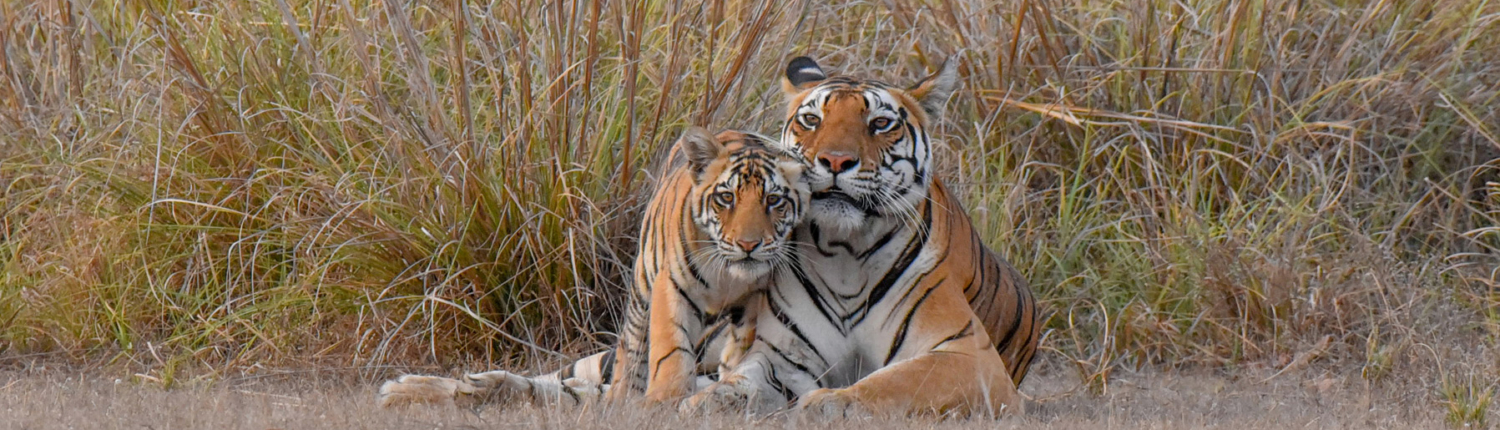
{"id":21141,"date":"2019-06-01T15:26:07","date_gmt":"2019-06-01T19:26:07","guid":{"rendered":"https:\/\/clemson.world\/?p=21141"},"modified":"2019-06-01T15:26:07","modified_gmt":"2019-06-01T19:26:07","slug":"saving-tigers","status":"publish","type":"post","link":"https:\/\/clemson.world\/archive\/saving-tigers\/","title":{"rendered":"Saving Tigers"},"content":{"rendered":"<p><div id='full_slider_1'  class='avia-fullwidth-slider main_color avia-shadow   avia-builder-el-0  el_before_av_textblock  avia-builder-el-first   container_wrap sidebar_right' style=' '  ><div   data-size='featured'  data-lightbox_size='large'  data-animation='slide'  data-conditional_play=''  data-ids='21142'  data-video_counter='0'  data-autoplay='false'  data-bg_slider='false'  data-slide_height=''  data-handle='av_slideshow_full'  data-interval='5'  data-class=' '  data-el_id=''  data-css_id=''  data-scroll_down=''  data-control_layout='av-control-default'  data-custom_markup=''  data-perma_caption=''  data-autoplay_stopper=''  data-image_attachment=''  data-min_height='0px'  data-src=''  data-position='top left'  data-repeat='no-repeat'  data-attach='scroll'  data-stretch=''  data-default-height='28.6666666667'  class='avia-slideshow avia-slideshow-1  av-control-default av-default-height-applied avia-slideshow-featured av_slideshow_full   avia-slide-slider '  itemprop=\"image\" itemscope=\"itemscope\" itemtype=\"https:\/\/schema.org\/ImageObject\" ><ul class='avia-slideshow-inner ' style='padding-bottom: 28.6666666667%;' ><li  class=' av-single-slide slide-1 ' ><div data-rel='slideshow-1' class='avia-slide-wrap '   ><div class = \"caption_fullwidth av-slideshow-caption caption_center\"><div class = \"container caption_container\"><div class = \"slideshow_caption\"><div class = \"slideshow_inner_caption\"><div class = \"slideshow_align_caption\"><h2  style='font-size:30px; ' class='avia-caption-title  '  itemprop=\"name\" >Saving Tigers<\/h2><div class='avia-caption-content  av_inherit_color'  itemprop=\"description\"   style='font-size:18px; '><p>Clemson-based U.S. Tiger University Consortium raising awareness of the big cat\u2019s plight<br \/>\nBy Rachelle Beckner<\/p>\n<\/div><\/div><\/div><\/div><\/div><\/div><img src='https:\/\/clemson.world\/archive\/wp-content\/uploads\/sites\/3\/2019\/07\/DSC_1260-3rd-tiger-very-good-e1562870961105-1500x430.jpg' width='1500' height='430' title='DSC_1260 3rd tiger very good' alt=''  itemprop=\"thumbnailUrl\"   \/><\/div><\/li><\/ul><\/div><\/div><div id='after_full_slider_1'  class='main_color av_default_container_wrap container_wrap sidebar_right' style=' '  ><div class='container' ><div class='template-page content  av-content-small alpha units'><div class='post-entry post-entry-type-page post-entry-21141'><div class='entry-content-wrapper clearfix'><br \/>\n<section class=\"av_textblock_section \"  itemscope=\"itemscope\" itemtype=\"https:\/\/schema.org\/BlogPosting\" itemprop=\"blogPost\" ><div class='avia_textblock  '   itemprop=\"text\" ><blockquote>\n<p>The morning tour was finished. Our caravan of open-top vehicles favored by rangers at Kanha National Park was descending toward the valley floor past an area where the day before we\u2019d spotted unmistakable tracks in the soft dirt.<br \/>\nRounding a bend in the path, headed for our guest house in the central Indian village of Kisli, we spotted a Sambar deer lying awkwardly in a ditch, swaying almost imperceptibly, as if dancing to music our human ears could not hear.<br \/>\nThen we saw its dance partner.<\/p>\n<\/blockquote>\n<p style=\"text-align: center\">\u2022\u2022\u2022<\/p>\n<p>What we call <em>Panthera tigris<\/em> emerged from the great cats of the early Pleistocene, nearly 3 million years ago. While subject to some debate in the scientific community, it is generally accepted that there are nine subspecies of tiger: Amur, Bali, Bengal, Caspian, Indochinese, Javan, Malayan, South China and Sumatran.<br \/>\nThat is to say, there <em>were<\/em>.<br \/>\nExtinction came for the Bali tiger first. By the 1940s, hunting and loss of habitat had sealed its fate. Those same anthropogenic pressures claimed the Caspian tiger by the end of the 1970s, and the Javan tiger by the 1980s.<br \/>\nA century ago, more than 100,000 tigers lived across 30 countries. Today, there are fewer than 4,000 wild tigers remaining, and the species is considered endangered.<\/p>\n<\/div><\/section><br \/>\n<\/div><\/div><\/div><!-- close content main div --><\/div><\/div><div id='full_slider_2'  class='avia-fullwidth-slider main_color avia-shadow   avia-builder-el-2  el_after_av_textblock  el_before_av_textblock   slider-not-first container_wrap sidebar_right' style=' '  ><div   data-size='featured'  data-lightbox_size='large'  data-animation='slide'  data-conditional_play=''  data-ids='21146,'  data-video_counter='0'  data-autoplay='false'  data-bg_slider='false'  data-slide_height=''  data-handle='av_slideshow_full'  data-interval='5'  data-class=' '  data-el_id=''  data-css_id=''  data-scroll_down=''  data-control_layout='av-control-default'  data-custom_markup=''  data-perma_caption=''  data-autoplay_stopper=''  data-image_attachment=''  data-min_height='0px'  data-src=''  data-position='top left'  data-repeat='no-repeat'  data-attach='scroll'  data-stretch=''  data-default-height='28.6666666667'  class='avia-slideshow avia-slideshow-2  av-control-default av-default-height-applied avia-slideshow-featured av_slideshow_full   avia-slide-slider '  itemprop=\"image\" itemscope=\"itemscope\" itemtype=\"https:\/\/schema.org\/ImageObject\" ><ul class='avia-slideshow-inner ' style='padding-bottom: 28.6666666667%;' ><li  class=' av-single-slide slide-1 ' ><div data-rel='slideshow-2' class='avia-slide-wrap '   ><img src='https:\/\/clemson.world\/archive\/wp-content\/uploads\/sites\/3\/2019\/07\/fullsizeoutput_124ce2-1500x430.jpg' width='1500' height='430' title='fullsizeoutput_124ce2' alt=''  itemprop=\"thumbnailUrl\"   \/><\/div><\/li><\/ul><\/div><\/div><div id='after_full_slider_2'  class='main_color av_default_container_wrap container_wrap sidebar_right' style=' '  ><div class='container' ><div class='template-page content  av-content-small alpha units'><div class='post-entry post-entry-type-page post-entry-21141'><div class='entry-content-wrapper clearfix'><br \/>\n<section class=\"av_textblock_section \"  itemscope=\"itemscope\" itemtype=\"https:\/\/schema.org\/BlogPosting\" itemprop=\"blogPost\" ><div class='avia_textblock  '   itemprop=\"text\" ><p>Clemson president James Clements understands the sense of urgency.<br \/>\nThat\u2019s why, in 2017, he established the <a href=\"https:\/\/www.clemson.edu\/tigers-always\/\">U.S. Tiger University Consortium<\/a>, headquartered at Clemson. The organization has brought together some of the brightest minds in wildlife conservation at Clemson, Auburn University, Louisiana State University and the University of Missouri. In partnership with the Global Tiger Forum, an international thinktank headquartered in India, the consortium supports research that will, hopefully, save tigers from extinction.<br \/>\nBrett Wright, director of the U.S. Tiger University Consortium and dean emeritus of the College of Behavioral, Social and Health Sciences, says supporting research starts with raising awareness:<br \/>\n\u201cIt\u2019s easy to get caught up in the excitement surrounding our beloved mascot. We want our fan base to have the same level of enthusiasm for the majestic animal on which it is based and for that enthusiasm to translate into awareness, advocacy and support for our work.\u201d<br \/>\nFlashback to the brisk morning in the forests of Madhya Pradesh, India. An adult male Bengal tiger, 5 years old and at 500 pounds firmly secure in his place at the top of the food chain, lies contentedly in a ditch. His abrasive tongue scours the hide of the sambar to get at the tender meat below. He pays no attention to the retinue of vehicles and their occupants quietly watching the scene unfold, a portrait of fauna engaged in ancient ritual. Alfred Lord Tennyson once wrote of nature as \u201cred in tooth and claw,\u201d and this tiger is the metaphor incarnate: His face is a red mask as he rises from the fresh kill and saunters away into the underbrush.<br \/>\nIt\u2019s a scene that plays out regularly in rural Madyha Pradesh, a large central Indian state some 1,000 kilometers from the bustling capital of Delhi. Here, nearly 2,000 square kilometers are set aside for Kanha National Park, arguably the crown jewel of India\u2019s 50 wild tiger preserves, especially since some 70 percent of the world\u2019s wild tiger population lives in India.<br \/>\nEven then, only 100 or so tigers live within Kanha\u2019s borders, so it is somewhat rare to even see a tiger, let along witness one with captured prey, forest officials told us. The national park is a large expanse of thick forest roughly the size of Greenville County, and its most famous denizen is an exceedingly solitary animal. As an ambush predator, a tiger relies on sheer strength and only eats what it can kill on its own. Unlike lions, there is no pride for support, and unlike cheetahs, tigers lack blazing speed to catch their dinner. Kanha officials seemed as awestruck as we were to witness the moment between predator and prey.<br \/>\nBut it was not the first tiger we saw that February morning; it was the third. All told, we saw six during the 10-day fact-finding mission that brought together officials with the U.S. Tiger University Consortium, the Global Tiger Forum and the Indian government. The trip was the latest part of a Clemson University campaign to save the wild tiger from extinction.<\/p>\n<\/div><\/section><br \/>\n<div  class='avia-image-container  av-styling-    avia-builder-el-4  el_after_av_textblock  el_before_av_textblock  avia-align-center '  itemprop=\"image\" itemscope=\"itemscope\" itemtype=\"https:\/\/schema.org\/ImageObject\"  ><div class='avia-image-container-inner'><div class='avia-image-overlay-wrap'><img class='avia_image' src='https:\/\/clemson.world\/archive\/wp-content\/uploads\/sites\/3\/2019\/07\/fullsizeoutput_1266c2-e1563453098779-1500x630.jpg' alt='' title='fullsizeoutput_1266c2' height=\"630\" width=\"1500\"  itemprop=\"thumbnailUrl\"  \/><\/div><\/div><\/div><br \/>\n<section class=\"av_textblock_section \"  itemscope=\"itemscope\" itemtype=\"https:\/\/schema.org\/BlogPosting\" itemprop=\"blogPost\" ><div class='avia_textblock  '   itemprop=\"text\" ><p>Patricia McAbee has served on the Clemson University Board of Trustees since 1993. She and her husband, orthopedic surgeon Thomas Eison, were among the members of a Clemson-led team of philanthropists, researchers and wildlife activists who participated in the India mission.<br \/>\nClemson can make important contributions to our world through the application of knowledge and research in areas\u00a0such as behavioral, social and health sciences, forestry, and environmental conservation, among others, especially as they relate to issues surrounding the tiger species. After returning from India, McAbee said, \u201cIt\u2019s more than saving a beautiful animal and more than even saving our beloved mascot.\u201d It\u2019s about the larger implications the loss of the tiger would have on ecosystems, communities, the world.<br \/>\nMcAbee\u2019s epiphany was one that came to Keshav Varma as well, when he was a young child.<br \/>\nThe founder of the Global Tiger Forum, Varma is a former executive with the World Bank and current chair of the Sabarmati Riverfront Development Corporation in India. He has decades of experience at the highest levels of the Indian government and in building strategic partnerships around the world. When Wright took over as the consortium\u2019s first director, Varma was one of the first key allies. Their friendship \u2014 along with partnerships Wright continues to form with stakeholders from tiger range countries around the world \u2014 is paying dividends in the consortium\u2019s efforts.<br \/>\nAs a child, Varma regularly encountered a wild tiger he named \u201cOld Uncle,\u201d one that claimed the Varma family farm as its territory. He often stole away to watch the tiger drink from a small stream near his home. They became, if not friends, then certainly acquaintances. On his frequent trips into the forest, the tiger came to accept this curious child who\u2019d watch him from a distance. For Varma, he came to think of Old Uncle as a treasured member of his family, a face that would appear only after his presence was announced by the cacophony of the forest: deer and monkeys and feral pigs and birds, all announcing the king was near.<br \/>\n\u201cThat face is still in my mind,\u201d Varma says.<br \/>\nIn those days, tiger hunting was legal, and Old Uncle was a trophy many villagers wanted \u2014 not as a friend or family member but as a hide on their floor. Varma\u2019s father was a district official in those days, and his son urged him to use whatever influence he had to protect the tiger. That was the first time \u2014 but certainly not the last\u00a0\u2014 that Varma fought for a tiger\u2019s life.<br \/>\n\u201cThat experience left an impression on me,\u201d Varma says. \u201cThere is divinity in a tiger; it exists in a state of meditative repose. So when you see a tiger, it\u2019s an experience that transforms your life. It transformed mine.\u201d<\/p>\n<\/div><\/section><br \/>\n<\/div><\/div><\/div><!-- close content main div --><\/div><\/div><div id='full_slider_3'  class='avia-fullwidth-slider main_color avia-shadow   avia-builder-el-6  el_after_av_textblock  el_before_av_textblock   slider-not-first container_wrap sidebar_right' style=' '  ><div   data-size='featured'  data-lightbox_size='large'  data-animation='slide'  data-conditional_play=''  data-ids='21148'  data-video_counter='0'  data-autoplay='false'  data-bg_slider='false'  data-slide_height=''  data-handle='av_slideshow_full'  data-interval='5'  data-class=' '  data-el_id=''  data-css_id=''  data-scroll_down=''  data-control_layout='av-control-default'  data-custom_markup=''  data-perma_caption=''  data-autoplay_stopper=''  data-image_attachment=''  data-min_height='0px'  data-src=''  data-position='top left'  data-repeat='no-repeat'  data-attach='scroll'  data-stretch=''  data-default-height='28.6666666667'  class='avia-slideshow avia-slideshow-3  av-control-default av-default-height-applied avia-slideshow-featured av_slideshow_full   avia-slide-slider '  itemprop=\"image\" itemscope=\"itemscope\" itemtype=\"https:\/\/schema.org\/ImageObject\" ><ul class='avia-slideshow-inner ' style='padding-bottom: 28.6666666667%;' ><li  class=' av-single-slide slide-1 ' ><div data-rel='slideshow-3' class='avia-slide-wrap '   ><img src='https:\/\/clemson.world\/archive\/wp-content\/uploads\/sites\/3\/2019\/07\/DSC_8449-1500x430.jpg' width='1500' height='430' title='DSC_8449' alt=''  itemprop=\"thumbnailUrl\"   \/><\/div><\/li><\/ul><\/div><\/div><div id='after_full_slider_3'  class='main_color av_default_container_wrap container_wrap sidebar_right' style=' '  ><div class='container' ><div class='template-page content  av-content-small alpha units'><div class='post-entry post-entry-type-page post-entry-21141'><div class='entry-content-wrapper clearfix'><br \/>\n<section class=\"av_textblock_section \"  itemscope=\"itemscope\" itemtype=\"https:\/\/schema.org\/BlogPosting\" itemprop=\"blogPost\" ><div class='avia_textblock  '   itemprop=\"text\" ><p>Varma is a gifted storyteller, a bureaucrat with a poet\u2019s sensibilities. For him, describing a tiger is like composing lines of verse that come from a place of intimate, firsthand knowledge. \u201cA forest comes alive when the tiger is there,\u201d he says. \u201cThe trees are more beautiful. The breeze blows more gently.\u201d<br \/>\nAnd this is where poetry and science intersect. Wright is not a poet, but he explains the tiger\u2019s impact on flora and fauna in much the same way as his friend.<br \/>\n\u201cAs an apex species, tigers protect the forest in a way,\u201d Wright says. \u201cWhen they are no longer there, we have an imbalance in the ecosystem. And that affects everyone \u2014 \u00a0you, me and the world. The presence of a tiger means the forest is healthy.\u201d<br \/>\nIt\u2019s a classic illustration of the food chain, or more accurately, the symbiosis of nature. Clean air and water means healthy grasses. Healthy grasses mean large numbers of deer and other foraging herbivores. And when prey species like sambar, swamp or spotted deer are in abundance \u2014 as they are in Kanha \u2014 apex predators aren\u2019t far behind. And there is no apex predator like a tiger.<br \/>\nHealthy tiger equals healthy ecosystem. Healthy ecosystem equals healthy world.<br \/>\nHimmat Singh Negi spent 14 years at Kanha, the last four of which he served as its director. He said that simple equation has enormous implications for life, not just in India, but halfway around the world, in a southern state in America where tigers have never lived but where people celebrate the species nonetheless.<br \/>\n\u201cIt\u2019s the top predator, which explains the survival of human beings, and that is what we really need to understand,\u201d says Negi, one of the members of the Clemson expedition. \u201cIf you protect the tiger, you protect yourself.\u201d<br \/>\nHence the urgency of the U.S. Tiger University Consortium\u2019s mission and Wright\u2019s leadership in finding partners around the world. The Global Tiger Forum, with which Clemson signed a memorandum of agreement to help launch the consortium, is perhaps the most significant of those alliances.<br \/>\n\u201cThe fact that we are partnering with the Global Tiger Forum is extremely important,\u201d Wright says. \u201cIt is the organization that coordinates all efforts among the 13 tiger range countries. We share resources and ideas while collaborating on research that is having an enormous impact on tiger health worldwide.\u201d<br \/>\nAmong those who are central to that process is Mohnish Kapoor, who leads programs and partnerships for the Global Tiger Forum. He is a relentless advocate for tiger conservation and travels the world, building relationships among stakeholders. Kapoor estimates he\u2019s seen hundreds of wild tigers, but \u201cstill I get goosebumps.\u201d<br \/>\n\u201cThe feeling is there, every time,\u201d he continues. \u201cI just hope future generations can witness them too. It is one of the best gifts of God to this planet. I really hope we can be successful in our work to save this majestic animal.\u201d<br \/>\nThat same hope brought the Clemson team to India and brought Kapoor and Varma \u2014 at Wright\u2019s invitation \u2014 to see other kinds of tigers, specifically, those who play football. Kapoor grins widely when recalling his first college football game: Clemson versus Auburn. Tiger versus tiger.<br \/>\n\u201cThere are no wild tigers [in Clemson],\u201d Kapoor says. \u201cBut the amount of excitement that I saw when I was there was amazing.\u201d<br \/>\nAmazing, yes. But also sobering. Because, again, how many of the 85,000 people in Death Valley that day know what\u2019s at stake? It\u2019s the mission of the U.S. Tiger University Consortium to help them know.<br \/>\n\u201cHundreds of times a day, on our campus and across South Carolina, Clemson fans say, \u2018Go Tigers,\u2019\u201d Wright says. \u201cBut what will we say when they are gone?\u201d<br \/>\n<a href=\"https:\/\/www.clemson.edu\/tigers-always\/\"><em>+Learn more about the U.S. Tiger University Consortium and Clemson&#8217;s role.<\/em><\/a><\/p>\n<\/div><\/section><br \/>\n<\/div><\/div><\/div><!-- close content main div --><\/div><\/div><div id='full_slider_4'  class='avia-fullwidth-slider main_color avia-shadow   avia-builder-el-8  el_after_av_textblock  el_before_av_comments_list   slider-not-first container_wrap sidebar_right' style=' '  ><div   data-size='featured'  data-lightbox_size='large'  data-animation='slide'  data-conditional_play=''  data-ids='21145'  data-video_counter='0'  data-autoplay='false'  data-bg_slider='false'  data-slide_height=''  data-handle='av_slideshow_full'  data-interval='5'  data-class=' '  data-el_id=''  data-css_id=''  data-scroll_down=''  data-control_layout='av-control-default'  data-custom_markup=''  data-perma_caption=''  data-autoplay_stopper=''  data-image_attachment=''  data-min_height='0px'  data-src=''  data-position='top left'  data-repeat='no-repeat'  data-attach='scroll'  data-stretch=''  data-default-height='28.6666666667'  class='avia-slideshow avia-slideshow-4  av-control-default av-default-height-applied avia-slideshow-featured av_slideshow_full   avia-slide-slider '  itemprop=\"image\" itemscope=\"itemscope\" itemtype=\"https:\/\/schema.org\/ImageObject\" ><ul class='avia-slideshow-inner ' style='padding-bottom: 28.6666666667%;' ><li  class=' av-single-slide slide-1 ' ><div data-rel='slideshow-4' class='avia-slide-wrap '   ><img src='https:\/\/clemson.world\/archive\/wp-content\/uploads\/sites\/3\/2019\/07\/fullsizeoutput_12655-1500x430.jpg' width='1500' height='430' title='fullsizeoutput_12655' alt=''  itemprop=\"thumbnailUrl\"   \/><\/div><\/li><\/ul><\/div><\/div><div id='after_full_slider_4'  class='main_color av_default_container_wrap container_wrap sidebar_right' style=' '  ><div class='container' ><div class='template-page content  av-content-small alpha units'><div class='post-entry post-entry-type-page post-entry-21141'><div class='entry-content-wrapper clearfix'><br \/>\n<div  class='av-buildercomment   '><\/div><\/p>\n","protected":false},"excerpt":{"rendered":"<p>While subject to some debate in the scientific community, it is generally accepted that there are nine subspecies of tiger: Amur, Bali, Bengal, Caspian, Indochinese, Javan, Malayan, South China and Sumatran. That is to say, there were.<\/p>\n","protected":false},"author":4,"featured_media":21142,"comment_status":"open","ping_status":"open","sticky":false,"template":"","format":"standard","meta":{"_jetpack_memberships_contains_paid_content":false,"footnotes":""},"categories":[18],"tags":[1088,3015,3238],"coauthors":[],"class_list":["post-21141","post","type-post","status-publish","format-standard","has-post-thumbnail","hentry","category-web-exclusive","tag-endangered-species","tag-tigers","tag-web-exclusive"],"jetpack_featured_media_url":"https:\/\/clemson.world\/archive\/wp-content\/uploads\/sites\/3\/2019\/07\/DSC_1260-3rd-tiger-very-good-e1562870961105.jpg","jetpack_sharing_enabled":true,"_links":{"self":[{"href":"https:\/\/clemson.world\/archive\/wp-json\/wp\/v2\/posts\/21141","targetHints":{"allow":["GET"]}}],"collection":[{"href":"https:\/\/clemson.world\/archive\/wp-json\/wp\/v2\/posts"}],"about":[{"href":"https:\/\/clemson.world\/archive\/wp-json\/wp\/v2\/types\/post"}],"author":[{"embeddable":true,"href":"https:\/\/clemson.world\/archive\/wp-json\/wp\/v2\/users\/4"}],"replies":[{"embeddable":true,"href":"https:\/\/clemson.world\/archive\/wp-json\/wp\/v2\/comments?post=21141"}],"version-history":[{"count":0,"href":"https:\/\/clemson.world\/archive\/wp-json\/wp\/v2\/posts\/21141\/revisions"}],"wp:featuredmedia":[{"embeddable":true,"href":"https:\/\/clemson.world\/archive\/wp-json\/wp\/v2\/media\/21142"}],"wp:attachment":[{"href":"https:\/\/clemson.world\/archive\/wp-json\/wp\/v2\/media?parent=21141"}],"wp:term":[{"taxonomy":"category","embeddable":true,"href":"https:\/\/clemson.world\/archive\/wp-json\/wp\/v2\/categories?post=21141"},{"taxonomy":"post_tag","embeddable":true,"href":"https:\/\/clemson.world\/archive\/wp-json\/wp\/v2\/tags?post=21141"},{"taxonomy":"author","embeddable":true,"href":"https:\/\/clemson.world\/archive\/wp-json\/wp\/v2\/coauthors?post=21141"}],"curies":[{"name":"wp","href":"https:\/\/api.w.org\/{rel}","templated":true}]}}