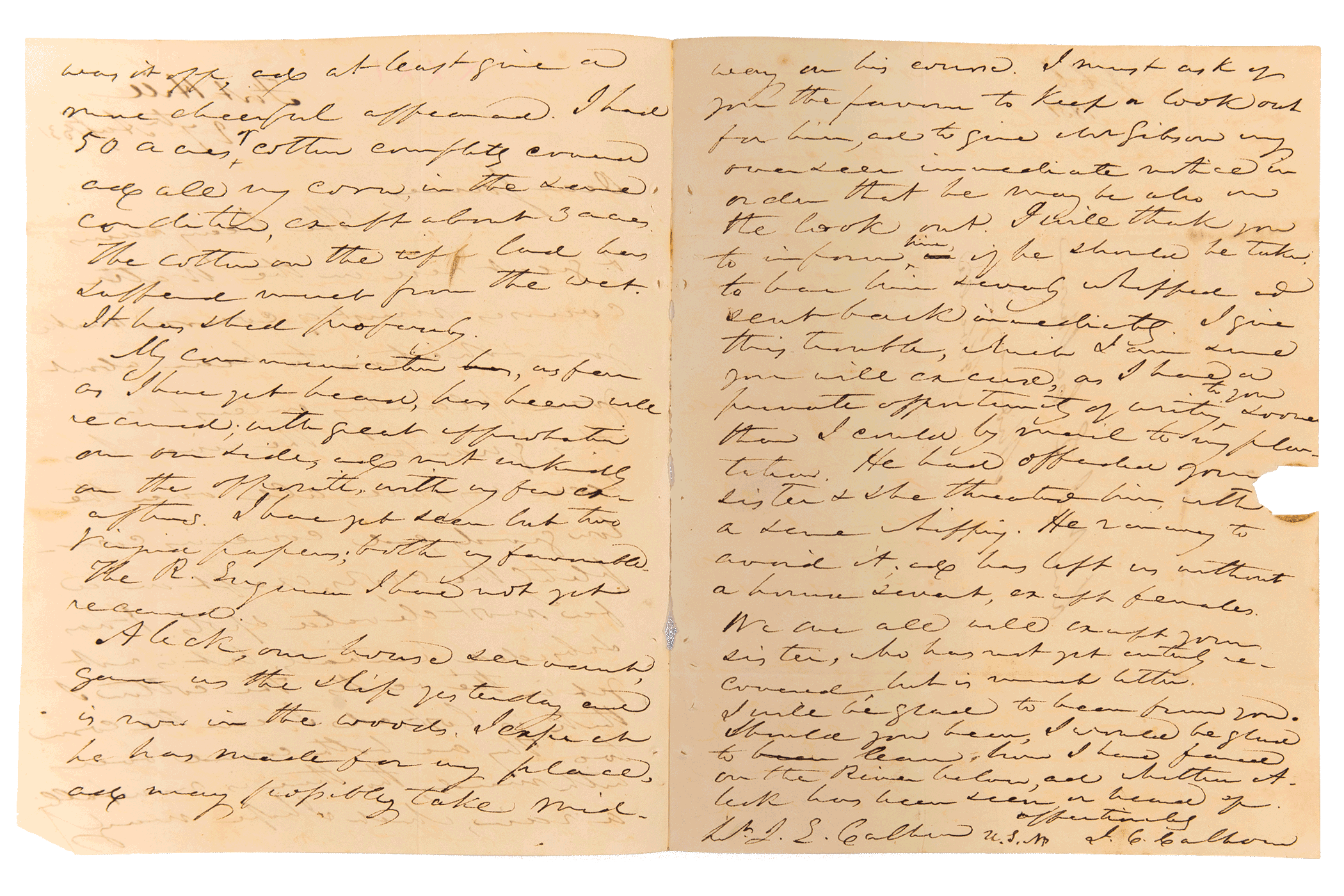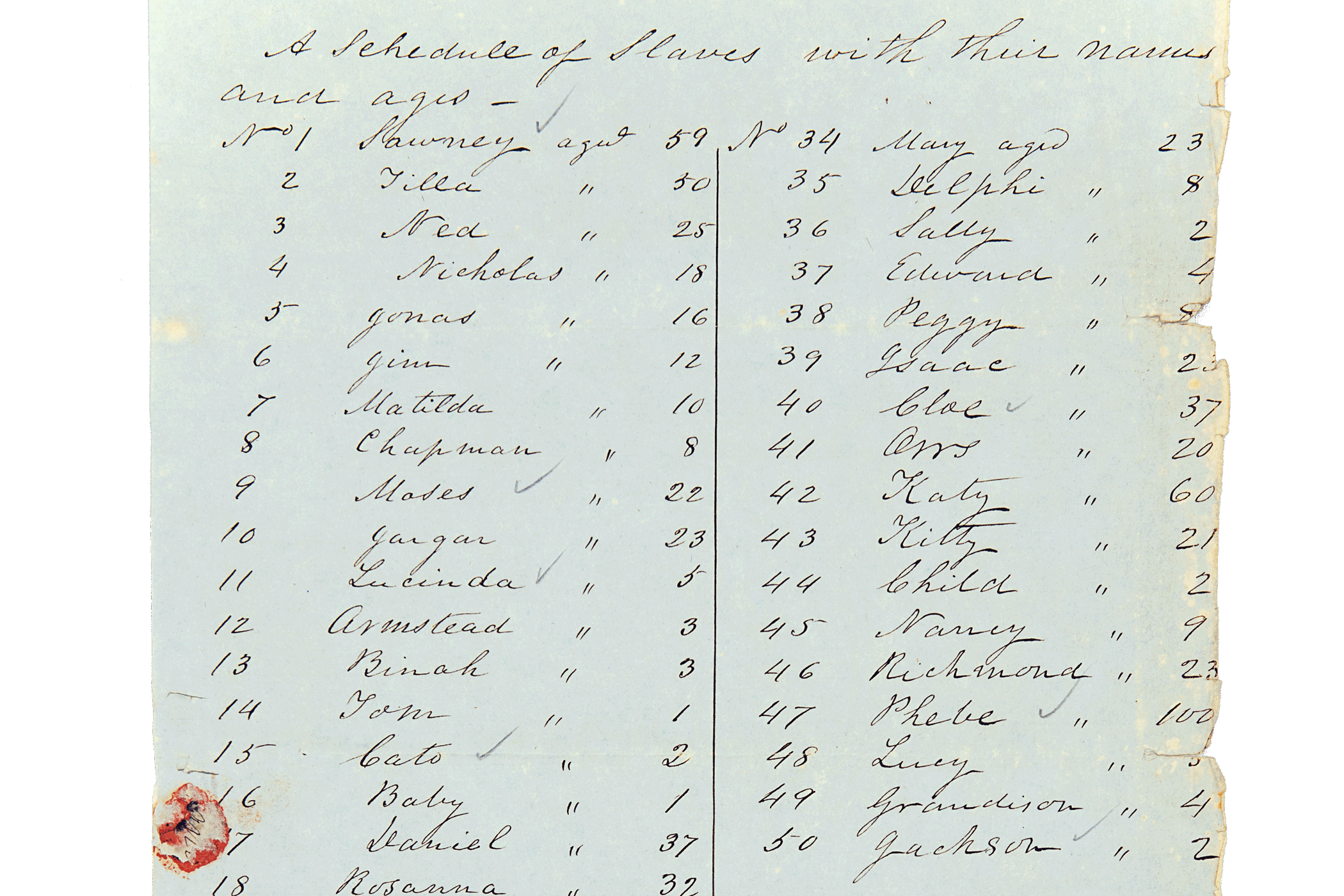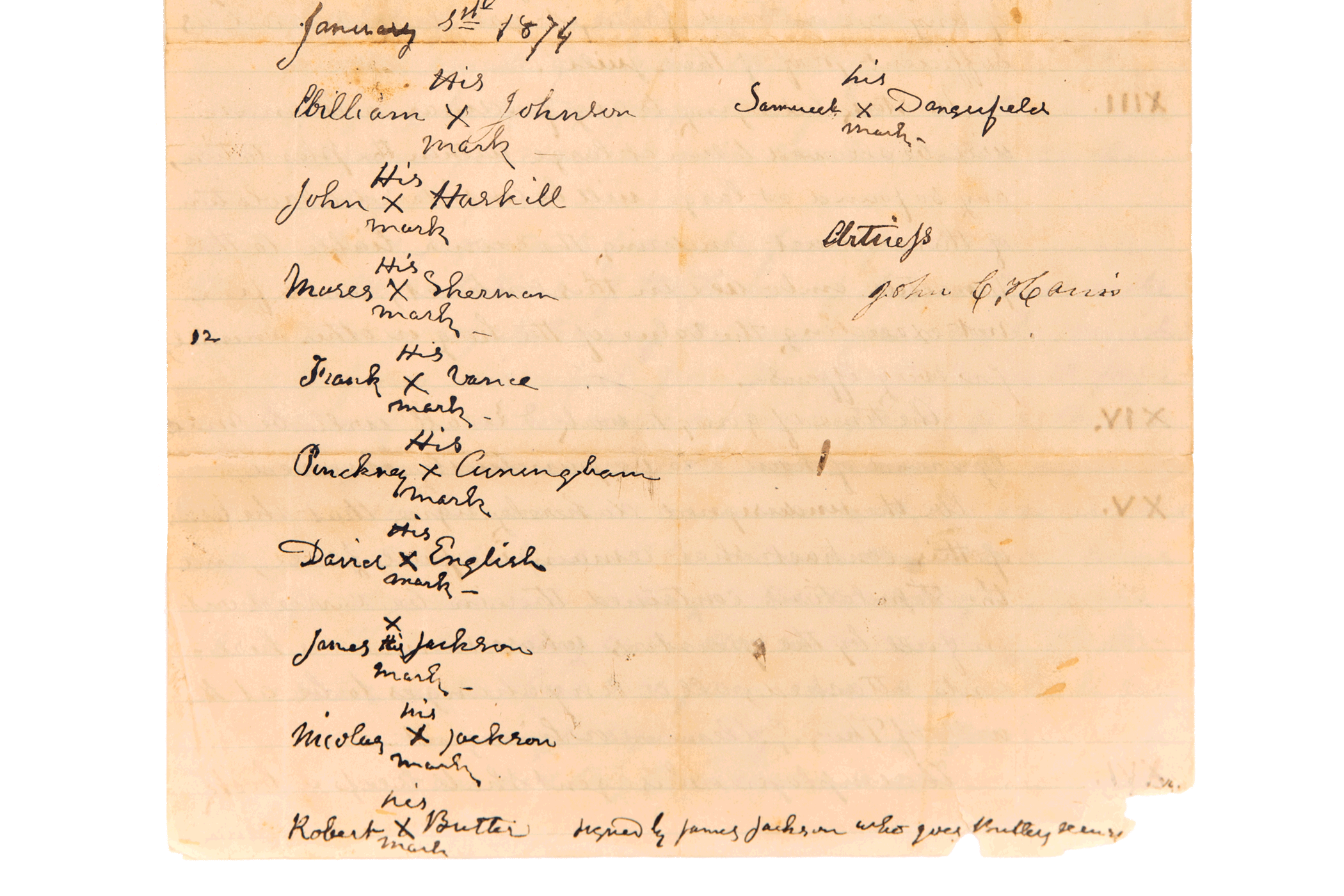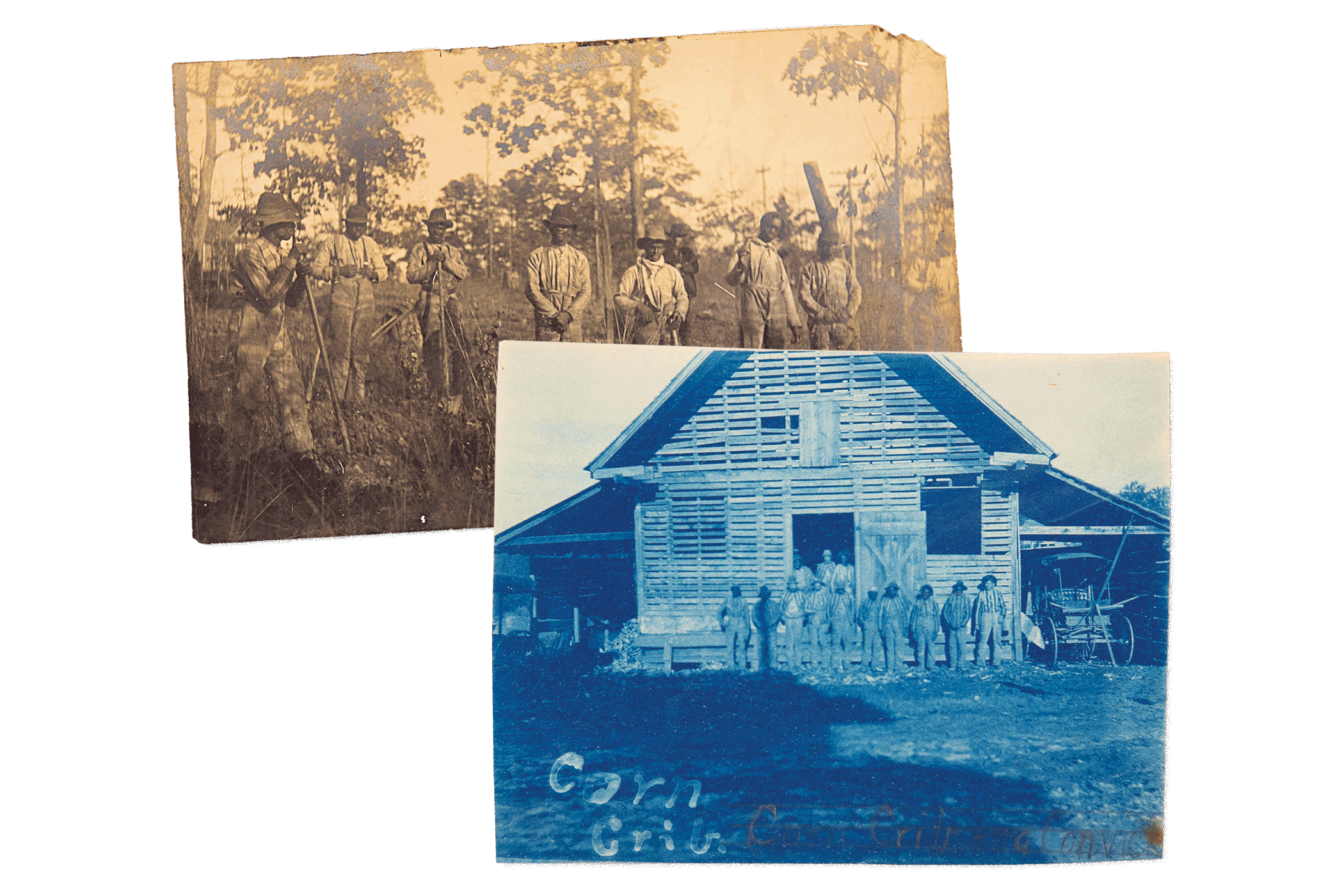
{"id":21456,"date":"2019-09-04T10:21:54","date_gmt":"2019-09-04T14:21:54","guid":{"rendered":"https:\/\/clemson.world\/?p=21456"},"modified":"2019-09-04T10:21:54","modified_gmt":"2019-09-04T14:21:54","slug":"callinganame","status":"publish","type":"post","link":"https:\/\/clemson.world\/archive\/callinganame\/","title":{"rendered":"The Power of Calling a Name"},"content":{"rendered":"<p><div id='fullscreen_slider_1'  class='avia-fullscreen-slider main_color   avia-builder-el-0  el_before_av_hr  avia-builder-el-first   container_wrap sidebar_right' style=' '  ><a href='#next-section' title='' class='scroll-down-link av-control-minimal' aria-hidden='true' data-av_icon='\ue877' data-av_iconfont='entypo-fontello'><\/a><div   data-size='no scaling'  data-lightbox_size='large'  data-animation='slide'  data-conditional_play=''  data-ids='21462'  data-video_counter='0'  data-autoplay='true'  data-bg_slider='true'  data-slide_height='100'  data-handle='av_fullscreen'  data-interval='5'  data-class=' '  data-el_id=''  data-css_id='fullscreen_slider_1'  data-scroll_down='aviaTBscroll_down'  data-control_layout='av-control-minimal'  data-custom_markup=''  data-perma_caption=''  data-autoplay_stopper=''  data-image_attachment='scroll'  data-min_height='0px'  data-stretch=''  class='avia-slideshow avia-slideshow-1 av-slider-scroll-down-active av-control-minimal av-default-height-applied avia-slideshow-no scaling av_fullscreen   avia-slide-slider '  itemprop=\"image\" itemscope=\"itemscope\" itemtype=\"https:\/\/schema.org\/ImageObject\" ><ul class='avia-slideshow-inner ' style='padding-bottom: 66.6666666667%;' ><li style='background-position:top center;' data-img-url='https:\/\/clemson.world\/archive\/wp-content\/uploads\/sites\/3\/2019\/09\/Rhonnda-Thomas_Intro-1.jpg' class=' av-single-slide slide-1 ' ><div data-rel='slideshow-1' class='avia-slide-wrap '   ><\/div><\/li><\/ul><\/div><\/div><div id='after_full_slider_1'  class='main_color av_default_container_wrap container_wrap sidebar_right' style=' '  ><div class='container' ><div class='template-page content  av-content-small alpha units'><div class='post-entry post-entry-type-page post-entry-21456'><div class='entry-content-wrapper clearfix'><br \/>\n<div  style='height:25px' class='hr hr-invisible   avia-builder-el-1  el_after_av_fullscreen  el_before_av_image  avia-builder-el-first '><span class='hr-inner ' ><span class='hr-inner-style'><\/span><\/span><\/div><br \/>\n<div  class='avia-image-container  av-styling-    avia-builder-el-2  el_after_av_hr  el_before_av_hr  avia-align-center '  itemprop=\"image\" itemscope=\"itemscope\" itemtype=\"https:\/\/schema.org\/ImageObject\"  ><div class='avia-image-container-inner'><div class='avia-image-overlay-wrap'><img class='avia_image' src='https:\/\/clemson.world\/archive\/wp-content\/uploads\/sites\/3\/2019\/09\/Calling-a-Name_Title-2.png' alt='' title='Calling-a-Name_Title' height=\"400\" width=\"1100\"  itemprop=\"thumbnailUrl\"  \/><\/div><\/div><\/div><br \/>\n<div  style='height:50px' class='hr hr-invisible   avia-builder-el-3  el_after_av_image  el_before_av_one_fifth '><span class='hr-inner ' ><span class='hr-inner-style'><\/span><\/span><\/div><br \/>\n<div class=\"flex_column av_one_fifth  flex_column_div av-zero-column-padding first  avia-builder-el-4  el_after_av_hr  el_before_av_three_fifth  \" style='border-radius:0px; '><\/div><br \/>\n<div class=\"flex_column av_three_fifth  flex_column_div av-zero-column-padding   avia-builder-el-5  el_after_av_one_fifth  el_before_av_one_fifth  \" style='border-radius:0px; '><div   class='hr hr-default   avia-builder-el-6  avia-builder-el-no-sibling '><span class='hr-inner ' ><span class='hr-inner-style'><\/span><\/span><\/div><\/div><br \/>\n<div class=\"flex_column av_one_fifth  flex_column_div av-zero-column-padding   avia-builder-el-7  el_after_av_three_fifth  el_before_av_one_full  \" style='border-radius:0px; '><\/div><br \/>\n<div class=\"flex_column av_one_full  flex_column_div av-zero-column-padding first  avia-builder-el-8  el_after_av_one_fifth  el_before_av_one_fifth  column-top-margin\" style='border-radius:0px; '><section class=\"av_textblock_section \"  itemscope=\"itemscope\" itemtype=\"https:\/\/schema.org\/BlogPosting\" itemprop=\"blogPost\" ><div class='avia_textblock  av_inherit_color '  style='font-size:13px; color:#000000; '  itemprop=\"text\" ><p style=\"text-align: center\">By <b>Karen Land<\/b><br \/>\nPhotography by <b>Craig Mahaffey \u201998<\/b>,<br \/>\n<b>Ashley Jones<\/b> &amp; <b>Sydney Lykins \u201919<\/b><\/p>\n<\/div><\/section><\/div><\/p>\n<p><div class=\"flex_column av_one_fifth  flex_column_div av-zero-column-padding first  avia-builder-el-10  el_after_av_one_full  el_before_av_three_fifth  column-top-margin\" style='border-radius:0px; '><\/div><br \/>\n<div class=\"flex_column av_three_fifth  flex_column_div av-zero-column-padding   avia-builder-el-11  el_after_av_one_fifth  el_before_av_one_fifth  column-top-margin\" style='border-radius:0px; '><div   class='hr hr-default   avia-builder-el-12  avia-builder-el-no-sibling '><span class='hr-inner ' ><span class='hr-inner-style'><\/span><\/span><\/div><\/div><br \/>\n<div class=\"flex_column av_one_fifth  flex_column_div av-zero-column-padding   avia-builder-el-13  el_after_av_three_fifth  el_before_av_one_full  column-top-margin\" style='border-radius:0px; '><\/div><br \/>\n<div class=\"flex_column av_one_full  flex_column_div av-zero-column-padding first  avia-builder-el-14  el_after_av_one_fifth  el_before_av_one_full  column-top-margin\" style='border-radius:0px; '><section class=\"av_textblock_section \"  itemscope=\"itemscope\" itemtype=\"https:\/\/schema.org\/BlogPosting\" itemprop=\"blogPost\" ><div class='avia_textblock  av_inherit_color '  style='font-size:33px; color:#daae53; '  itemprop=\"text\" ><p style=\"text-align: center;line-height: 1.4em\"><strong>Rhondda Robinson Thomas is bringing to light a more complete Clemson history<\/strong><\/p>\n<\/div><\/section><\/div><br \/>\n<div class=\"flex_column av_one_full  flex_column_div av-zero-column-padding first  avia-builder-el-16  el_after_av_one_full  el_before_av_hr  column-top-margin\" style='border-radius:0px; '><section class=\"av_textblock_section \"  itemscope=\"itemscope\" itemtype=\"https:\/\/schema.org\/BlogPosting\" itemprop=\"blogPost\" ><div class='avia_textblock  av_inherit_color '  style='font-size:17px; color:#000000; '  itemprop=\"text\" ><p>A dozen years ago,\u00a0Rhondda Robinson Thomas was gliding on a dream. Clemson University had just offered her a three-year stint as a visiting professor. This campus would be her campus.<br \/>\nA colleague from the English department walked her around various sites on the central campus, then paused near the edge of a manicured lawn. From where Thomas planted her feet, she looked up the hill and caught a glimpse of white. To her, the clapboard house with columns was unmistakable.<br \/>\n\u201cI cannot believe I am working on a plantation,\u201d Thomas thought.<br \/>\nWhen Thomas and her husband, William, moved to South Carolina, she thought they would only stay long enough for her to complete her contract. But on that first day at Clemson, as Thomas stood near John C. Calhoun\u2019s Fort Hill home, her professional life pivoted in ways she could not yet fathom.<br \/>\nThe specialist in 18th- and 19th-century African American literature soon focused on a new set of stories. Thomas began her tenacious research into the history of African American laborers at Clemson University, starting with those enslaved there and continuing generation by generation to the present day.<br \/>\nShe is telling their stories, and she is calling their names.<\/p>\n<\/div><\/section><\/div><br \/>\n<div  style='height:75px' class='hr hr-invisible   avia-builder-el-18  el_after_av_one_full  el_before_av_one_fifth '><span class='hr-inner ' ><span class='hr-inner-style'><\/span><\/span><\/div><br \/>\n<div class=\"flex_column av_one_fifth  flex_column_div av-zero-column-padding first  avia-builder-el-19  el_after_av_hr  el_before_av_three_fifth  \" style='border-radius:0px; '><\/div><br \/>\n<div class=\"flex_column av_three_fifth  flex_column_div av-zero-column-padding   avia-builder-el-20  el_after_av_one_fifth  el_before_av_one_fifth  \" style='border-radius:0px; '><section class=\"av_textblock_section \"  itemscope=\"itemscope\" itemtype=\"https:\/\/schema.org\/BlogPosting\" itemprop=\"blogPost\" ><div class='avia_textblock  av_inherit_color '  style='color:#000000; '  itemprop=\"text\" ><p><span style=\"color: #daae53;font-size: 64px;font-family: serif\">1831<\/span><br \/>\n<span style=\"font-weight: bolder\">LETTER FROM\u00a0THE JOHN C.\u00a0CALHOUN PAPERS<\/span><br \/>\n<span style=\"font-weight: lighter\">In the lower left hand corner of the letter, Calhoun mentions Aleck, an enslaved laborer who had run away from Fort Hill, seeking his freedom. In a later letter, Calhoun gives instructions to punish Aleck with a week of bread and water and 30 lashes.<\/span><br \/>\n<span style=\"color: #daae53;font-size: 13px;font-weight: lighter\">Courtesy of Clemson\u00a0Libraries\u2019 Special\u00a0Collections and Archives.<\/span><\/p>\n<\/div><\/section><\/div><br \/>\n<div class=\"flex_column av_one_fifth  flex_column_div av-zero-column-padding   avia-builder-el-22  el_after_av_three_fifth  el_before_av_one_full  \" style='border-radius:0px; '><\/div><br \/>\n<div class=\"flex_column av_one_full  flex_column_div av-zero-column-padding first  avia-builder-el-23  el_after_av_one_fifth  el_before_av_one_full  column-top-margin\" style='border-radius:0px; '><div  class='avia-image-container  av-styling-    avia-builder-el-24  avia-builder-el-no-sibling  avia-align-center '  itemprop=\"image\" itemscope=\"itemscope\" itemtype=\"https:\/\/schema.org\/ImageObject\"  ><div class='avia-image-container-inner'><div class='avia-image-overlay-wrap'><img class='avia_image' src='https:\/\/clemson.world\/archive\/wp-content\/uploads\/sites\/3\/2019\/09\/Rhondda_Calhoun-Letter.png' alt='' title='Rhondda_Calhoun-Letter' height=\"1400\" width=\"2100\"  itemprop=\"thumbnailUrl\"  \/><\/div><\/div><\/div><\/div><br \/>\n<div class=\"flex_column av_one_full  flex_column_div av-zero-column-padding first  avia-builder-el-25  el_after_av_one_full  el_before_av_image  column-top-margin\" style='border-radius:0px; '><section class=\"av_textblock_section \"  itemscope=\"itemscope\" itemtype=\"https:\/\/schema.org\/BlogPosting\" itemprop=\"blogPost\" ><div class='avia_textblock  av_inherit_color '  style='font-size:17px; color:#000000; '  itemprop=\"text\" ><p>A sixth-generation South Carolinian, Thomas was born in Spartanburg and raised in Georgia and North Carolina. She is soft-spoken, smiles easily and speaks with eloquence and passion.<br \/>\nBoth of her parents, Earle and Naomi Robinson, were teachers. She recalls growing up with her siblings Donald, Carlton and Monika in a home filled with books.<br \/>\nHer father was a mathematician who brought his family to California over three summers as he continued his graduate studies courtesy of the National Science Foundation. The experience left quite an impression on Thomas, then in middle school.<br \/>\n\u201cI was leaving this tiny little segregated town and seeing the whole United States, and spending the summer at Stanford,\u201d Thomas says. \u201cI just thought, \u2018This is such a wonderful life.\u2019 You work on beautiful campuses, you get to engage with your students and their families, and in my little mind I decided I wanted to be a college professor.\u201d<br \/>\nThomas began her studies in journalism several years later, first as an undergraduate at Washington Adventist University, then completing a master\u2019s degree at the University of Georgia. She then earned two degrees in literature, a master\u2019s from the University of New Hampshire and a Ph.D. at the University of Maryland.<br \/>\nShe was preparing to embody her dream.<\/p>\n<\/div><\/section><\/div><br \/>\n<div  class='avia-image-container  av-styling-    avia-builder-el-27  el_after_av_one_full  el_before_av_one_full  avia-align-center '  itemprop=\"image\" itemscope=\"itemscope\" itemtype=\"https:\/\/schema.org\/ImageObject\"  ><div class='avia-image-container-inner'><div class='avia-image-overlay-wrap'><img class='avia_image' src='https:\/\/clemson.world\/archive\/wp-content\/uploads\/sites\/3\/2019\/09\/separator.png' alt='' title='separator' height=\"50\" width=\"100\"  itemprop=\"thumbnailUrl\"  \/><\/div><\/div><\/div><br \/>\n<div class=\"flex_column av_one_full  flex_column_div av-zero-column-padding first  avia-builder-el-28  el_after_av_image  el_before_av_image  \" style='border-radius:0px; '><section class=\"av_textblock_section \"  itemscope=\"itemscope\" itemtype=\"https:\/\/schema.org\/BlogPosting\" itemprop=\"blogPost\" ><div class='avia_textblock  av_inherit_color '  style='font-size:17px; color:#000000; '  itemprop=\"text\" ><p>When Thomas first arrived at Clemson, it was a time when universities across the country were taking a hard look at their ties to slavery. Many institutions were examining their own histories, reckoning with the past and rewriting their public narratives.<br \/>\nAs a new professor, Thomas began taking her classes to Fort Hill as a way of complementing assigned readings about slavery. They visited John C. Cahoun\u2019s house and his office. On their first guided tour, they heard detailed accounts of the rooms and their furnishings, paintings and china. However, \u201cThere was no mention of slavery,\u201d Thomas says.<br \/>\nShe requested that for subsequent visits to Fort Hill, the story of slavery be included. In her first years at Clemson, Thomas said on each visit to Fort Hill \u201cit was a different tour, different information.\u201d<br \/>\nThomas wanted to know more. And she wanted to know another thing: \u201cWhy aren\u2019t people talking about this?\u201d<br \/>\nOn one tour of Fort Hill, the guide mentioned inventories \u2013 the 1854 and 1865 inventories of slaves. Thomas took notice: \u201cMy goodness, we have names.\u201d<br \/>\nShe immediately searched the Special Collections and Archives at Clemson University. Thomas was leafing through the papers of Thomas Green Clemson when she encountered a register of 50 names.<br \/>\n\u201cWe know who they are,\u201d she realized. \u201cWhy aren\u2019t we talking about them?\u201d<\/p>\n<\/div><\/section><\/div><br \/>\n<div  class='avia-image-container  av-styling-    avia-builder-el-30  el_after_av_one_full  el_before_av_one_full  avia-align-center '  itemprop=\"image\" itemscope=\"itemscope\" itemtype=\"https:\/\/schema.org\/ImageObject\"  ><div class='avia-image-container-inner'><div class='avia-image-overlay-wrap'><img class='avia_image' src='https:\/\/clemson.world\/archive\/wp-content\/uploads\/sites\/3\/2019\/09\/separator.png' alt='' title='separator' height=\"50\" width=\"100\"  itemprop=\"thumbnailUrl\"  \/><\/div><\/div><\/div><br \/>\n<div class=\"flex_column av_one_full  flex_column_div av-zero-column-padding first  avia-builder-el-31  el_after_av_image  el_before_av_hr  \" style='border-radius:0px; '><section class=\"av_textblock_section \"  itemscope=\"itemscope\" itemtype=\"https:\/\/schema.org\/BlogPosting\" itemprop=\"blogPost\" ><div class='avia_textblock  av_inherit_color '  style='font-size:17px; color:#000000; '  itemprop=\"text\" ><p>Without<span class=\"Apple-converted-space\">\u00a0<\/span>John C. Calhoun, his land and the will of his son-in-law, a university would not have risen up from the soil in this rural region of Upstate South Carolina.<br \/>\nPerhaps these hills would still be covered with lush forests, grassy pastures or tidy rows of corn. And in Death Valley, on an autumn Saturday, no one would call out the name of Clemson in chants of glory.<br \/>\nThe history of Clemson University is inextricably tangled with the triumphs and transgressions of its founders. Thomas Green Clemson was a European-educated engineer who inherited the estate of his wife\u2019s father. Calhoun himself was a prominent planter, a former vice president under John Quincy Adams and Andrew Jackson, and one of slavery\u2019s most passionate proponents.<br \/>\nBenjamin Tillman was a powerful politician and advocate for the founding and advancement of the new college that would bear the Clemson name. He was an innovative agronomist and a steadfast supporter of education in agriculture and practical science, even before he served South Carolina as governor and a U.S. senator. He was also an avowed white supremacist who spent his life systematically and sometimes violently separating African Americans from power, votes, wealth, land and even their lives.<br \/>\nCalhoun and Clemson were both slaveholders. Tillman, in his teens, helped his widowed mother manage the family\u2019s inn, plantation and enslaved workers.<br \/>\nThe campus of Clemson University stands on the same plantation land where people enslaved by Calhoun and Clemson toiled; where some were born, bought and sold; and where some of their bones now rest.<\/p>\n<\/div><\/section><\/div><br \/>\n<div  style='height:75px' class='hr hr-invisible   avia-builder-el-33  el_after_av_one_full  el_before_av_one_fifth '><span class='hr-inner ' ><span class='hr-inner-style'><\/span><\/span><\/div><br \/>\n<div class=\"flex_column av_one_fifth  flex_column_div av-zero-column-padding first  avia-builder-el-34  el_after_av_hr  el_before_av_three_fifth  \" style='border-radius:0px; '><\/div><br \/>\n<div class=\"flex_column av_three_fifth  flex_column_div av-zero-column-padding   avia-builder-el-35  el_after_av_one_fifth  el_before_av_one_fifth  \" style='border-radius:0px; '><section class=\"av_textblock_section \"  itemscope=\"itemscope\" itemtype=\"https:\/\/schema.org\/BlogPosting\" itemprop=\"blogPost\" ><div class='avia_textblock  av_inherit_color '  style='color:#000000; '  itemprop=\"text\" ><p><span style=\"color: #daae53;font-size: 64px;font-family: serif\">1854<\/span><br \/>\n<span style=\"font-weight: bolder\">INVENTORY OF SLAVES<\/span><br \/>\n<span style=\"font-weight: lighter\">Part of an 1854 deed included in the papers of Thomas Green Clemson. The register lists 50 persons and their ages, ranging from Baby and Daniel at 1, to Phebe at 100.<\/span><br \/>\n<span style=\"color: #daae53;font-size: 13px;font-weight: lighter\">Courtesy of Clemson\u00a0Libraries\u2019 Special\u00a0Collections and Archives.<\/span><\/p>\n<\/div><\/section><\/div><br \/>\n<div class=\"flex_column av_one_fifth  flex_column_div av-zero-column-padding   avia-builder-el-37  el_after_av_three_fifth  el_before_av_hr  \" style='border-radius:0px; '><\/div><br \/>\n<div  style='height:75px' class='hr hr-invisible   avia-builder-el-38  el_after_av_one_fifth  el_before_av_image '><span class='hr-inner ' ><span class='hr-inner-style'><\/span><\/span><\/div><br \/>\n<div  class='avia-image-container  av-styling-    avia-builder-el-39  el_after_av_hr  el_before_av_hr  avia-align-center '  itemprop=\"image\" itemscope=\"itemscope\" itemtype=\"https:\/\/schema.org\/ImageObject\"  ><div class='avia-image-container-inner'><div class='avia-image-overlay-wrap'><img class='avia_image' src='https:\/\/clemson.world\/archive\/wp-content\/uploads\/sites\/3\/2019\/09\/Rhondda_Slave-Inventory-1.png' alt='' title='Rhondda_Slave-Inventory' height=\"1400\" width=\"2100\"  itemprop=\"thumbnailUrl\"  \/><\/div><\/div><\/div><br \/>\n<div  style='height:75px' class='hr hr-invisible   avia-builder-el-40  el_after_av_image  el_before_av_one_full '><span class='hr-inner ' ><span class='hr-inner-style'><\/span><\/span><\/div><br \/>\n<div class=\"flex_column av_one_full  flex_column_div av-zero-column-padding first  avia-builder-el-41  el_after_av_hr  el_before_av_image  \" style='border-radius:0px; '><section class=\"av_textblock_section \"  itemscope=\"itemscope\" itemtype=\"https:\/\/schema.org\/BlogPosting\" itemprop=\"blogPost\" ><div class='avia_textblock  av_inherit_color '  style='font-size:17px; color:#000000; '  itemprop=\"text\" ><p>During her TEDx talk in Greenville last March, Thomas made the point that \u201cstories about specific people can help us talk about topics we\u2019d rather avoid \u2014 topics like slavery, sharecropping and convict leasing.\u201d<br \/>\nHer ongoing research project at Clemson is titled \u201cCall My Name: African Americans in Early Clemson University History.\u201d<br \/>\nNames are critical to Thomas. Calling a person by name is an affirmation of humanity.<br \/>\nNames can be given but they, too, can be taken away. In the case of enslaved laborers, Thomas stresses that \u201cthese people didn\u2019t get to choose their own names.\u201d<br \/>\nYet even an imposed name provides identity. \u201cIf we have identities, then that\u2019s a starting place to see if we can trace the storylines of some of these individuals,\u201d Thomas says.<br \/>\n\u201cYou know, my job is to call people\u2019s names,\u201d Thomas says. \u201cAs a faculty member, I call the names of my students, and they respond. We call the names of students as they walk across the stage at graduation. Everybody\u2019s name is called at Clemson, at least once.\u201d<br \/>\nAnd, a call is something that invites a response. \u201cIf you are singing a song, then people are responding to that song, and that music becomes something else because the audience becomes involved in creating that experience,\u201d Thomas says.<br \/>\n\u201cI knew that I couldn\u2019t tell these stories by myself.\u201d<\/p>\n<\/div><\/section><\/div><br \/>\n<div  class='avia-image-container  av-styling-    avia-builder-el-43  el_after_av_one_full  el_before_av_one_full  avia-align-center '  itemprop=\"image\" itemscope=\"itemscope\" itemtype=\"https:\/\/schema.org\/ImageObject\"  ><div class='avia-image-container-inner'><div class='avia-image-overlay-wrap'><img class='avia_image' src='https:\/\/clemson.world\/archive\/wp-content\/uploads\/sites\/3\/2019\/09\/separator.png' alt='' title='separator' height=\"50\" width=\"100\"  itemprop=\"thumbnailUrl\"  \/><\/div><\/div><\/div><br \/>\n<div class=\"flex_column av_one_full  flex_column_div av-zero-column-padding first  avia-builder-el-44  el_after_av_image  el_before_av_image  \" style='border-radius:0px; '><section class=\"av_textblock_section \"  itemscope=\"itemscope\" itemtype=\"https:\/\/schema.org\/BlogPosting\" itemprop=\"blogPost\" ><div class='avia_textblock  av_inherit_color '  style='font-size:17px; color:#000000; '  itemprop=\"text\" ><p>Since her arrival at the University, Thomas has been unravelling the history of six generations of African Americans who lived and labored at Clemson.<br \/>\nThe ground below today\u2019s orange and purple banners once nourished a Cherokee town called Esseneca. The land was later planted thick with green fields of white cotton that pricked brown hands. In the years before emancipation, those hands belonged to the enslaved. Between 1868 and 1874, those hands were attached to sharecroppers \u2014 bound by contract and debt to Thomas Green Clemson \u2014 and in 1890, to convicts who were bound to the state and the University by crimes or minor trespasses.<br \/>\nThe same rusty earth beneath the feet of today\u2019s students was long ago scooped up by smooth-faced teens and hardened old men, all convicts who lived in stockades on the campus. Under the South Carolina sun, they pressed the damp putty into millions of bricks that raised up a University, including the present buildings of Sikes Hall, Tillman Hall and Trustee House.<br \/>\nConvicts also tore down the plantation slave quarters, moving massive granite stones some distance to form the foundation of Hardin Hall. Those rough boulders stripped from simple quarters are still visible from some rooms in the brick building that \u2014 appropriately or ironically \u2014 now houses the Department of History, The Rutland Institute for Ethics and the Department of Philosophy and Religion. If visitors lay their hands upon those stones, they can feel their coolness \u2014 and the chill of their history.<br \/>\nAs generations passed, other brown hands at Clemson moved lunch trays and brooms, tools and papers. Deft hands moved across the keys of pianos, the valves of trumpets and the strings of guitars.<br \/>\nAfrican American workers and visiting musicians earned praises and earned pay, but for many decades they were not invited to dine at the same tables, not welcome to live in some parts of town and not permitted to take classes on the same campus where they labored.<br \/>\nThomas shares their compelling stories on the \u201cCall My Name\u201d Facebook page and also on a webpage, <a style=\"color: #daae53\" href=\"http:\/\/www.callmyname.org\" target=\"_blank\" rel=\"noopener\"><em>callmyname.org.<\/em><\/a><\/p>\n<\/div><\/section><\/div><br \/>\n<div  class='avia-image-container  av-styling-    avia-builder-el-46  el_after_av_one_full  el_before_av_one_full  avia-align-center '  itemprop=\"image\" itemscope=\"itemscope\" itemtype=\"https:\/\/schema.org\/ImageObject\"  ><div class='avia-image-container-inner'><div class='avia-image-overlay-wrap'><img class='avia_image' src='https:\/\/clemson.world\/archive\/wp-content\/uploads\/sites\/3\/2019\/09\/separator.png' alt='' title='separator' height=\"50\" width=\"100\"  itemprop=\"thumbnailUrl\"  \/><\/div><\/div><\/div><br \/>\n<div class=\"flex_column av_one_full  flex_column_div av-zero-column-padding first  avia-builder-el-47  el_after_av_image  el_before_av_hr  \" style='border-radius:0px; '><section class=\"av_textblock_section \"  itemscope=\"itemscope\" itemtype=\"https:\/\/schema.org\/BlogPosting\" itemprop=\"blogPost\" ><div class='avia_textblock  av_inherit_color '  style='font-size:17px; color:#000000; '  itemprop=\"text\" ><p>One name that has propelled Thomas through her research and difficult findings is that of Wade Foster.<br \/>\n\u201cHe was the child that pulled me into this project,\u201d Thomas says. \u201cIf I had not found the convict records, I\u2019m not sure there would be a project.\u201d<br \/>\nFoster was sentenced to six months of hard labor in 1891 as one of the nearly 700 convicts assigned to Clemson College between 1890-1915. He had taken a toy drum, pillowcase and several pieces of boys\u2019 clothing. He was 13 at the time.<br \/>\nAt the time she discovered Foster\u2019s story, Thomas had not yet earned tenure. Some close to her were concerned that if she went public with information about the convicts, her prospects might be harmed. Thomas did it anyway.<br \/>\n\u201cI did it because I felt Wade Foster didn\u2019t have a choice. He and other teenage boys were caught up in circumstances beyond their control,\u201d she says. \u201cHis labor created an opportunity for me to work at this University that he couldn\u2019t attend. So, I could not act from fear. I had to do the courageous thing, and that was to tell his story and deal with the consequences.\u201d<br \/>\nThomas has not only earned tenure at Clemson University; she also has been named the Calhoun Lemon Professor of Literature.<br \/>\nAt times, her work can be emotionally wrenching. \u201cI allow myself to fully experience a range of emotions when researching the unsettling parts of Clemson history, including joy, sadness and anger,\u201d Thomas says. \u201cI persist because I believe we must honor the humanity of Black people who were subjected to slavery, sharecropping, convict leasing, economic exploitation, and segregation on the land where Clemson was built and in nearby communities.\u201d<br \/>\nHer work continues for people like young Wade Foster, whose life after Clemson remains largely a mystery.<\/p>\n<\/div><\/section><\/div><br \/>\n<div  style='height:75px' class='hr hr-invisible   avia-builder-el-49  el_after_av_one_full  el_before_av_one_fifth '><span class='hr-inner ' ><span class='hr-inner-style'><\/span><\/span><\/div><br \/>\n<div class=\"flex_column av_one_fifth  flex_column_div av-zero-column-padding first  avia-builder-el-50  el_after_av_hr  el_before_av_three_fifth  \" style='border-radius:0px; '><\/div><br \/>\n<div class=\"flex_column av_three_fifth  flex_column_div av-zero-column-padding   avia-builder-el-51  el_after_av_one_fifth  el_before_av_one_fifth  \" style='border-radius:0px; '><section class=\"av_textblock_section \"  itemscope=\"itemscope\" itemtype=\"https:\/\/schema.org\/BlogPosting\" itemprop=\"blogPost\" ><div class='avia_textblock  av_inherit_color '  style='color:#000000; '  itemprop=\"text\" ><p><span style=\"color: #daae53;font-size: 64px;font-family: serif\">1874<\/span><br \/>\n<span style=\"font-weight: bolder\">AGREEMENT WITH SHARECROPPERS<\/span><br \/>\n<span style=\"font-weight: lighter\">A page from an agreement between Thomas Green Clemson and sharecroppers working the land at Fort Hill. Their names are written in the hand of the writer of the agreement, with an \u201cX\u201d labeled \u201cHis mark.\u201d<\/span><br \/>\n<span style=\"color: #daae53;font-size: 13px;font-weight: lighter\">Courtesy of Clemson\u00a0Libraries\u2019 Special\u00a0Collections and Archives.<\/span><\/p>\n<\/div><\/section><\/div><br \/>\n<div class=\"flex_column av_one_fifth  flex_column_div av-zero-column-padding   avia-builder-el-53  el_after_av_three_fifth  el_before_av_one_full  \" style='border-radius:0px; '><\/div><br \/>\n<div class=\"flex_column av_one_full  flex_column_div av-zero-column-padding first  avia-builder-el-54  el_after_av_one_fifth  el_before_av_one_full  column-top-margin\" style='border-radius:0px; '><div  class='avia-image-container  av-styling-    avia-builder-el-55  avia-builder-el-no-sibling  avia-align-center '  itemprop=\"image\" itemscope=\"itemscope\" itemtype=\"https:\/\/schema.org\/ImageObject\"  ><div class='avia-image-container-inner'><div class='avia-image-overlay-wrap'><img class='avia_image' src='https:\/\/clemson.world\/archive\/wp-content\/uploads\/sites\/3\/2019\/09\/Rhondda_Land-Agreement.png' alt='' title='Rhondda_Land-Agreement' height=\"1400\" width=\"2100\"  itemprop=\"thumbnailUrl\"  \/><\/div><\/div><\/div><\/div><br \/>\n<div class=\"flex_column av_one_full  flex_column_div av-zero-column-padding first  avia-builder-el-56  el_after_av_one_full  el_before_av_image  column-top-margin\" style='border-radius:0px; '><section class=\"av_textblock_section \"  itemscope=\"itemscope\" itemtype=\"https:\/\/schema.org\/BlogPosting\" itemprop=\"blogPost\" ><div class='avia_textblock  av_inherit_color '  style='font-size:17px; color:#000000; '  itemprop=\"text\" ><p>It might seem like destiny that Rhondda Robinson Thomas came to Clemson to discover these stories, and that she arrived in a moment when she could not only uncover deep truths about the past but also discuss them openly as the University aspires to share a more complete history.<br \/>\nShe almost didn\u2019t get the chance.<br \/>\nLong before Thomas became a Clemson professor, before she earned four university degrees, and before she graduated from high school, she faced a life-threatening illness.<br \/>\nShe mentioned the crisis in a matter-of-fact way, as another part of her complete history: \u201cDuring my senior year of high school, I got cancer.\u201d<br \/>\nDoctors placed her odds of surviving her diagnosis of a rare sarcoma at 50\/50.<br \/>\n\u201cI\u2019ll take that 50; I\u2019ll take that chance,\u201d she recalls thinking.<br \/>\nAt the time, Rhondda was focused on graduating from high school. She still had dreams of working at a university.<br \/>\n\u201cI think it\u2019s pretty extraordinary that not only did I survive,\u201d Thomas says, \u201cbut that my childhood dream came true.\u201d<\/p>\n<\/div><\/section><\/div><br \/>\n<div  class='avia-image-container  av-styling-    avia-builder-el-58  el_after_av_one_full  el_before_av_one_full  avia-align-center '  itemprop=\"image\" itemscope=\"itemscope\" itemtype=\"https:\/\/schema.org\/ImageObject\"  ><div class='avia-image-container-inner'><div class='avia-image-overlay-wrap'><img class='avia_image' src='https:\/\/clemson.world\/archive\/wp-content\/uploads\/sites\/3\/2019\/09\/separator.png' alt='' title='separator' height=\"50\" width=\"100\"  itemprop=\"thumbnailUrl\"  \/><\/div><\/div><\/div><br \/>\n<div class=\"flex_column av_one_full  flex_column_div av-zero-column-padding first  avia-builder-el-59  el_after_av_image  el_before_av_one_full  \" style='border-radius:0px; '><section class=\"av_textblock_section \"  itemscope=\"itemscope\" itemtype=\"https:\/\/schema.org\/BlogPosting\" itemprop=\"blogPost\" ><div class='avia_textblock  av_inherit_color '  style='font-size:17px; color:#000000; '  itemprop=\"text\" ><p>In her efforts to share a more complete Clemson history, Thomas has not been alone.<br \/>\nResearch assistants, English majors and alumni, and interns from the Pearce Center for Professional Communication assist her with developing media and planning events for the project.<br \/>\nUndergraduate students in Creative Inquiry classes have participated in aspects of the \u201cCall My Name\u201d research. Beginning composition students will be given opportunities to contribute to online and multimedia aspects of her project.<br \/>\nIn 2015, she received a grant from former trustee and Clemson alumnus James E. Bostic Jr. \u201969, Ph.D. \u201972 of Atlanta and his wife, Edith, which was matched by Clemson University.<br \/>\nAs Thomas\u2019s history and storytelling initiative has developed, it has expanded into the City of Clemson, where generations of African American employees have lived \u2014 at least in the neighborhoods where they were not specifically banned by deed.<br \/>\nThomas has spent the past year participating in monthly meetings with African American leaders and community officials in Seneca, Clemson and Pendleton. She is collaborating with Clemson\u2019s Humanities Hub and local institutions, including the Clemson Area African American Museum, the Bertha Lee Strickland Cultural Museum and the Pendleton Foundation for Black History and Culture, to develop and share programming and resources. This work is being supported by the National Endowment for the Humanities, as part of its Creating Humanities Communities program.<br \/>\nThrough a prestigious Whiting Fellowship and other support, Thomas has been developing an interactive traveling museum exhibition about the history of Clemson called \u201cBlack Clemson: From Enslavement to Integration,\u201d which builds upon \u201cCall My Name.\u201d Once it is complete, the exhibition will travel to sites around South Carolina, Georgia and North Carolina.<br \/>\nShe also has a two-day \u201cDocumenting Your Roots\u201d event in the works for February 2020, where community members will be able to digitally preserve photographs and records, and if desired, share that information with the \u201cCall My Name\u201d project. The upcoming event is being funded through an NEH Common Heritage grant.<br \/>\nClemson is bringing its history out to the community, and also inviting the community in.<br \/>\nIn February, Thomas hosted a \u201cCall My Name\u201d campus tour, which was fully booked.<br \/>\nThis spring, she launched the latest phase of her \u201cCall My Name\u201d initiative during a public event held at Memorial Stadium, an area of campus that once was the site of primitive housing for the University\u2019s African American workers.<br \/>\nOn display were heavy books from the archives that were filled with convicts\u2019 names.<br \/>\nIn attendance were several descendants of people enslaved at Fort Hill.<\/p>\n<\/div><\/section><\/div><br \/>\n<div class=\"flex_column av_one_full  flex_column_div av-zero-column-padding first  avia-builder-el-61  el_after_av_one_full  el_before_av_one_full  column-top-margin\" style='border-radius:0px; '><section class=\"av_textblock_section \"  itemscope=\"itemscope\" itemtype=\"https:\/\/schema.org\/BlogPosting\" itemprop=\"blogPost\" ><div class='avia_textblock  av_inherit_color '  style='font-size:33px; color:#daae53; '  itemprop=\"text\" ><p style=\"text-align: center;line-height: 1.4em\"><strong>\u201cAs a faculty member, I call the names of my students, and they respond. We call the names of students as they walk across the stage at graduation. Everybody\u2019s name is called at Clemson, at least once.\u201d<\/strong><\/p>\n<\/div><\/section><\/div><br \/>\n<div class=\"flex_column av_one_full  flex_column_div av-zero-column-padding first  avia-builder-el-63  el_after_av_one_full  el_before_av_image  column-top-margin\" style='border-radius:0px; '><section class=\"av_textblock_section \"  itemscope=\"itemscope\" itemtype=\"https:\/\/schema.org\/BlogPosting\" itemprop=\"blogPost\" ><div class='avia_textblock  av_inherit_color '  style='font-size:17px; color:#000000; '  itemprop=\"text\" ><p>One reason Thomas is reaching out to local communities is so she can connect with descendants of the convicts, sharecroppers and people enslaved on Clemson land.<br \/>\nShe is calling their names \u2014 and hoping for a response.<br \/>\nThomas hopes that members of the community will explore the Clemson records, find familiar names from their own family trees and share their information. \u201cI have met and talked to at least three families,\u201d she says. So far, she has been in touch with the Fruster family, the Shaw family, the Martin family and descendants of people enslaved by Calhoun relatives.<br \/>\nThomas caught up with Eva Hester Martin just in time. \u201cOne of my community partners from the Clemson Area African American Museum was like, \u2018You need to talk to this lady,\u2019\u201d she says.<br \/>\nAs it turned out, Martin lived nearby. When Thomas finally met her at the age of 90, Martin\u2019s house was packed up in boxes for a move to Atlanta.<br \/>\nMartin\u2019s grandmother, Matilda Brown, had been born into slavery at Fort Hill, but was freed as a child when the Civil War ended. Matilda\u2019s parents, Sharper and Caroline Brown, had been enslaved by the Calhouns.<br \/>\n\u201cWhen I walked into Mrs. Martin\u2019s house, she had a family tree of sorts made of photographs on her dining room table,\u201d Thomas says. \u201cAt the top was a picture I had seen of a woman named Matilda and then her mother, Anna, and then the 10 siblings, and then the grandchildren, and the great-grandchildren. I just was overwhelmed.<br \/>\n\u201cI was like, \u2018I have been looking for you for nearly 10 years!\u2019\u201d<\/p>\n<\/div><\/section><\/div><br \/>\n<div  class='avia-image-container  av-styling-    avia-builder-el-65  el_after_av_one_full  el_before_av_one_full  avia-align-center '  itemprop=\"image\" itemscope=\"itemscope\" itemtype=\"https:\/\/schema.org\/ImageObject\"  ><div class='avia-image-container-inner'><div class='avia-image-overlay-wrap'><img class='avia_image' src='https:\/\/clemson.world\/archive\/wp-content\/uploads\/sites\/3\/2019\/09\/separator.png' alt='' title='separator' height=\"50\" width=\"100\"  itemprop=\"thumbnailUrl\"  \/><\/div><\/div><\/div><br \/>\n<div class=\"flex_column av_one_full  flex_column_div av-zero-column-padding first  avia-builder-el-66  el_after_av_image  el_before_av_hr  \" style='border-radius:0px; '><section class=\"av_textblock_section \"  itemscope=\"itemscope\" itemtype=\"https:\/\/schema.org\/BlogPosting\" itemprop=\"blogPost\" ><div class='avia_textblock  av_inherit_color '  style='font-size:17px; color:#000000; '  itemprop=\"text\" ><p>By now, the early history of Clemson is in Thomas\u2019s<span class=\"Apple-converted-space\">\u00a0 <\/span>blood. Little did she know, it had been there all along.<br \/>\nHer paternal great-great-grandmother, Lucretia Earle, had a light complexion and long, straight hair that reached her ankles. One family member described her as white, while another insisted she was enslaved. Her death certificate categorized her as \u201cNon-White.\u201d<br \/>\nThomas was puzzled by the contradictions.<br \/>\n\u201cWhile I was conducting this research, I found out Lucretia was born a Wannamaker,\u201d Thomas says.<br \/>\nLucretia was born in the Orangeburg District of South Carolina and shared a surname with one of the seven original lifetime trustees of Clemson College, John E. Wannamaker.<br \/>\nIn her TEDx talk, Thomas said she is trying to verify the connection between her direct ancestor, Lucretia, and the Wannamakers: \u201cDNA testing suggests a link between me and the white Wannamakers of South Carolina. A genealogist I consulted believes Lucretia was enslaved. Indeed, the history of South Carolina is written on my skin, a history of slavery and its legacies in my family.\u201d<\/p>\n<\/div><\/section><\/div><br \/>\n<div  style='height:75px' class='hr hr-invisible   avia-builder-el-68  el_after_av_one_full  el_before_av_one_fifth '><span class='hr-inner ' ><span class='hr-inner-style'><\/span><\/span><\/div><br \/>\n<div class=\"flex_column av_one_fifth  flex_column_div av-zero-column-padding first  avia-builder-el-69  el_after_av_hr  el_before_av_three_fifth  \" style='border-radius:0px; '><\/div><br \/>\n<div class=\"flex_column av_three_fifth  flex_column_div av-zero-column-padding   avia-builder-el-70  el_after_av_one_fifth  el_before_av_one_fifth  \" style='border-radius:0px; '><section class=\"av_textblock_section \"  itemscope=\"itemscope\" itemtype=\"https:\/\/schema.org\/BlogPosting\" itemprop=\"blogPost\" ><div class='avia_textblock  av_inherit_color '  style='color:#000000; '  itemprop=\"text\" ><p><span style=\"color: #daae53;font-size: 64px;font-family: serif\">1904<\/span><br \/>\n<span style=\"font-weight: bolder\">CONVICT LABORERS<\/span><br \/>\n<span style=\"font-weight: lighter\">Two photos of convict laborers, some of the nearly 700 men and boys sentenced to hard labor and assigned to Clemson College between 1890-1915.<\/span><br \/>\n<span style=\"color: #daae53;font-size: 13px;font-weight: lighter\">Courtesy of Clemson\u00a0Libraries\u2019 Special\u00a0Collections and Archives.<\/span><\/p>\n<\/div><\/section><\/div><br \/>\n<div class=\"flex_column av_one_fifth  flex_column_div av-zero-column-padding   avia-builder-el-72  el_after_av_three_fifth  el_before_av_one_full  \" style='border-radius:0px; '><\/div><br \/>\n<div class=\"flex_column av_one_full  flex_column_div av-zero-column-padding first  avia-builder-el-73  el_after_av_one_fifth  el_before_av_one_full  column-top-margin\" style='border-radius:0px; '><div  class='avia-image-container  av-styling-    avia-builder-el-74  avia-builder-el-no-sibling  avia-align-center '  itemprop=\"image\" itemscope=\"itemscope\" itemtype=\"https:\/\/schema.org\/ImageObject\"  ><div class='avia-image-container-inner'><div class='avia-image-overlay-wrap'><img class='avia_image' src='https:\/\/clemson.world\/archive\/wp-content\/uploads\/sites\/3\/2019\/09\/Rhondda_Convict_Laborers.png' alt='' title='Rhondda_Convict_Laborers' height=\"1400\" width=\"2100\"  itemprop=\"thumbnailUrl\"  \/><\/div><\/div><\/div><\/div><br \/>\n<div class=\"flex_column av_one_full  flex_column_div av-zero-column-padding first  avia-builder-el-75  el_after_av_one_full  el_before_av_image  column-top-margin\" style='border-radius:0px; '><section class=\"av_textblock_section \"  itemscope=\"itemscope\" itemtype=\"https:\/\/schema.org\/BlogPosting\" itemprop=\"blogPost\" ><div class='avia_textblock  av_inherit_color '  style='font-size:17px; color:#000000; '  itemprop=\"text\" ><p>At Clemson, Thomas sees the stories of its past as an opportunity for dialogue but also as an obligation.<br \/>\n\u201cThis is our history now, because Clemson was built on this plantation,\u201d Thomas explains. \u201cAs a higher education institution, I think we have a responsibility to share that story, and to make resources available to the public so that they can better understand the history of plantations and slavery in the Upstate region, where we don\u2019t talk about it very much.\u201d<br \/>\nHer wish is that each time Clemson University tells its story, it will be as forthright and comprehensive as possible: \u201cI think we\u2019re still too timid in the way we tell the story. We must study Clemson history fully, honestly and openly and learn from it, especially the parts some want to justify, avoid or gloss over simply due to personal discomfort or willful ignorance.\u201d<br \/>\n\u201cAvoiding this history would dishonor thousands of Black Southerners like my great-great-grandparents, who were enslaved in South Carolina and gained freedom after the Civil War, only to face the devastating setbacks of the end of Reconstruction and the establishment of a Jim Crow society,\u201d Thomas continues.<br \/>\n\u201cTruth-telling is essential for healing the wounds still festering in America due to slavery and its legacies.\u201d<\/p>\n<\/div><\/section><\/div><br \/>\n<div  class='avia-image-container  av-styling-    avia-builder-el-77  el_after_av_one_full  el_before_av_one_full  avia-align-center '  itemprop=\"image\" itemscope=\"itemscope\" itemtype=\"https:\/\/schema.org\/ImageObject\"  ><div class='avia-image-container-inner'><div class='avia-image-overlay-wrap'><img class='avia_image' src='https:\/\/clemson.world\/archive\/wp-content\/uploads\/sites\/3\/2019\/09\/separator.png' alt='' title='separator' height=\"50\" width=\"100\"  itemprop=\"thumbnailUrl\"  \/><\/div><\/div><\/div><br \/>\n<div class=\"flex_column av_one_full  flex_column_div av-zero-column-padding first  avia-builder-el-78  el_after_av_image  el_before_av_one_fifth  \" style='border-radius:0px; '><section class=\"av_textblock_section \"  itemscope=\"itemscope\" itemtype=\"https:\/\/schema.org\/BlogPosting\" itemprop=\"blogPost\" ><div class='avia_textblock  av_inherit_color '  style='color:#000000; '  itemprop=\"text\" ><\/div><\/section><\/div><div class=\"flex_column av_one_fifth  flex_column_div av-zero-column-padding first  avia-builder-el-80  el_after_av_one_full  el_before_av_three_fifth  column-top-margin\" style='border-radius:0px; '><\/div><br \/>\n<div class=\"flex_column av_three_fifth  flex_column_div av-zero-column-padding   avia-builder-el-81  el_after_av_one_fifth  el_before_av_one_fifth  column-top-margin\" style='border-radius:0px; '><div   class='hr hr-default   avia-builder-el-82  avia-builder-el-no-sibling '><span class='hr-inner ' ><span class='hr-inner-style'><\/span><\/span><\/div><\/div><br \/>\n<div class=\"flex_column av_one_fifth  flex_column_div av-zero-column-padding   avia-builder-el-83  el_after_av_three_fifth  el_before_av_one_fifth  column-top-margin\" style='border-radius:0px; '><\/div><br \/>\n<div class=\"flex_column av_one_fifth  flex_column_div av-zero-column-padding first  avia-builder-el-84  el_after_av_one_fifth  el_before_av_three_fifth  column-top-margin\" style='border-radius:0px; '><\/div><br \/>\n<div class=\"flex_column av_three_fifth  flex_column_div av-zero-column-padding   avia-builder-el-85  el_after_av_one_fifth  el_before_av_one_fifth  column-top-margin\" style='border-radius:0px; '><section class=\"av_textblock_section \"  itemscope=\"itemscope\" itemtype=\"https:\/\/schema.org\/BlogPosting\" itemprop=\"blogPost\" ><div class='avia_textblock  av_inherit_color '  style='color:#000000; '  itemprop=\"text\" ><p><span style=\"font-size: 13px\"><strong>Karen Land<\/strong> is public information director for the\u00a0College of Architecture, Arts and Humanities.<\/span><\/p>\n<\/div><\/section><\/div><div class=\"flex_column av_one_fifth  flex_column_div av-zero-column-padding   avia-builder-el-87  el_after_av_three_fifth  el_before_av_hr  column-top-margin\" style='border-radius:0px; '><\/div><br \/>\n<div  style='height:100px' class='hr hr-invisible   avia-builder-el-88  el_after_av_one_fifth  el_before_av_comments_list '><span class='hr-inner ' ><span class='hr-inner-style'><\/span><\/span><\/div><br \/>\n<div  class='av-buildercomment   '><\/div><\/p>\n","protected":false},"excerpt":{"rendered":"<p>English professor Rhondda Robinson Thomas is bringing to light a more complete Clemson history.<\/p>\n","protected":false},"author":13,"featured_media":21462,"comment_status":"open","ping_status":"open","sticky":false,"template":"","format":"standard","meta":{"_jetpack_memberships_contains_paid_content":false,"footnotes":""},"categories":[4],"tags":[126,1172],"coauthors":[],"class_list":["post-21456","post","type-post","status-publish","format-standard","has-post-thumbnail","hentry","category-features","tag-african-american-history","tag-fall-2019-features"],"jetpack_featured_media_url":"https:\/\/clemson.world\/archive\/wp-content\/uploads\/sites\/3\/2019\/09\/Rhonnda-Thomas_Intro-1.jpg","jetpack_sharing_enabled":true,"_links":{"self":[{"href":"https:\/\/clemson.world\/archive\/wp-json\/wp\/v2\/posts\/21456","targetHints":{"allow":["GET"]}}],"collection":[{"href":"https:\/\/clemson.world\/archive\/wp-json\/wp\/v2\/posts"}],"about":[{"href":"https:\/\/clemson.world\/archive\/wp-json\/wp\/v2\/types\/post"}],"author":[{"embeddable":true,"href":"https:\/\/clemson.world\/archive\/wp-json\/wp\/v2\/users\/13"}],"replies":[{"embeddable":true,"href":"https:\/\/clemson.world\/archive\/wp-json\/wp\/v2\/comments?post=21456"}],"version-history":[{"count":0,"href":"https:\/\/clemson.world\/archive\/wp-json\/wp\/v2\/posts\/21456\/revisions"}],"wp:featuredmedia":[{"embeddable":true,"href":"https:\/\/clemson.world\/archive\/wp-json\/wp\/v2\/media\/21462"}],"wp:attachment":[{"href":"https:\/\/clemson.world\/archive\/wp-json\/wp\/v2\/media?parent=21456"}],"wp:term":[{"taxonomy":"category","embeddable":true,"href":"https:\/\/clemson.world\/archive\/wp-json\/wp\/v2\/categories?post=21456"},{"taxonomy":"post_tag","embeddable":true,"href":"https:\/\/clemson.world\/archive\/wp-json\/wp\/v2\/tags?post=21456"},{"taxonomy":"author","embeddable":true,"href":"https:\/\/clemson.world\/archive\/wp-json\/wp\/v2\/coauthors?post=21456"}],"curies":[{"name":"wp","href":"https:\/\/api.w.org\/{rel}","templated":true}]}}