\n
 <\/div><\/div><\/div>
\n
\n
\n
\n
\n
By Michael Staton<\/b> Clemson researchers play an instrumental role in expanding a program that spares infants the pain of opioid withdrawal<\/strong><\/p>\n<\/div><\/section><\/div> One word is constant when adults describe opioid withdrawal: pain. \u201cAfter a few years of adhering to this standard, the approach just started to feel impractical and unethical,\u201d Hudson says. \u201cIf the suffering of an infant wasn\u2019t enough of a reason to be more proactive, then there\u2019s the list of other long-term problems withdrawal creates that hospitals have to fix.\u201d THE RESEARCH CHALLENGE<\/b> \u201cMothers are understandably afraid to self-identify for fear that their child will be taken from them.\u201d<\/strong><\/p>\n<\/div><\/section><\/div> \u201cPregnancy is a real window for these mothers. If there\u2019s ever a time that they will be motivated to make a positive change in their lives, it will be during this time when they can do something for their baby. We want to empower them to do that.\u201d<\/strong><\/p>\n<\/div><\/section><\/div> A WINDOW OF OPPORTUNITY<\/strong> A LARGER IMPACT<\/b> The program\u2019s focus isn\u2019t just on preventing withdrawal; it\u2019s also about more time with mom. <\/strong><\/p>\n<\/div><\/section><\/div>
\nPhotography by Craig Mahaffey<\/b><\/p>\n<\/div><\/section><\/div>
\n
\n
\n
\n
\n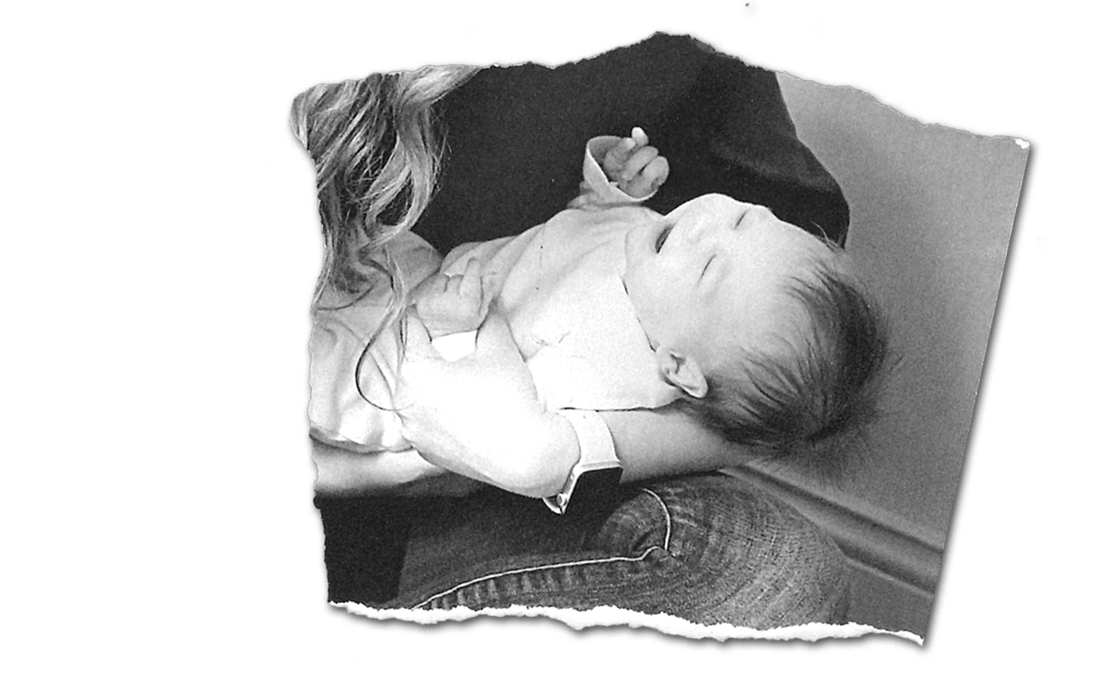 <\/div><\/div><\/div>
\n
\nFever, seizures, hyperactive reflexes, vomiting, diarrhea, sweating, dehydration and little-to-no sleep are the guaranteed symptoms that contribute to this pain and why most can\u2019t make it through opioid withdrawal \u201ccold turkey.\u201d
\nThe same set of symptoms applies to some infants exposed in utero to opioids taken by substance-dependent mothers. These infants are born with neonatal abstinence syndrome. The high-pitched crying and trembling make breastfeeding or bonding with a mother more difficult, and seizures can lead to lack of oxygen and even death if unrecognized.
\nCommon practice for adults experiencing opioid withdrawal is treatment with a drug such as methadone, with a gradual dose reduction to alleviate symptoms. However, the standard of care for infants has been to wait for sufficient signs of withdrawal symptoms before providing the child with medicine. Typically, infants are admitted to a neonatal intensive care unit (NICU) immediately after birth or once withdrawal symptoms are severe enough to warrant medication. Either way, they\u2019re destined for the harrowing experience of withdrawal.
\nThis was reality for Jennifer Hudson, a physician and medical director of newborn services at Prisma Health-Upstate in Greenville, South Carolina. She could predict with startling accuracy what would happen to infants who were exposed in utero to methadone. By day three or four, their intense withdrawal symptoms became as predictable and routine to her as the frustration she felt standing by and waiting for it to happen.<\/p>\n<\/div><\/section><\/div>
\n
\n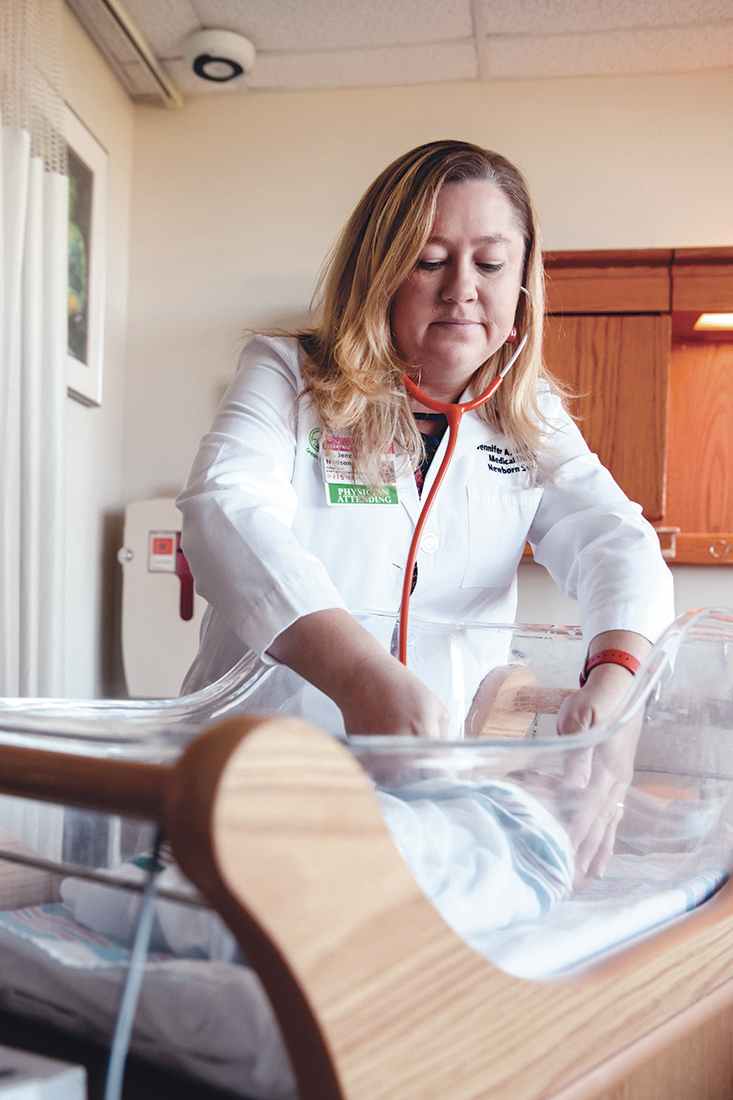 <\/div><\/div><\/div>
\n
\n
\nHudson decided to break the cycle. In 2003, she began offering mothers prophylactic treatment for their methadone-exposed infants in order to curb withdrawal symptoms. It proved to be a reliable way to get infants out in front of the damage that withdrawal could cause, and people began to notice the positive results.
\nColleagues and representatives from state agencies encouraged Hudson to publish her work so that the benefits from this approach would not remain with one population and one hospital system. She received funding from the South Carolina Department of Health and Human Services to better illustrate her approach\u2019s efficacy and safety, so she knew she needed data to make her case.
\n\u201cI couldn\u2019t just go to hospitals and say \u2018I\u2019m doing this really cool thing. I think it\u2019s safe and you should do it, too,\u2019\u201d Hudson says. \u201cI was not trained to do research and was a little afraid of that part, but when Clemson got involved that all changed. They have been incredible research partners, and this project wouldn\u2019t be where it is now without them.\u201d
\nHudson\u2019s collaboration with researchers from Clemson\u2019s College of Behavioral, Social and Health Sciences would help inform the Managing Abstinence in Newborns (MAiN) project that Hudson had been spearheading at Prisma Health since 2012. MAiN is now being expanded to multiple hospitals across South Carolina, but handing it off to doctors and staff unfamiliar with the approach isn\u2019t as simple as sharing the directions for use found on the back of a medicine bottle.
\nThe MAiN team has developed a curriculum for partner hospitals that addresses the immediate needs of infants and then educates, supports and encourages mothers to prioritize their health and the health of their children in the long term. Thanks to research from Clemson faculty, there\u2019s mounting evidence that this approach benefits mom and baby as well as hospital systems and surrounding communities trying to keep the negative effects of an opioid epidemic at bay.<\/p>\n<\/div><\/section>
\n
\n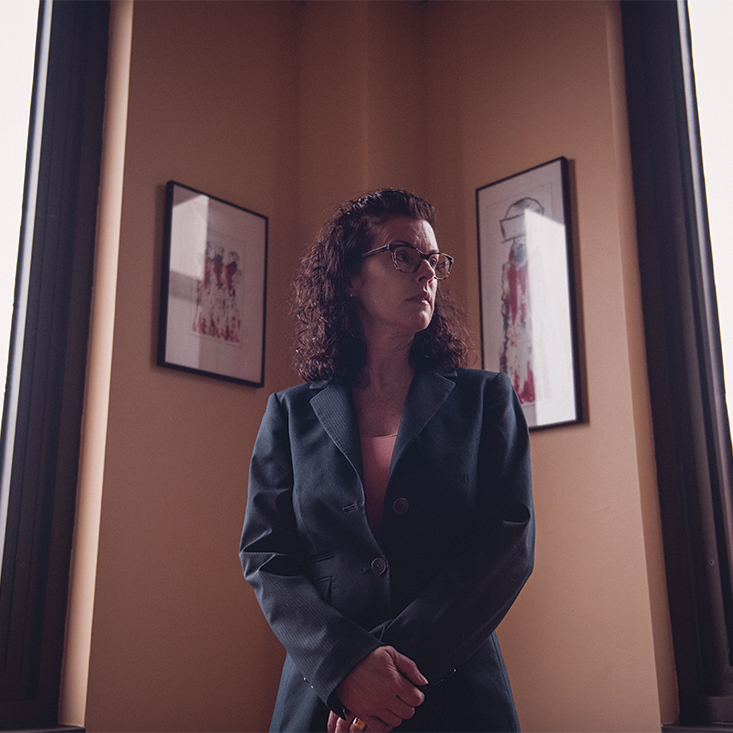 <\/div><\/div><\/div>
\n
\n
\nIt can be easy to rush to judgment about the mothers involved in the MAiN project. However, like most of the tragic stories that have come from the opioid epidemic in the U.S., there is no single path to addiction and no easy villain at which to point a finger.
\nRachel Mayo, professor in Clemson\u2019s public health sciences department, admits that even she had to check her emotions as a mother at the door when she was first introduced to the work Hudson was doing in 2012 when she was brought on board to inform Hudson\u2019s work with research. Any preconceptions she had of these mothers were quickly removed when she saw the similarities across their stories.
\n\u201cAs soon as I dug in, I realized they were just people who fell victim to the usual story of opioid addiction,\u201d Mayo says. \u201cThey had an accident or were injured, they were prescribed opioids, they became addicted to a highly addictive drug and then they got pregnant.\u201d
\nMothers involved in the MAiN program are typically in treatment for their own dependency, and quitting cold turkey is not advised for pregnant mothers due to the toll withdrawal takes on the mother\u2019s body and the baby in utero. Mayo, who has previously specialized in research involving women\u2019s health and cancer prevention, said she was immediately attracted to the project not only from a women\u2019s health standpoint, but also because of the growing nationwide prevalence of neonatal abstinence syndrome.
\nThe National Institute on Drug Abuse estimates that 32,000 babies born in the U.S. developed neonatal abstinence syndrome in 2014, which was a fivefold increase since 2004. That\u2019s a baby born every 15 minutes who will experience opioid withdrawal, and opioid use has yet to plateau in the U.S.
\nThe \u201cbig picture\u201d was clear enough to Mayo, but the project needed specific, accurate data to determine the effectiveness of Hudson\u2019s approach in the Upstate South Carolina population. With the added gray area that comes along with a stigmatized population such as substance-dependent mothers, the challenge in data collection became that much greater.
\n\u201cMothers are understandably afraid to self-identify for fear that their child will be taken from them, so infants would wind up in NICUs too late, or they were leaving hospitals before withdrawal symptoms occurred and coming back through emergency rooms,\u201d Mayo says. \u201cWe needed good, solid numbers, and there were a variety of factors that made that tricky.\u201d
\nMayo, along with the Clemson team and Hudson\u2019s staff, began pulling data from years of medical records related to pregnancies. To account for those mothers and babies who might have fallen through statistical cracks, they looked back also at emergency room readmission data 30 to 60 days after birth in order to paint as accurate a picture of the data as possible.
\nClemson researchers began to also analyze the protocols developed by Hudson\u2019s team, including the standardized plan of care for mothers in the program as well as the data they were capturing from mothers and infants. These tweaks would go on to improve future data collection and analysis of the MAiN protocol.
\nMayo says that while the hunt for accurate, reliable data was difficult, it was plain to see that Hudson\u2019s approach was working for infants. The approach was also becoming more reliable as the physicians and pharmacologists zeroed in on a methadone wean that was effective for each infant. Since 2012, 90 percent of mothers whose newborns qualified for early treatment have chosen the MAiN protocol.
\nThose infants have avoided devastating weight loss that comes from burning calories in withdrawal and the disorganized feeding skills that emerge from not eating or having time to bond with their mother. They have avoided both the special protocols to address bleeding caused by diaper rash and a need for long-term physical therapy required to help the infant finally relax after the trauma of withdrawal. They have avoided pain.
\n\u201cFor me, the most exciting thing was seeing that babies receiving this treatment did the same or better than those that went to NICUs,\u201d Mayo says. \u201cThis approach would be extremely successful if it were just limited to medical outcomes, but there are many more benefits.\u201d<\/p>\n<\/div><\/section><\/div>
\n
\n<\/div><\/div><\/div><\/div><\/div>
\n
\n
\nThe program\u2019s focus isn\u2019t just on preventing withdrawal; it\u2019s also about more time with mom. It has evolved to address the fears of mothers and provide a positive birth experience that comes with its own long-term benefits for both mom and baby.
\nAs special project coordinator for the Children\u2019s Hospital at Prisma Health-Upstate, Landrum Knight is often the first point of contact for mothers referred to the MAiN program. Moms who are new to the program understandably come in with concerns related to their child receiving methadone, and Knight helps them understand that there is no one-size-fits-all solution administered to each child.
\n\u201cIt usually sets them at ease to learn that some infants who go on what we call \u2018watch and see\u2019 protocol don\u2019t even end up needing medication, but for those that do, we are there to monitor and administer it before the pain begins,\u201d Knight says. \u201cMothers who have gone through withdrawal want nothing more than to keep their infants from experiencing it.\u201d
\nKnight works to also dispel misinformation that most mothers have upon entering the program. Mothers often think there is some punitive aspect to the program or that they\u2019ll lose their child, while others have more specific concerns about their ability to breastfeed.
\nBefore and after birth, the team is there to provide as much education as possible so that mothers become an integral part of the baby\u2019s care. Hudson says this is vital for the success of infants but also for the continued success of mothers, both in their journey to overcome addiction and to become successful parents.
\n\u201cPregnancy is a real window of opportunity for these mothers,\u201d Hudson says. \u201cIf there\u2019s ever a time that they will be motivated to make a positive change in their lives, it will be during this time when they can do something for their baby. We want to empower them to do that.\u201d
\nFeedback from mothers has been overwhelmingly positive. Hudson says there are three women who have had their third baby in the program, while many more have had two. A big part of why they stick with it is because they know it\u2019s a medical experience that is free of judgment.
\nThe length of a mother\u2019s treatment varies depending on her specific life circumstances and medication needs. Some mothers can wean from opioids within weeks of giving birth, while others will need to remain in treatment for years or for the rest of their lives.
\nOne mother \u2014 who requested to remain anonymous \u2014 entered the program well into her third trimester after difficult experiences with other physicians.
\n\u201cI missed appointments during months four to six because of stress and anxiety and complete exhaustion,\u201d she says, \u201cbut I was relaxed once I was accepted as a patient [in the MAiN program]. No one shamed me, and that is huge for an addict, but especially for a pregnant addict who continues in daily recovery. They accepted me.\u201d<\/p>\n<\/div><\/section><\/div>
\n
\n <\/div><\/div><\/div>
\n
\n
\nLori Dickes, associate professor and director of Clemson\u2019s master of public administration program, analyzes the project\u2019s broader economic impact. She says that a mom and baby \u201cgraduating\u201d from the program at a successful three-month checkup can have a big downstream effect.
\n\u201cCreating a system of care in which mothers feel less judged and more supported is better for all of us,\u201d Dickes says. \u201cThe hundreds of mothers and children who\u2019ve benefited from this program will have a more positive view of health care, and they\u2019ll be more likely to make their health a priority; the longer-term spillover effects are substantive.\u201d
\nThe evidence supporting the immediate and lasting positive impacts for mom and baby grow with every infant born in the MAiN program, as does the evidence that the program is simply smart for hospitals to employ.
\nInfants who don\u2019t have to be admitted to NICUs free up space for other newborns in need and ease the workload of NICU doctors, nurses and staff. Infants in the program are also far less likely to be evaluated in emergency rooms for withdrawal symptoms after discharge from the hospital. Almost 90 percent of infants in the program are covered by Medicaid, so savings are ultimately passed on to taxpayers; the research team estimates that hospitals save approximately $89,400 per birth.
\n\u201cAccording to research, the biggest proverbial bang for society\u2019s buck is with children or infants,\u201d Dickes says. \u201cIf we can get babies and children off to a healthy start, then everybody wins. This project is showing that from an economic standpoint, the approach developed by the MAiN program is good for our communities and not just individuals.\u201d
\nEven though the data was promising, the team wanted to provide even more backup for the program\u2019s effectiveness by conducting a pilot program at another Upstate hospital. Hudson says that even in a smaller hospital with less resources, outcomes in the pilot program were the same or better for mothers and infants.
\nThe pilot program also revealed ways in which expansion to other hospitals could be made easier for hospital staff. A half-day training session was expanded to a six-hour, web-based training module that addressed feedback gathered during the pilot. Training includes video instruction and training materials provided directly by members of the MAiN team.
\nThanks to the pilot and the data collected, the Department of Health and Human Services provided more funding through 2022 that will allow the MAiN program to expand to 10 hospitals across the state. Mayo says MAiN data compared to state and national data helped make the case for expansion.
\n\u201cWe\u2019ve shown the program to be effective at Prisma Health and during the pilot program, so we look forward to seeing how the program is implemented across the state,\u201d Mayo says. \u201cThe opioid epidemic is a nationwide issue, so we\u2019d like to come together with even more health care systems and academics to spread the positive results and lessons learned in this program as it is refined in the coming years.\u201d
\nThe first children who graduated from the MAiN model of care are now in their early teens, so researchers will also begin looking at the long-term outcomes they\u2019ve experienced. The team is particularly interested in any developmental issues \u2014 or lack thereof \u2014 that might be tied to participation in the program compared to long-term outcomes in other children.
\nThe program has come a long way since 2003, and it can all be traced to one person\u2019s well-developed sense of empathy. Hudson never anticipated that a method she decided to experiment with out of frustration might be expanded across the state and considered across the nation. She also never anticipated being as affected by the relationships she\u2019s established with moms in the program.
\nShe says one of her primary goals when working with them is to reinforce good behavior. Sometimes that\u2019s as easy as Hudson taking the time to tell a mom that she\u2019s proud of the choices that she\u2019s making for herself and her soon-to-be-born child. Last year, that simple phrase elicited a response that reminded Hudson again that she was on the right track.
\n\u201cAll I said to the mother was, \u2018I\u2019m proud of you,\u2019 and she just broke down in tears,\u201d Hudson says. \u201cShe told me that no one had ever told her that before. It broke my heart. Every mother deserves to hear that, just like every mother and child deserve to have a positive birth experience. It can be tough for anyone, and it shouldn\u2019t be any tougher for them.\u201d<\/p>\n<\/div><\/section><\/div>
\n
\n<\/div><\/div><\/div><\/div><\/div>
\n
Clemson researchers play an instrumental role in expanding a program that spares infants the pain of opioid withdrawal.<\/p>\n","protected":false},"author":13,"featured_media":21909,"comment_status":"open","ping_status":"open","sticky":false,"template":"","format":"standard","meta":{"_jetpack_newsletter_access":"","_jetpack_dont_email_post_to_subs":false,"_jetpack_newsletter_tier_id":0,"_jetpack_memberships_contains_paywalled_content":false,"_jetpack_feature_clip_id":0,"_jetpack_memberships_contains_paid_content":false,"footnotes":"","jetpack_post_was_ever_published":false},"categories":[4],"tags":[3348],"coauthors":[],"class_list":["post-21897","post","type-post","status-publish","format-standard","has-post-thumbnail","hentry","category-features","tag-winter-2020-features"],"jetpack_sharing_enabled":true,"jetpack_featured_media_url":"https:\/\/clemson.world\/archive\/wp-content\/uploads\/sites\/3\/2019\/12\/Opioid_Intro-2.jpg","_links":{"self":[{"href":"https:\/\/clemson.world\/archive\/wp-json\/wp\/v2\/posts\/21897","targetHints":{"allow":["GET"]}}],"collection":[{"href":"https:\/\/clemson.world\/archive\/wp-json\/wp\/v2\/posts"}],"about":[{"href":"https:\/\/clemson.world\/archive\/wp-json\/wp\/v2\/types\/post"}],"author":[{"embeddable":true,"href":"https:\/\/clemson.world\/archive\/wp-json\/wp\/v2\/users\/13"}],"replies":[{"embeddable":true,"href":"https:\/\/clemson.world\/archive\/wp-json\/wp\/v2\/comments?post=21897"}],"version-history":[{"count":0,"href":"https:\/\/clemson.world\/archive\/wp-json\/wp\/v2\/posts\/21897\/revisions"}],"wp:featuredmedia":[{"embeddable":true,"href":"https:\/\/clemson.world\/archive\/wp-json\/wp\/v2\/media\/21909"}],"wp:attachment":[{"href":"https:\/\/clemson.world\/archive\/wp-json\/wp\/v2\/media?parent=21897"}],"wp:term":[{"taxonomy":"category","embeddable":true,"href":"https:\/\/clemson.world\/archive\/wp-json\/wp\/v2\/categories?post=21897"},{"taxonomy":"post_tag","embeddable":true,"href":"https:\/\/clemson.world\/archive\/wp-json\/wp\/v2\/tags?post=21897"},{"taxonomy":"author","embeddable":true,"href":"https:\/\/clemson.world\/archive\/wp-json\/wp\/v2\/coauthors?post=21897"}],"curies":[{"name":"wp","href":"https:\/\/api.w.org\/{rel}","templated":true}]}}