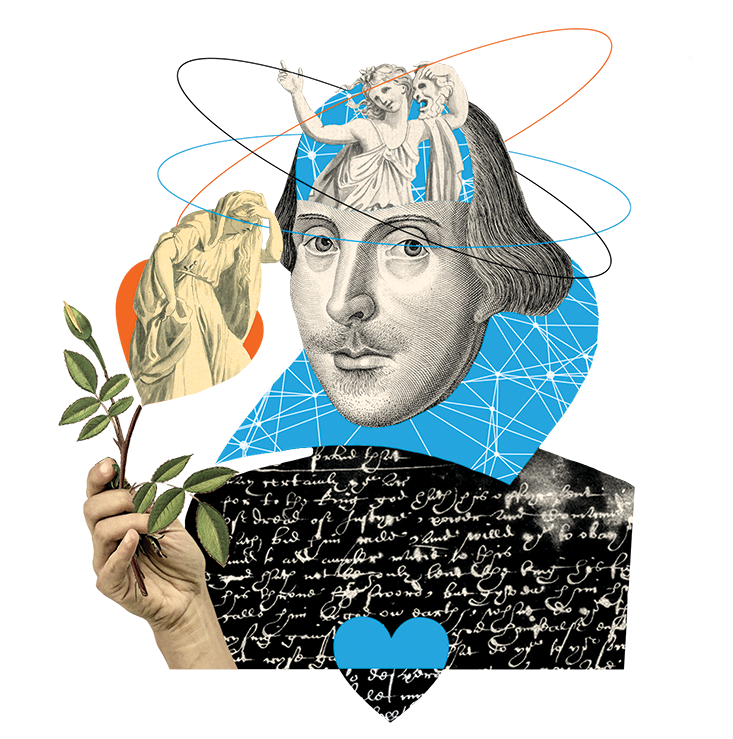
{"id":24925,"date":"2022-06-27T11:17:30","date_gmt":"2022-06-27T15:17:30","guid":{"rendered":"https:\/\/clemson.world\/?p=24925"},"modified":"2022-06-27T11:17:30","modified_gmt":"2022-06-27T15:17:30","slug":"line-by-line","status":"publish","type":"post","link":"https:\/\/clemson.world\/archive\/line-by-line\/","title":{"rendered":"Line-by-Line"},"content":{"rendered":"<p><div id='fullscreen_slider_1'  class='avia-fullscreen-slider main_color   avia-builder-el-0  el_before_av_image  avia-builder-el-first   container_wrap sidebar_right' style=' '  ><a href='#next-section' title='' class='scroll-down-link av-control-minimal' aria-hidden='true' data-av_icon='\ue877' data-av_iconfont='entypo-fontello'><\/a><div   data-size='no scaling'  data-lightbox_size='large'  data-animation='slide'  data-conditional_play=''  data-ids='24926'  data-video_counter='0'  data-autoplay='true'  data-bg_slider='true'  data-slide_height='100'  data-handle='av_fullscreen'  data-interval='5'  data-class=' '  data-el_id=''  data-css_id='fullscreen_slider_1'  data-scroll_down='aviaTBscroll_down'  data-control_layout='av-control-minimal'  data-custom_markup=''  data-perma_caption=''  data-autoplay_stopper=''  data-image_attachment='scroll'  data-min_height='0px'  data-stretch=''  class='avia-slideshow avia-slideshow-1 av-slider-scroll-down-active av-control-minimal av-default-height-applied avia-slideshow-no scaling av_fullscreen   avia-slide-slider '  itemprop=\"image\" itemscope=\"itemscope\" itemtype=\"https:\/\/schema.org\/ImageObject\" ><ul class='avia-slideshow-inner ' style='padding-bottom: 66.6666666667%;' ><li style='background-position:top center;' data-img-url='https:\/\/clemson.world\/archive\/wp-content\/uploads\/sites\/3\/2022\/06\/AI_Title.jpg' class=' av-single-slide slide-1 ' ><div data-rel='slideshow-1' class='avia-slide-wrap '   ><\/div><\/li><\/ul><\/div><\/div><div id='after_full_slider_1'  class='main_color av_default_container_wrap container_wrap sidebar_right' style=' '  ><div class='container' ><div class='template-page content  av-content-small alpha units'><div class='post-entry post-entry-type-page post-entry-24925'><div class='entry-content-wrapper clearfix'><br \/>\n<div  class='avia-image-container  av-styling-    avia-builder-el-1  el_after_av_fullscreen  el_before_av_hr  avia-builder-el-first  avia-align-center '  itemprop=\"image\" itemscope=\"itemscope\" itemtype=\"https:\/\/schema.org\/ImageObject\"  ><div class='avia-image-container-inner'><div class='avia-image-overlay-wrap'><img class='avia_image' src='https:\/\/clemson.world\/archive\/wp-content\/uploads\/sites\/3\/2022\/06\/AI_Title.png' alt='' title='AI_Title' height=\"262\" width=\"1100\"  itemprop=\"thumbnailUrl\"  \/><\/div><\/div><\/div><br \/>\n<div  style='height:50px' class='hr hr-invisible   avia-builder-el-2  el_after_av_image  el_before_av_one_fifth '><span class='hr-inner ' ><span class='hr-inner-style'><\/span><\/span><\/div><br \/>\n<div class=\"flex_column av_one_fifth  flex_column_div av-zero-column-padding first  avia-builder-el-3  el_after_av_hr  el_before_av_three_fifth  \" style='border-radius:0px; '><\/div><br \/>\n<div class=\"flex_column av_three_fifth  flex_column_div av-zero-column-padding   avia-builder-el-4  el_after_av_one_fifth  el_before_av_one_fifth  \" style='border-radius:0px; '><div  style=' margin-top:0; margin-bottom:0;'  class='hr hr-custom hr-center hr-icon-yes   avia-builder-el-5  avia-builder-el-no-sibling '><span class='hr-inner   inner-border-av-border-thin' style=' width:1100px; border-color:#dedede;' ><span class='hr-inner-style'><\/span><\/span><span class='av-seperator-icon'  aria-hidden='true' data-av_icon='\ue808' data-av_iconfont='entypo-fontello'><\/span><span class='hr-inner   inner-border-av-border-thin' style=' width:1100px; border-color:#dedede;' ><span class='hr-inner-style'><\/span><\/span><\/div><\/div><br \/>\n<div class=\"flex_column av_one_fifth  flex_column_div av-zero-column-padding   avia-builder-el-6  el_after_av_three_fifth  el_before_av_one_fifth  \" style='border-radius:0px; '><\/div><br \/>\n<div class=\"flex_column av_one_fifth  flex_column_div av-zero-column-padding first  avia-builder-el-7  el_after_av_one_fifth  el_before_av_three_fifth  column-top-margin\" style='border-radius:0px; '><\/div><br \/>\n<div class=\"flex_column av_three_fifth  flex_column_div av-zero-column-padding   avia-builder-el-8  el_after_av_one_fifth  el_before_av_one_fifth  column-top-margin\" style='border-radius:0px; '><section class=\"av_textblock_section \"  itemscope=\"itemscope\" itemtype=\"https:\/\/schema.org\/BlogPosting\" itemprop=\"blogPost\" ><div class='avia_textblock  av_inherit_color '  style='font-size:16px; color:#000000; '  itemprop=\"text\" ><p style=\"text-align: center\">By\u00a0<b>Angela Nixon \u201999, M \u201901<\/b><br \/>\nIllustrations by <b>Chris Koelle<\/b><\/p>\n<\/div><\/section><\/div><\/p>\n<p><div class=\"flex_column av_one_fifth  flex_column_div av-zero-column-padding   avia-builder-el-10  el_after_av_three_fifth  el_before_av_one_fifth  column-top-margin\" style='border-radius:0px; '><\/div><br \/>\n<div class=\"flex_column av_one_fifth  flex_column_div av-zero-column-padding first  avia-builder-el-11  el_after_av_one_fifth  el_before_av_three_fifth  column-top-margin\" style='border-radius:0px; '><\/div><br \/>\n<div class=\"flex_column av_three_fifth  flex_column_div av-zero-column-padding   avia-builder-el-12  el_after_av_one_fifth  el_before_av_one_fifth  column-top-margin\" style='border-radius:0px; '><div  style=' margin-top:0; margin-bottom:0;'  class='hr hr-custom hr-center hr-icon-yes   avia-builder-el-13  avia-builder-el-no-sibling '><span class='hr-inner   inner-border-av-border-thin' style=' width:1100px; border-color:#dedede;' ><span class='hr-inner-style'><\/span><\/span><span class='av-seperator-icon'  aria-hidden='true' data-av_icon='\ue808' data-av_iconfont='entypo-fontello'><\/span><span class='hr-inner   inner-border-av-border-thin' style=' width:1100px; border-color:#dedede;' ><span class='hr-inner-style'><\/span><\/span><\/div><\/div><br \/>\n<div class=\"flex_column av_one_fifth  flex_column_div av-zero-column-padding   avia-builder-el-14  el_after_av_three_fifth  el_before_av_hr  column-top-margin\" style='border-radius:0px; '><\/div><br \/>\n<div  style='height:50px' class='hr hr-invisible   avia-builder-el-15  el_after_av_one_fifth  el_before_av_one_full '><span class='hr-inner ' ><span class='hr-inner-style'><\/span><\/span><\/div><br \/>\n<div class=\"flex_column av_one_full  flex_column_div av-zero-column-padding first  avia-builder-el-16  el_after_av_hr  el_before_av_hr  \" style='border-radius:0px; '><section class=\"av_textblock_section \"  itemscope=\"itemscope\" itemtype=\"https:\/\/schema.org\/BlogPosting\" itemprop=\"blogPost\" ><div class='avia_textblock  av_inherit_color '  style='font-size:33px; color:#000000; '  itemprop=\"text\" ><p style=\"text-align: center;color: #000000;line-height: 140%\"><strong>Whether it\u2019s code, color or creative writing, machine learning opens the door to better understanding<\/strong><\/p>\n<\/div><\/section><\/div><br \/>\n<div  style='height:100px' class='hr hr-invisible   avia-builder-el-18  el_after_av_one_full  el_before_av_image '><span class='hr-inner ' ><span class='hr-inner-style'><\/span><\/span><\/div><br \/>\n<div  class='avia-image-container  av-styling-    avia-builder-el-19  el_after_av_hr  el_before_av_one_full  avia-align-center '  itemprop=\"image\" itemscope=\"itemscope\" itemtype=\"https:\/\/schema.org\/ImageObject\"  ><div class='avia-image-container-inner'><div class='avia-image-overlay-wrap'><img class='avia_image' src='https:\/\/clemson.world\/archive\/wp-content\/uploads\/sites\/3\/2022\/06\/AI_Shakespeare.png' alt='' title='AI_Shakespeare' height=\"739\" width=\"733\"  itemprop=\"thumbnailUrl\"  \/><\/div><\/div><\/div><br \/>\n<div class=\"flex_column av_one_full  flex_column_div av-zero-column-padding first  avia-builder-el-20  el_after_av_image  el_before_av_one_full  \" style='border-radius:0px; '><section class=\"av_textblock_section \"  itemscope=\"itemscope\" itemtype=\"https:\/\/schema.org\/BlogPosting\" itemprop=\"blogPost\" ><div class='avia_textblock  av_inherit_color '  style='font-size:19px; color:#000000; '  itemprop=\"text\" ><p class=\"p1\"><span class=\"s1\">When Dillon Ranwala enrolled <\/span><span class=\"s2\">at Clemson as a computer science major, the last thing he expected to analyze was \u201cTo be, or not to be\u201d and \u201cwherefore art thou, Romeo?\u201d<\/span><\/p>\n<p class=\"p2\"><span class=\"s2\">Ranwala joined a Creative Inquiry team called \u201cWatt AI,\u201d looking for a project that would give him hands-on experience in IBM\u2019s artificial intelligence (AI) and machine-learning program, Watson. He was surprised to find Shakespeare research on the list of projects he could join.<\/span><\/p>\n<p class=\"p2\"><span class=\"s2\">Lucian Ghita, senior lecturer of English, started th<\/span>e project in 2019 when he joined the Watt Faculty Fellows, a program designed to promote the Watt Family Innovation Center\u2019s unique resources to faculty in a variety of disciplines. Ghita had read a paper about using AI to analyze the language in <i>Macbeth,<\/i> and he wanted to explore how AI could be used to analyze other Shakespeare plays. Since natural language understanding is one of Watson\u2019s primary purposes, it seemed the perfect tool to approach some very old and familiar works in a new way.<\/p>\n<p class=\"p2\"><span class=\"s2\">Ghita and his team are using Watson to analyze emotion in Shakespeare\u2019s plays and how emotional expression differs between genres and genders. He hopes his findings will bring a greater understanding of Shakespeare\u2019s works and could help actors and directors express characters\u2019 emotions even more effectively.<\/span><\/p>\n<p class=\"p2\"><span class=\"s2\">The first project the group tackled was <i>Hamlet,<\/i> which actually exists in three versions of different lengths. The earliest version is much shorter than what most people consider the traditional version of the play, says Ghita.<\/span><\/p>\n<\/div><\/section><\/div><br \/>\n<div class=\"flex_column av_one_full  flex_column_div av-zero-column-padding first  avia-builder-el-22  el_after_av_one_full  el_before_av_hr  column-top-margin\" style='border-radius:0px; '><section class=\"av_textblock_section \"  itemscope=\"itemscope\" itemtype=\"https:\/\/schema.org\/BlogPosting\" itemprop=\"blogPost\" ><div class='avia_textblock  av_inherit_color '  style='font-size:40px; color:#000000; '  itemprop=\"text\" ><p style=\"text-align: center;color: #000000;line-height: 140%\"><strong>\u201cThis has allowed me to see how I can work in arts and literature while also being a STEM major.\u201d<\/strong><\/p>\n<p style=\"text-align: center;color: #ff6600;font-size: 19px;font-weight: bold;letter-spacing: 3px\">Alison Menezes<\/p>\n<\/div><\/section><\/div><br \/>\n<div  style=' margin-top:30px; margin-bottom:100px;'  class='hr hr-custom hr-center hr-icon-no   avia-builder-el-24  el_after_av_one_full  el_before_av_one_full '><span class='hr-inner   inner-border-av-border-fat' style=' width:220px; border-color:#ff6600;' ><span class='hr-inner-style'><\/span><\/span><\/div><br \/>\n<div class=\"flex_column av_one_full  flex_column_div av-zero-column-padding first  avia-builder-el-25  el_after_av_hr  el_before_av_one_full  \" style='border-radius:0px; '><section class=\"av_textblock_section \"  itemscope=\"itemscope\" itemtype=\"https:\/\/schema.org\/BlogPosting\" itemprop=\"blogPost\" ><div class='avia_textblock  av_inherit_color '  style='font-size:19px; color:#000000; '  itemprop=\"text\" ><p class=\"p1\"><span class=\"s1\">\u201cWe wanted to see if there were any differences in the emotional scores between the different versions, and we found some interesting things,\u201d he continues. \u201cIn the first version, everything happens much faster, and Hamlet is more decisive in his actions. In later versions, the action is slowed down, and Hamlet agonizes more over what to do and whether or not to seek his revenge for much longer.<\/span><\/p>\n<p class=\"p1\"><span class=\"s1\">\u201cIn the shorter version, Hamlet is angrier and less fearful, but in later versions, the fear scores were higher, and the anger scores were lower.\u201d<\/span><\/p>\n<p class=\"p1\"><span class=\"s1\">Ghita and his team are now looking at all 37 of Shakespeare\u2019s plays and how emotion is expressed differently across their various genres. The bulk of the work is feeding each line of dialogue into the AI and teaching it how to detect emotions by different words.<\/span><\/p>\n<p class=\"p1\"><span class=\"s1\">Alison Menezes, a freshman computer science major, is one of the students helping teach Watson about Shakespeare. She says the team has about 60,000 lines of text to enter for the project, about half of which she is responsible for.<\/span><\/p>\n<p class=\"p1\"><span class=\"s1\">\u201cWe label and categorize each line, and I now have a way better understanding of AI than I did before,\u201d she says. \u201cI can see that it is different than the \u2018magical technology\u2019 I thought it was. There\u2019s a lot of coding, a lot of logic to it.\u201d<\/span><\/p>\n<p class=\"p1\"><span class=\"s1\">As a musician majoring in computer science, Menezes was drawn to the project because it blended her interests in computing and technology with the arts.<\/span><\/p>\n<p class=\"p1\"><span class=\"s1\">\u201cThis has allowed me to see how I can work in arts and literature while also being a STEM major,\u201d she says. \u201cI feel like there is a lot of potential for applying AI to the arts and music that I would love to explore.\u201d<\/span><\/p>\n<p class=\"p1\"><span class=\"s1\">Ranwala agrees: \u201cI have been able to learn how to work on a team of people who don\u2019t necessarily have the same background as I do, such as an English professor or a statistician. But we have all been able to work together and bring in our own subject matter expertise and communicate with one another so that we all understand what we\u2019re doing. In the real workplace, that\u2019s what you need to be able to do.\u201d<\/span><\/p>\n<\/div><\/section><\/div><br \/>\n<div class=\"flex_column av_one_full  flex_column_div av-zero-column-padding first  avia-builder-el-27  el_after_av_one_full  el_before_av_hr  column-top-margin\" style='border-radius:0px; '><section class=\"av_textblock_section \"  itemscope=\"itemscope\" itemtype=\"https:\/\/schema.org\/BlogPosting\" itemprop=\"blogPost\" ><div class='avia_textblock  av_inherit_color '  style='font-size:40px; color:#000000; '  itemprop=\"text\" ><p style=\"text-align: center;color: #000000;line-height: 140%\"><strong>\u201cThe Creative Inquiry program really separates Clemson from other research universities.\u201d<\/strong><\/p>\n<p style=\"text-align: center;color: #ff6600;font-size: 19px;font-weight: bold;letter-spacing: 3px\">Jeremy Spooner<\/p>\n<\/div><\/section><\/div><br \/>\n<div  style=' margin-top:30px; margin-bottom:100px;'  class='hr hr-custom hr-center hr-icon-no   avia-builder-el-29  el_after_av_one_full  el_before_av_one_full '><span class='hr-inner   inner-border-av-border-fat' style=' width:220px; border-color:#ff6600;' ><span class='hr-inner-style'><\/span><\/span><\/div><br \/>\n<div class=\"flex_column av_one_full  flex_column_div av-zero-column-padding first  avia-builder-el-30  el_after_av_hr  el_before_av_hr  \" style='border-radius:0px; '><section class=\"av_textblock_section \"  itemscope=\"itemscope\" itemtype=\"https:\/\/schema.org\/BlogPosting\" itemprop=\"blogPost\" ><div class='avia_textblock  av_inherit_color '  style='font-size:19px; color:#000000; '  itemprop=\"text\" ><p class=\"p1\"><span class=\"s1\"><b>The stuff of science fiction<\/b><\/span><\/p>\n<p class=\"p2\"><span class=\"s2\">In 1956, the term \u201cartificial intelligence\u201d <\/span>was first coined at a Dartmouth College conference. The Dartmouth Summer Research Project on Artificial Intelligence focused on a field that had previously been the stuff of science fiction \u2014 developing \u201cthinking machines\u201d that could learn, solve problems and make decisions in the same way the human mind does.<\/p>\n<p class=\"p3\">In 1997, IBM\u2019s Deep Blue, a supercomputer built to learn and play chess, defeated a human opponent, world chess champion Garry Kasparov. A milestone in AI research and development, the victory was a very public demonstration that computers can learn from input and make decisions and predictions based on that input.<\/p>\n<p class=\"p3\">IBM went on to develop Watson, a question-answering AI computer system that made history in 2011 when it won <i>Jeopardy!<\/i>, defeating champions Brad Rutter and Ken Jennings. Watson has since been further developed to include processing and analyzing natural language, generating hypotheses, and retrieving information. Today, Watson is used in industries ranging from agriculture to health care to help analyze large quantities of data and provide subsequent insights.<\/p>\n<p class=\"p3\">In 2018, Watson came to Clemson through a partnership with IBM and the Watt Family Innovation Center. Known as Watt AI, the program assists faculty across campus with using AI and machine learning tools in their research. Students get hands-on experience using AI through the Watt AI Creative Inquiry project.<\/p>\n<p class=\"p3\">Creative Inquiry is Clemson\u2019s nationally recognized cross-disciplinary undergraduate research program. More than 2,800 students from all majors participate in Creative Inquiry each semester, working directly with faculty mentors and a team of peers to tackle real-world problems.<\/p>\n<p class=\"p3\">The human brains behind the AI in the Watt Center are research associates Hudson Smith and Carl Ehrett M \u201917. Smith and Ehrett lead the Watt AI Creative Inquiry class and mentor student teams working with faculty on various AI-related projects. They are working with more than 30 projects from a range of disciplines, including health care, marketing, engineering, political science and literature.<\/p>\n<p class=\"p3\">\u201cWe facilitate AI and machine learning research for any faculty who are interested in applying it to their research but might not have the background or the experience to do it alone,\u201d says Ehrett.<\/p>\n<\/div><\/section><\/div><br \/>\n<div  style='height:75px' class='hr hr-invisible   avia-builder-el-32  el_after_av_one_full  el_before_av_image '><span class='hr-inner ' ><span class='hr-inner-style'><\/span><\/span><\/div><br \/>\n<div  class='avia-image-container  av-styling-    avia-builder-el-33  el_after_av_hr  el_before_av_hr  avia-align-center '  itemprop=\"image\" itemscope=\"itemscope\" itemtype=\"https:\/\/schema.org\/ImageObject\"  ><div class='avia-image-container-inner'><div class='avia-image-overlay-wrap'><img class='avia_image' src='https:\/\/clemson.world\/archive\/wp-content\/uploads\/sites\/3\/2022\/06\/AI_Tiger.png' alt='' title='AI_Tiger' height=\"748\" width=\"733\"  itemprop=\"thumbnailUrl\"  \/><\/div><\/div><\/div><br \/>\n<div  style='height:50px' class='hr hr-invisible   avia-builder-el-34  el_after_av_image  el_before_av_one_full '><span class='hr-inner ' ><span class='hr-inner-style'><\/span><\/span><\/div><br \/>\n<div class=\"flex_column av_one_full  flex_column_div av-zero-column-padding first  avia-builder-el-35  el_after_av_hr  el_before_av_hr  \" style='border-radius:0px; '><section class=\"av_textblock_section \"  itemscope=\"itemscope\" itemtype=\"https:\/\/schema.org\/BlogPosting\" itemprop=\"blogPost\" ><div class='avia_textblock  av_inherit_color '  style='font-size:19px; color:#000000; '  itemprop=\"text\" ><p class=\"p1\"><span class=\"s1\"><b>Protecting the Clemson colors<\/b><\/span><\/p>\n<p class=\"p2\"><span class=\"s2\">Whenever Erica Walker M \u201905, Ph.D.\u201916 <\/span>and her husband would watch Clemson Football games, she noticed that Clemson Orange often looked red, depending on what TV she was watching. As an assistant professor in graphic communications with an education in film production, she is well aware of how important colors are to an organization\u2019s brand. She wondered if there was a way to correct it so that Clemson Orange would look like Clemson Orange consistently, regardless of the TV.<\/p>\n<p class=\"p3\">Walker was familiar with the work Smith and Ehrett were doing, so she asked if AI could be used for color correction \u2014 specifically for color correction in fast-paced, live broadcast situations like sports. They created a Creative Inquiry project, and over the next few years, ColorNet was born.<\/p>\n<p class=\"p3\">\u201cWhat ColorNet is made to do is identify and correct specific brand colors live on a video feed,\u201d Walker says. For now, ColorNet is trained to correct Clemson\u2019s official colors \u2014 Clemson Orange and Regalia \u2014 but the software has now been patented and could be trained to correct any brand\u2019s colors as they appear in video and photography.<\/p>\n<p class=\"p3\">To correct colors as an event on a live broadcast, the AI must identify the incorrect colors and make the color correction in fractions of a second. And it must do that without altering any other colors it is not programmed to correct.<\/p>\n<p class=\"p3\">The ColorNet team is also developing an app that will implement color correction in photos on the fly. For example, this technology could be used by social media managers who are posting photos in real time during events.<\/p>\n<p class=\"p3\">Michelle Mayer and Jeremy Spooner are two computer engineering seniors who have worked on the ColorNet project for several years. And both of them already have jobs lined up after they graduate in May. Mayer is going to be a software engineer at Microsoft in Charlotte, and Spooner has been hired as a software engineer at AT&amp;T\u2019s headquarters in Dallas. Both credit their experience on the project with helping them land their jobs.<\/p>\n<p class=\"p3\">\u201cThe Creative Inquiry program really separates Clemson from other research universities,\u201d Spooner says. \u201cPrograms like this are how our students are a step above students from other schools in applying for jobs. We have a huge advantage coming out of college after going through this program.\u201d<\/p>\n<\/div><\/section><\/div><br \/>\n<div  style='height:75px' class='hr hr-invisible   avia-builder-el-37  el_after_av_one_full  el_before_av_image '><span class='hr-inner ' ><span class='hr-inner-style'><\/span><\/span><\/div><br \/>\n<div  class='avia-image-container  av-styling-    avia-builder-el-38  el_after_av_hr  el_before_av_one_full  avia-align-center '  itemprop=\"image\" itemscope=\"itemscope\" itemtype=\"https:\/\/schema.org\/ImageObject\"  ><div class='avia-image-container-inner'><div class='avia-image-overlay-wrap'><img class='avia_image' src='https:\/\/clemson.world\/archive\/wp-content\/uploads\/sites\/3\/2022\/06\/AI_Woman.png' alt='' title='AI_Woman' height=\"891\" width=\"733\"  itemprop=\"thumbnailUrl\"  \/><\/div><\/div><\/div><br \/>\n<div class=\"flex_column av_one_full  flex_column_div av-zero-column-padding first  avia-builder-el-39  el_after_av_image  el_before_av_section  avia-builder-el-last  \" style='border-radius:0px; '><section class=\"av_textblock_section \"  itemscope=\"itemscope\" itemtype=\"https:\/\/schema.org\/BlogPosting\" itemprop=\"blogPost\" ><div class='avia_textblock  av_inherit_color '  style='font-size:19px; color:#000000; '  itemprop=\"text\" ><p class=\"p1\"><b>Man versus machine in marketing<\/b><\/p>\n<p class=\"p2\"><span class=\"s1\">The Watt Center<\/span><span class=\"s2\"> isn\u2019t the only place where AI research is happening at Clemson. Mike Giebelhausen, associate professor of marketing, has a Creative Inquiry group exploring whether AI can replace humans in a variety of roles, including the creation of ads and other brand communications.<\/span><\/p>\n<p class=\"p3\"><span class=\"s2\">Cadency, a student-run ad agency in the Erwin Center for Brand Communication, wrote ad copy for several fictitous products while an AI tool generated ad copy for those same products. The ads were split into categories \u2014 emotional or utilitarian. They asked people to rate the ads, and the results were a bit surprising.<\/span><\/p>\n<p class=\"p3\"><span class=\"s2\">\u201cOur initial hypothesis was that humans might do a better job at emotional ads,\u201d says Giebelhausen. \u201cInstead, we found that humans were relatively better at creating utilitarian ads\u201d \u2014 which Geibelhausen and his team theorized is because the AI was better at expressing empathy than sympathy.<\/span><\/p>\n<p class=\"p3\">\u201cThe algorithm was pretty good at adding emotion, actually, which is not that surprising in retrospect because a lot of the technology has been built around the idea of sentiment analysis and being good at detecting sentiment in language,\u201d he explains. \u201cWe found it didn\u2019t have as good a capability to understand problems that people need to solve, whereas copywriters really have felt that pain. So humans were able to write a more effective utilitarian ad.\u201d<\/p>\n<p class=\"p3\">The project allowed siblings Meg and Charles Truluck the chance to team up and work together. Meg, a marketing major who works for Cadency, provided the human-generated ad copy, and Charles, a computer science major, worked with the AI algorithm to create the computer-generated copy. They both liked that the project gave them the opportunity to dabble in one another\u2019s field of study.<\/p>\n<p class=\"p3\">\u201cI feel like that\u2019s something I wouldn\u2019t have been able to do at a lot of other schools,\u201d says Charles. \u201cYou would have to be a marketing major to do undergraduate research in marketing.\u201d<\/p>\n<p class=\"p3\">\u201cIt\u2019s cool to be able to do research with someone from a totally opposite major,\u201d says Meg. \u201cComputer science and marketing, you would probably say that they\u2019re the farthest from each other, but it\u2019s crazy how much they really do intertwine.\u201d<\/p>\n<\/div><\/section><\/div><br \/>\n<\/div><\/div><\/div><!-- close content main div --><\/div><\/div><div id='av_section_1'  class='avia-section main_color avia-section-small avia-no-border-styling avia-bg-style-scroll  avia-builder-el-41  el_after_av_one_full  el_before_av_hr   container_wrap sidebar_right' style='background-color: #111111;  '  ><div class='container' ><div class='template-page content  av-content-small alpha units'><div class='post-entry post-entry-type-page post-entry-24925'><div class='entry-content-wrapper clearfix'>\n<div class=\"flex_column av_one_full  flex_column_div first  avia-builder-el-42  avia-builder-el-no-sibling  \" style='padding:10; border-radius:0px; '><section class=\"av_textblock_section \"  itemscope=\"itemscope\" itemtype=\"https:\/\/schema.org\/BlogPosting\" itemprop=\"blogPost\" ><div class='avia_textblock  av_inherit_color '  style='font-size:19px; color:#ffffff; '  itemprop=\"text\" ><p><span style=\"color: #eeebea;font-size: 33px\"><strong>What is Creative Inquiry?<\/strong><\/span><\/p>\n<p style=\"font-weight: lighter\">Creative Inquiry is Clemson\u2019s unique undergraduate research program that combines experiential learning, multi-disciplinary interactions and team-based research. Since it began in 2005, more than 55,000 students from every major have participated in Creative Inquiry projects.<\/p>\n<p style=\"font-weight: lighter\">Today, approximately 2,800 students participate in Creative Inquiry each semester, exploring a wide range of topics, from robotic surgery to sustainable peach packaging to thermoregulartion in spring flowers. Projects typically last for multiple semesters, allowing students and faculty to dive deeper as they tackle tough questions and search for solutions to life\u2019s global challenges.<\/p>\n<p style=\"font-weight: lighter\">Students also have the opportunity to work with industry-leading companies through the Corporate Creative Inquiry program, which allows students to apply their knowledge and skills to real-world problems presented by industry partners. These experiences help open the door to potential internships and future employment possibilities.<\/p>\n<p style=\"font-weight: lighter\">Creative Inquiry has been nationally recognized as a leader in undergraduate research and engagement, including receiving the 2016 Award for Undergraduate Research Accomplishment from the Council on Undergraduate Research.<\/p>\n<p><strong>For more information, visit the <a style=\"color: #ff6600\" href=\"https:\/\/www.clemson.edu\/centers-institutes\/watt\/creative-inquiry\/index.html\">Creative Inquiry website.<\/a><\/strong><\/p>\n<\/div><\/section><\/div><\/div><\/div><\/div><!-- close content main div --><\/div><\/div><div id='after_section_1'  class='main_color av_default_container_wrap container_wrap sidebar_right' style=' '  ><div class='container' ><div class='template-page content  av-content-small alpha units'><div class='post-entry post-entry-type-page post-entry-24925'><div class='entry-content-wrapper clearfix'><div  style='height:50px' class='hr hr-invisible   avia-builder-el-44  el_after_av_section  el_before_av_one_full  avia-builder-el-first '><span class='hr-inner ' ><span class='hr-inner-style'><\/span><\/span><\/div><br \/>\n<div class=\"flex_column av_one_full  flex_column_div av-zero-column-padding first  avia-builder-el-45  el_after_av_hr  el_before_av_hr  \" style='border-radius:0px; '><section class=\"av_textblock_section \"  itemscope=\"itemscope\" itemtype=\"https:\/\/schema.org\/BlogPosting\" itemprop=\"blogPost\" ><div class='avia_textblock  av_inherit_color '  style='font-size:40px; color:#000000; '  itemprop=\"text\" ><p style=\"text-align: center;color: #000000;line-height: 140%\"><strong>\u201cThe AI and machine- learning tools we use are all in the service of knowledge discovery.\u201d<\/strong><\/p>\n<p style=\"text-align: center;color: #ff6600;font-size: 19px;font-weight: bold;letter-spacing: 3px\">Hudson Smith<\/p>\n<\/div><\/section><\/div><br \/>\n<div  style=' margin-top:30px; margin-bottom:100px;'  class='hr hr-custom hr-center hr-icon-no   avia-builder-el-47  el_after_av_one_full  el_before_av_one_full '><span class='hr-inner   inner-border-av-border-fat' style=' width:220px; border-color:#ff6600;' ><span class='hr-inner-style'><\/span><\/span><\/div><br \/>\n<div class=\"flex_column av_one_full  flex_column_div av-zero-column-padding first  avia-builder-el-48  el_after_av_hr  el_before_av_section  avia-builder-el-last  \" style='border-radius:0px; '><section class=\"av_textblock_section \"  itemscope=\"itemscope\" itemtype=\"https:\/\/schema.org\/BlogPosting\" itemprop=\"blogPost\" ><div class='avia_textblock  av_inherit_color '  style='font-size:19px; color:#000000; '  itemprop=\"text\" ><p class=\"p1\"><b>Coding + critical thinking<\/b><\/p>\n<p class=\"p2\"><span class=\"s1\">In their AI class at the Watt Center, <\/span><span class=\"s2\">Smith and Ehrett are not only teaching students about coding and creating learning models, but also discussing perceptions of AI in society and the ethical implications and problems that can arise with things like bias.<\/span><\/p>\n<p class=\"p3\">\u201cOne of our goals is to help students think critically about the role of technology in society and to think about the impact these tools can have,\u201d Smith says.<\/p>\n<p class=\"p3\">\u201cFor example, AI might have outcomes that are disproportionately favoring one group over another,\u201d says Ehrett. \u201cWe try to teach them how that can happen and ways to guard against it.\u201d<\/p>\n<p class=\"p3\">Smith and Ehrett realize that for many people, AI still seems like something out of a science fiction movie about robots taking over the world.<\/p>\n<p class=\"p3\">\u201cAI is a fraught term that doesn\u2019t have a truly concrete definition, but it is really just a tool to support decision-making,\u201d Smith says. \u201cWhen we have so much data that we don\u2019t have the manpower to analyze it or use it, we use AI to bring that knowledge to bear. The AI and machine learning tools we use are all in the service of knowledge discovery.\u201d<\/p>\n<\/div><\/section><\/div><br \/>\n<\/div><\/div><\/div><!-- close content main div --><\/div><\/div><div id='av_section_2'  class='avia-section main_color avia-section-small avia-no-border-styling avia-bg-style-scroll  avia-builder-el-50  el_after_av_one_full  el_before_av_hr   container_wrap sidebar_right' style='background-color: #eeebea;  '  ><div class='container' ><div class='template-page content  av-content-small alpha units'><div class='post-entry post-entry-type-page post-entry-24925'><div class='entry-content-wrapper clearfix'>\n<div class=\"flex_column av_one_full  flex_column_div first  avia-builder-el-51  avia-builder-el-no-sibling  \" style='padding:10; border-radius:0px; '><section class=\"av_textblock_section \"  itemscope=\"itemscope\" itemtype=\"https:\/\/schema.org\/BlogPosting\" itemprop=\"blogPost\" ><div class='avia_textblock  av_inherit_color '  style='font-size:19px; color:#000000; '  itemprop=\"text\" ><p><span style=\"color: #000000;font-size: 33px\"><strong>Bridging the Gaps in Career Readiness<\/strong><\/span><\/p>\n<p style=\"font-weight: lighter\">Working with Watt AI is preparing students for their careers in more ways than one. Clemson\u2019s Center for Career and Professional Development is using AI technology to look at the differences between students\u2019 perceptions of their own career readiness and what prospective employers are saying.<\/p>\n<p style=\"font-weight: lighter\">Clemson\u2019s career center has identified nine core competencies that students need to develop to succeed in the workplace \u2014 communication, collaboration, leadership, adaptability, analytical skills, technology, integrity and ethics, self-awareness and brand.<\/p>\n<p style=\"font-weight: lighter\">\u201cWhen you look at how an employer ranks those competencies and then when you look at how a student ranks those competencies, there\u2019s a gap,\u201d says Troy Nunamaker M \u201900, M \u201903, Ph.D.\u201920, chief solutions officer for the career center. \u201cStudents often think they perform higher in those competencies than employers think they do.\u201d<\/p>\n<p style=\"font-weight: lighter\">The idea to use AI to identify and quantify this gap started with Nunamaker\u2019s dissertation when he was earning his Ph.D. in higher education administration. He manually analyzed surveys from students who had completed internships and their internship employers to look for differences in each group\u2019s responses to core competency questions. He wanted to dig deeper but had neither the time nor the personnel to comb through more surveys, so he turned to Watt AI for help. Now, he can analyze thousands of surveys per semester.<\/p>\n<p style=\"font-weight: lighter\">The first year of the project was focused on leadership, looking at the ways student interns responded about their own leadership skills versus the way their employers did. The AI was taught to look for certain words that described leadership as either transactional \u2014 focused on rewards and consequences \u2014 or transformational leadership through encouragement and empowerment. The AI found that students tended to describe their own leadership as strictly in one style or another, whereas employers tended to want more of a blended approach.<\/p>\n<p style=\"font-weight: lighter\">Nunamaker says he hopes the results will allow the career center to better coach students on the job application process, as well as understand how these core competencies are taught and how that can be improved. The project has been recognized with an award from the Cooperative Education and Internship Association for distinguished excellence in the field.<\/p>\n<p style=\"font-weight: lighter\">For Daniel Smith \u201920, his work on the project helped him land his job as a software engineer for NCR Corporation in Atlanta. He worked on the project as a student, implementing the AI model and labeling the data so it would know what keywords to search for.<\/p>\n<p style=\"font-weight: lighter\">\u201cThis project was where I learned the most about AI and machine learning. I learned the fundamentals in the classroom, but this was where I got my hands dirty in AI,\u201d Smith says.<\/p>\n<p style=\"font-weight: lighter\">Smith connected with NCR at a hack-a-thon event at Georgia Tech, which he entered using the same kind of machine-learning tool that he used in his Creative Inquiry project. He didn\u2019t win, but he caught the attention of an NCR recruiter, which led to a job interview and an eventual job offer.<\/p>\n<\/div><\/section><\/div>\n<\/div><\/div><\/div><!-- close content main div --><\/div><\/div><div id='after_section_2'  class='main_color av_default_container_wrap container_wrap sidebar_right' style=' '  ><div class='container' ><div class='template-page content  av-content-small alpha units'><div class='post-entry post-entry-type-page post-entry-24925'><div class='entry-content-wrapper clearfix'><br \/>\n<div  style='height:100px' class='hr hr-invisible   avia-builder-el-53  el_after_av_section  el_before_av_one_fifth  avia-builder-el-first '><span class='hr-inner ' ><span class='hr-inner-style'><\/span><\/span><\/div><br \/>\n<div class=\"flex_column av_one_fifth  flex_column_div av-zero-column-padding first  avia-builder-el-54  el_after_av_hr  el_before_av_three_fifth  \" style='border-radius:0px; '><\/div><br \/>\n<div class=\"flex_column av_three_fifth  flex_column_div av-zero-column-padding   avia-builder-el-55  el_after_av_one_fifth  el_before_av_one_fifth  \" style='border-radius:0px; '><p><div  style=' margin-top:0; margin-bottom:30px;'  class='hr hr-custom hr-center hr-icon-no   avia-builder-el-56  el_before_av_textblock  avia-builder-el-first '><span class='hr-inner   inner-border-av-border-thin' style=' width:1100px; border-color:#dedede;' ><span class='hr-inner-style'><\/span><\/span><\/div><br \/>\n<section class=\"av_textblock_section \"  itemscope=\"itemscope\" itemtype=\"https:\/\/schema.org\/BlogPosting\" itemprop=\"blogPost\" ><div class='avia_textblock  av_inherit_color '  style='font-size:16px; color:#000000; '  itemprop=\"text\" ><p class=\"p1\" style=\"text-align: left\"><strong>Angela S. Nixon \u201999, M \u201901<\/strong> is director of marketing and communications for Clemson Libraries, Watt Family Innovation Center, Creative Inquiry, Clemson University Press and Historic Properties.<\/p>\n<\/div><\/section><\/p><\/div><br \/>\n<div class=\"flex_column av_one_fifth  flex_column_div av-zero-column-padding   avia-builder-el-58  el_after_av_three_fifth  el_before_av_hr  \" style='border-radius:0px; '><\/div><br \/>\n<div  style='height:100px' class='hr hr-invisible   avia-builder-el-59  el_after_av_one_fifth  el_before_av_comments_list '><span class='hr-inner ' ><span class='hr-inner-style'><\/span><\/span><\/div><br \/>\n<div  class='av-buildercomment   '><\/div><\/p>\n","protected":false},"excerpt":{"rendered":"<p>Creative Inquiry student-faculty teams&#8217; research on artificial intelligence spans topics from Shakespeare and advertising to the game of chess and color-correction technology.<\/p>\n","protected":false},"author":13,"featured_media":24930,"comment_status":"open","ping_status":"open","sticky":false,"template":"","format":"standard","meta":{"_jetpack_memberships_contains_paid_content":false,"footnotes":""},"categories":[4],"tags":[135,2827,2831,2832],"coauthors":[],"class_list":["post-24925","post","type-post","status-publish","format-standard","has-post-thumbnail","hentry","category-features","tag-ai","tag-summer-2022","tag-summer-2022-feature","tag-summer-2022-features"],"jetpack_featured_media_url":"https:\/\/clemson.world\/archive\/wp-content\/uploads\/sites\/3\/2022\/06\/AI_Tiger.png","jetpack_sharing_enabled":true,"_links":{"self":[{"href":"https:\/\/clemson.world\/archive\/wp-json\/wp\/v2\/posts\/24925","targetHints":{"allow":["GET"]}}],"collection":[{"href":"https:\/\/clemson.world\/archive\/wp-json\/wp\/v2\/posts"}],"about":[{"href":"https:\/\/clemson.world\/archive\/wp-json\/wp\/v2\/types\/post"}],"author":[{"embeddable":true,"href":"https:\/\/clemson.world\/archive\/wp-json\/wp\/v2\/users\/13"}],"replies":[{"embeddable":true,"href":"https:\/\/clemson.world\/archive\/wp-json\/wp\/v2\/comments?post=24925"}],"version-history":[{"count":0,"href":"https:\/\/clemson.world\/archive\/wp-json\/wp\/v2\/posts\/24925\/revisions"}],"wp:featuredmedia":[{"embeddable":true,"href":"https:\/\/clemson.world\/archive\/wp-json\/wp\/v2\/media\/24930"}],"wp:attachment":[{"href":"https:\/\/clemson.world\/archive\/wp-json\/wp\/v2\/media?parent=24925"}],"wp:term":[{"taxonomy":"category","embeddable":true,"href":"https:\/\/clemson.world\/archive\/wp-json\/wp\/v2\/categories?post=24925"},{"taxonomy":"post_tag","embeddable":true,"href":"https:\/\/clemson.world\/archive\/wp-json\/wp\/v2\/tags?post=24925"},{"taxonomy":"author","embeddable":true,"href":"https:\/\/clemson.world\/archive\/wp-json\/wp\/v2\/coauthors?post=24925"}],"curies":[{"name":"wp","href":"https:\/\/api.w.org\/{rel}","templated":true}]}}